Originally published in Wayfinder #15
Once the pyres start burning, it’s hard to tell the dead from the undead. It doesn’t help that one becomes another so easily.
Continue reading “Fiction: Matters of Faith”

Originally published in Wayfinder #15
Once the pyres start burning, it’s hard to tell the dead from the undead. It doesn’t help that one becomes another so easily.
Continue reading “Fiction: Matters of Faith”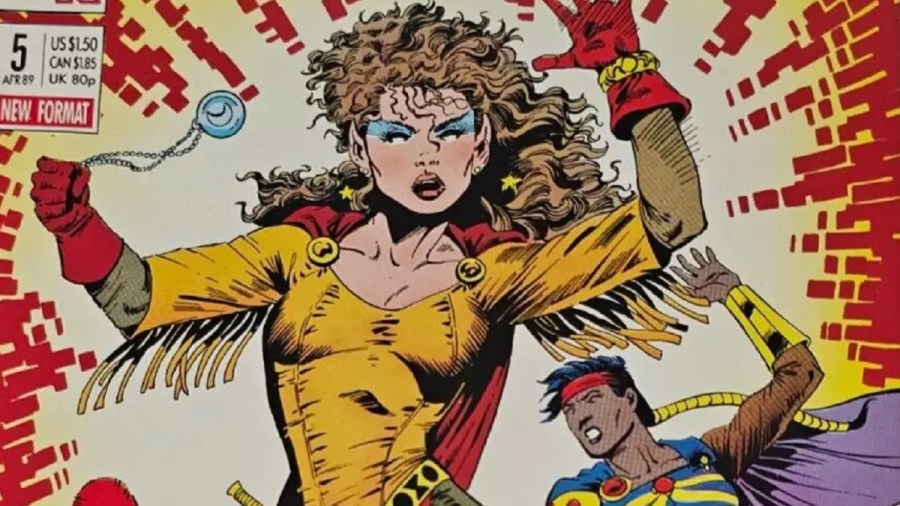
The start of the Advanced Dungeons & Dragons comic book line presented an epic tale in which a motley crew of do-gooders overcame their differences to stop an evil wizard from overrunning the land. It was a good introduction to the setting and our heroes, but it was the sort of giant epic quest that, quite frankly, does not play to D&D‘s strengths.
That’s not to say that D&D can’t be about epic quests and heroism, but a role-playing game is a unique place where group storytelling, whimsical jokes, and unlucky die rolls meet. That combination creates an off-beat sort of tale that stands apart from other fantasy literature. The second story of the comic book line, “The Spirit of Myrrth,” feels more like something that players would experience at a table. Here we find a portal to the underworld, a giant skeleton, and a group of jesters willing to kill to get the respect they think they deserve.
Continue reading “Comics & Quests: The Spirit of Myrrth”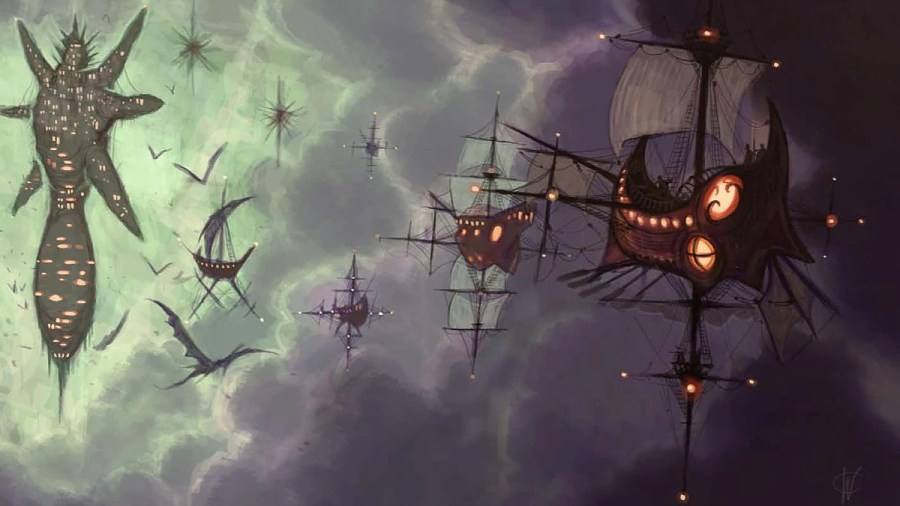
The destruction of the SS Stupid brought an end to one of the more bizarre chapters of my GMing experience. But great stories often get sequels, and it wasn’t long before the SS Stupid returned in a new, grander form.
Continue reading “The SS Stupid Rides Again”
I have many criticisms about the various editions of Dungeons & Dragons, but one thing has remained consistent for at least 35 years: tehe comics based off the games are tons of fun. Since I love trips down memory lane, I’m going to spend some time waxing nostalgic about some comics which readers of this blog may have forgotten, never heard of, or been born well after. First up: the simply-titled Advanced Dungeons & Dragons.
Back in the late 1980s, DC Comics got a license to produce various D&D comics. The first was based on the Dragonlance series, and I have sadly not read that one. The second was set in the Forgotten Realms and introduced a mishmash of hapless adventurers who struggled through adventures that ranged from epic to ludicrous. The first four issues served as their origin story, in a tale dubbed “The Gathering.”
Continue reading “Comics & Quests: The Gathering”
In creating a setting for a superhero RPG, one of the first steps is to think about how super-powered beings affect the world. Some comic continuities choose to alter history greatly. For example, Watchmen provides a world where Richard Nixon has successfully run for five terms as president after the presence of superheroes allowed America to win the Viet Nam War. Other settings assume that history happened as recorded, but with superheroes somewhere in the background. Most mainstream comics are representative of this philosophy.
Below is a sample history I created for a game of Mutants & Masterminds I ran some years back. This history takes something of a mix of the two philosophies described above. On the one hand, history hasn’t deviated greatly from the real world. On the other hand, many historical events happened because of superheroes – they helped captured Al Capone, inadvertently led to the Kennedy assassination, and so on. This is obviously just one example of a fictional continuity, and can easily be changed to fit many settings. Superheroes and villains are described in the history, but the details on their background and personality are vague, allowing GMs to tweak them to fit their campaign preferences.
Continue reading “A History of Superheroes”
A strange heart-shaped cavern lies in a remote spot by the sea. Music permeates the area, as though coming from the stones themselves. At the center of the grotto stands a trio of statues. Are they the source of the strange music? Many have sought to learn the secrets of the melody, and the adventurers may be the ones to unravel it…for good or ill.
“Looking for Love” is my latest mini-adventure for En5ider, a weekly publication that offers new options and stories for any D&D campaign. This scenario, crafted for 5th-level characters, provides a mystery in a seaside cavern with several possible conclusions.
When you buy into the En5ider Patreon, you get access to this adventure and almost 600 other articles. Check it out here!
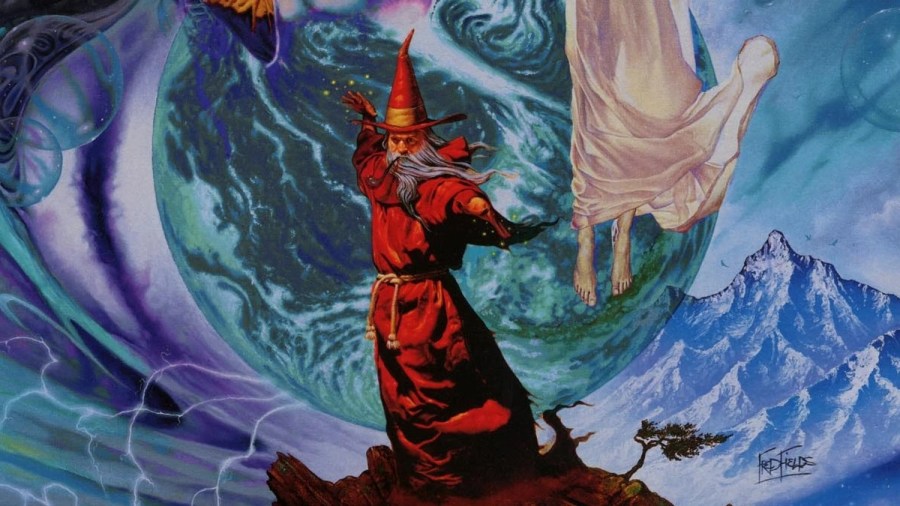
I’ve made my feelings on the Avatar Trilogy painfully clear. But one question remains: if I hate the adventures, why do I know so much about them? Well, I did it to myself.
Years ago, I picked up Waterdeep at a yard sale. I tried to run it, but never got it off the ground – very few of my campaigns lasted beyond the first few levels, and I usually shied away from doing mid-level one-shots. Years later, in a 3rd edition game, I decided that I wanted to shake things up in my campaign setting with a Time of Troubles-style event, so I hunted down Shadowdale and Tantras on eBay.
Yeah…I actually bought these monstrosities of my own volition.
And you know what? The game I ran with them turned out to be a lot of fun.
Any adventure module can be fun if the DM puts work into it. In the case of the Avatar Trilogy, it was still a waste of money on my part because the amount of work I put into the adventures to make them playable exceeded the work I would have needed to write my own adventure from scratch. Adventure modules are supposed to make things easier for a DM, not harder.
That said, let’s say you somehow wound up with these modules and you want to put them to use. How can you make this mess of an adventure into something enjoyable? Well, here are my suggestions…
Continue reading “Troubled Times, Troubled Adventures: Making the Avatar Trilogy Work”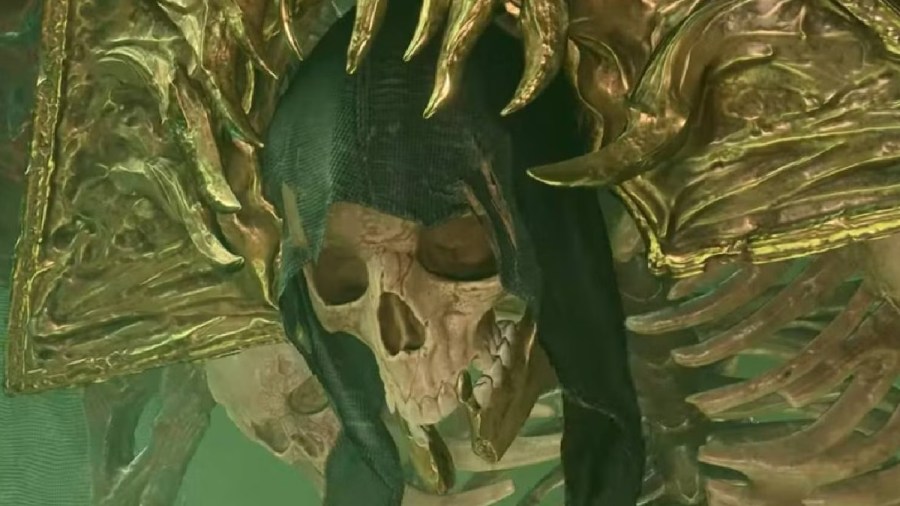
At long last, we are on the last chapter of the Avatar Trilogy. Chapter 6 of Waterdeep is a long, convoluted mess that ends with a huge insult both in game and out of game. But let’s take it one step at a time.
“Midnight has seen the Realm of the Dead, and she would rather be destroyed utterly than live in the Realms if Myrkul rules them. What actually happened there? ‘Don’t ask,’ Midnight replies, shaking her head. ‘Never ask me that again.’
“The only fact she will reveal about her time in Hades is that she succeeded in gaining possession of the second Tablet of Fate – the one that had been held by Myrkul. As the PCs can deduce, her success occurred at just about the same time that Myrkul’s minions stole the first tablet. Thus, an ironic and uneasy balance is maintained – and the fate of Realms, as before, still hinges on which faction will ultimately possess both tablets at the same time.
“If the players think to post a guard over Midnight’s sphere in the Pool of Loss, go to Event 1. However, don’t remind them of this if they don’t think of it! No NPC thinks of it, either.
“If the PCs post no guard, skip the next event. PCs can undertake more adventures in Waterdeep (left as exercises to the DM). If and when they return to Blackstaff Tower to rest, go to Event 2.”
Continue reading “Troubled Times, Troubled Adventures: Waterdeep, part six”
As Chapter 5 of Waterdeep begins, the PCs have been separated from Midnight. They have also lost the Tablet of Fate to the god of death. But wait…didn’t the text in the previous section state that the PCs could hold onto the tablet if they took special pains to do so?
“If the PCs managed to hang onto their Tablet of Fate through the battle at Dragonspear Castle, they should lose it before they reach Waterdeep. Harry them with more night riders, or have Myrkul himself steal into camp invisibly and steal the tablet from its sleeping guard.”
Yeah…should’ve known better.
“Once they lose the tablet, the PCs still should head for Waterdeep. They can guess that is where Myrkul will be, with one or both tablets. Besides, they still want to meet Elminster, so that the sage can help them find Midnight.”
There is no part of that paragraph that I like.
Continue reading “Troubled Times, Troubled Adventures: Waterdeep, part five”
Chapter 4 of Waterdeep opens with a multiple choice path: either Midnight teleported the group to safety or they’re screwed. Breaking with my normal format, I’ll show the second option first, since it’s the non-assumed part that won’t get brought up again in the module.
Continue reading “Troubled Times, Troubled Adventures: Waterdeep, part four” Babbling Brooks