Crowning Moments of Fatherhood

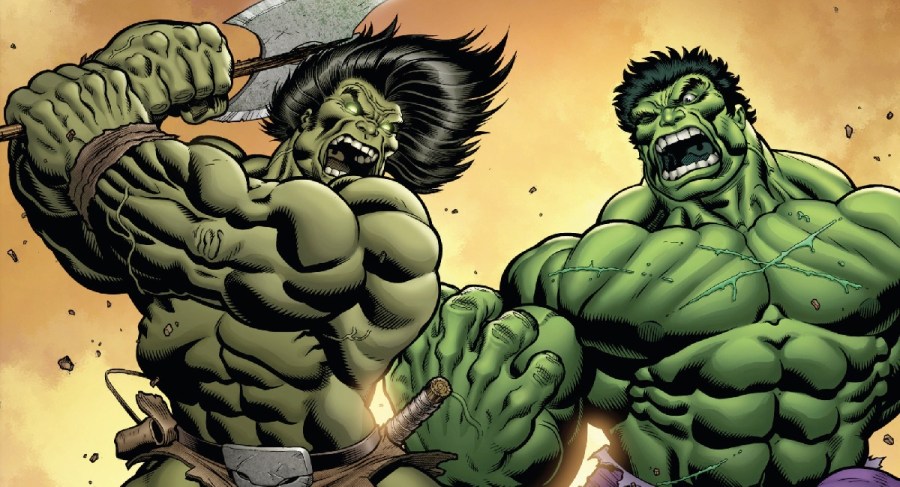
Superhero comics are filled with daddy issues. Be it parents who have died as part of a character’s origin story, abusive stepfathers, or children who are somehow their own father, a lot of superhero comics place focus on the importance of father figures. Here’s my list of the most awesome and heartwarming father-child moments in superhero comics.

All of these moments, of course, get the asterisk next to them that good parenting in comic-land is vastly different than good parenting in the real world. For example, Batman serves as a father figure to Robin, but in real life he’d be considered a monster for putting a child in harm’s way every night. So, placing on our reality-altering filters that allow spandex-clad vigilantes to be considered responsible figures, let’s dive into the list.

Continue reading “Crowning Moments of Fatherhood”
Superhero Evolutions: The Incredible Hulk, part three

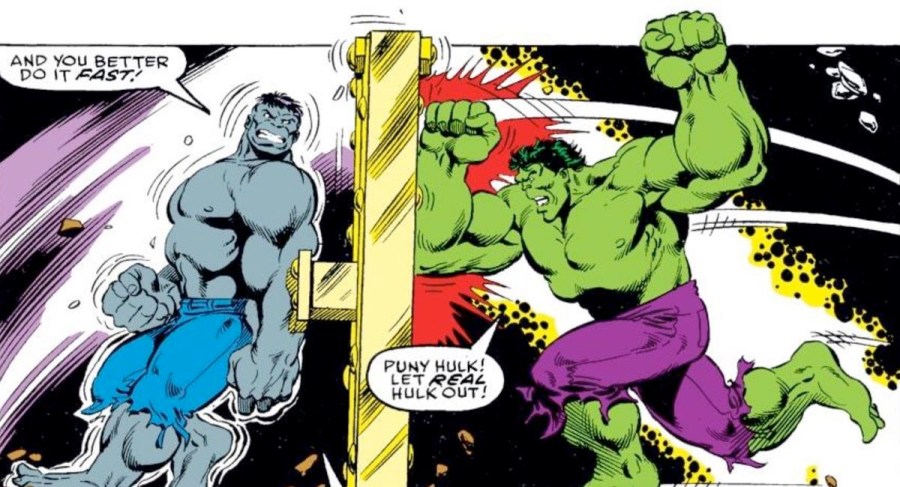
When we last left Bruce Banner, he had been cured of being the Hulk. Yeah…that never actually holds. Banner has actually been cured of the Hulk many times over, but it didn’t get mentioned here because it’s always at most a one- or two-issue fix. This time around is no exception.

With John Byrne come and gone, Al Milgrom would be the next guy in line to start something he couldn’t finish. He left before the story arc he began with Banner’s apparent cure was even finished. That was a symptom of a bigger problem for the Hulk in the 80s: nobody wanted to write the character. Driven into a funk by attempts to cash in on the TV show in a medium that lacked the acting and soundtrack that made the TV show huge, the character had become stagnant. That’s what forced Bill Mantlo to introduce a Banner-controlled Hulk and then a completely mindless Hulk – he had started to run out of ideas for the classic savage Hulk. But since his departure, and since Byrne’s plans to recreate the Hulk his way had been stopped short, the character was basically seen as a dead end. It got bad enough that the book was eventually handed over to some marketing guy named Peter David. And what did Peter David do with the book? Started a twelve-year long stint that turned the Hulk into one of Marvel’s hottest franchises, of course.

Continue reading “Superhero Evolutions: The Incredible Hulk, part three”

The Failures of the Flash, and Why the DC Extended Universe Flopped

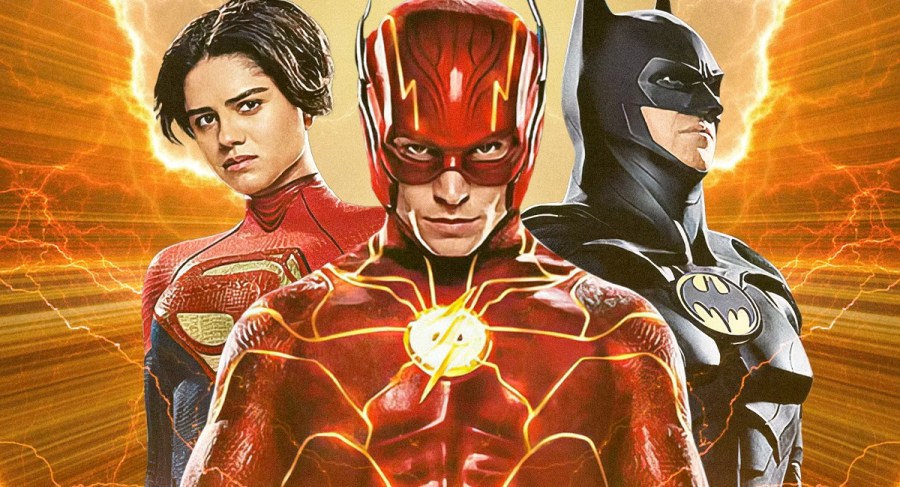
The Flash is the latest in a line of movies set in the DC Universe to flop critically, disappoint financially, or both. Despite trying to repeat the success of Spider-Man: No Way Home by giving fans a return of some of their favorite actors, in this case Michael Keaton as Batman, the film has greatly disappointed at the box office, spending a full month to reach the $250 million mark, all but guaranteeing that the film will lose a massive amount of money when all is said and done. It’s symptomatic of broader failures across the DC Cinematic Universe, which tried to replicate what Marvel accomplished with its films but has failed at almost every turn.

There are lots of reasons that these movies didn’t succeed, but I’m going to focus on what I think many critics ignore when they dissect these cinematic misses: the DC movies never took the time to earn the fan buy-in that they think they deserve.

Continue reading “The Failures of the Flash, and Why the DC Extended Universe Flopped”

Superhero Evolutions: The Incredible Hulk, part two

Well, if your liver has recovered from part one, we can continue our drinking game/history lesson on the Hulk.

As of 1964, the Hulk was a popular character without a home. Moreover, he had obviously gone through some changes off-panel. When last readers saw him in his own series, his transformations through the use of Bruce Banner’s gamma gun were becoming more unstable. His appearances in Fantastic Four and Avengers gave no indication that he was still using the gamma gun to transform, yet at the same time he was wandering about during the day, suggesting that his day/night transformation cycle was a thing of the past. When he popped up in Amazing Spider-Man, he was hiding out in a cave, not Banner’s secret lab where he had been during his own series. The truth of the matter was that the Hulk was still being written by Stan Lee, and Lee still didn’t know what he wanted to do with the character. In fact, you could make a pretty good argument that Stan never did figure out how to handle the Hulk. But one thing was for sure: with the character’s popularity still strong, the Hulk needed a book of his own.

Continue reading “Superhero Evolutions: The Incredible Hulk, part two”

Superhero Evolutions: The Incredible Hulk, part one

Is he man or monster or…is he both?

Hoo boy…

I’ve been putting this off for a while. Don’t get me wrong; I love the Hulk. He’s my favorite comic book character, and quite possibly my favorite literary character ever. If I ever got the chance, I’d put up with all the bullshit politics, editorial mandates, and fan whining in the comic book industry just to get a shot at writing this character. But actually documenting the number of changes he’s gone through…well, let’s just say that we’re definitely in for a multi-part rant here.

At his core, the Hulk is a simple concept. Inside each of us there dwells a raging fury. When Bruce Banner’s temper boils over, he becomes the embodiment of rage: a 7-foot tall, 1,000-pound force of unfettered fury that can casually knock over a city. Perhaps because the concept is so simple, a lot of different writers have played around with it. The result is something that can best be summed up with what I like to call the Incredible Hulk Drinking Game. The rules are simple: take a shot when, during the Hulk’s history, one of the following happens:

  • The Hulk changes color,
  • The Hulk’s transformation pattern changes,
  • The Hulk changes personality,
  • And take a bonus shot if this change is not given any explanation in the story.

(Warning: do not actually participate in the Incredible Hulk Drinking Game. You will die of alcohol poisoning.)

Ready for a doozy? Here we go…

Continue reading “Superhero Evolutions: The Incredible Hulk, part one”

Superhero Evolutions: Renee Montoya

As the Question, Renee Montoya isn’t a character who has seen a lot of costume changes, but she has gone through many other developments over her time in comics. To date, she has spent more time as a police officer than a superhero, beginning as a supporting character and working her way up. This long development has also left her as one of the more interesting characters in DC Comics.

Continue reading “Superhero Evolutions: Renee Montoya”

Lessons Learned from the Silver Age Green Lantern

Silver Age comics care more about fun than common sense. While storytelling has evolved significantly since the 1960s, the sheer goofiness of classic comics has a certain charm that can’t be replicated. And there is perhaps no character with more potential for goofiness than Hal Jordan, the Silver Age Green Lantern. With a magic ring that can allow him to do anything, he is only limited by his common sense…or lack thereof.

As a kid, I loved Hal Jordan because he had a cool costume. As an adult, I love him because he is such a nimrod. Brave, noble, and dumb as a post, he is perhaps the perfect Silver Age superhero.

Continue reading “Lessons Learned from the Silver Age Green Lantern”

The Dark Knight Trilogy: The Rogues Gallery

Let’s face it: nobody really gives a damn about Batman.

Sure, he’s a great superhero. He’s got a cool costume, a good origin, and is the epitome of the badass normal vigilante. But he’s not the reason people read his comics. The reason people read Batman comics is because he has the best villains. Bar none.

Outside of Spider-Man and Dick Tracy, nobody in the history of comics has the sheer quantity of recurring rogues that Batman has. Spider-Man’s rogues gallery is vast, but there are a lot of them that are just plain duds. Dick Tracy has an array of enemies spanning back decades, but most of them wind up dead after their first appearance. Batman’s rogues, on the other hand, have been developed and fleshed out over the course of 70 years. You love to hate them. And, on occasion, you feel genuine pity for them.

Here’s a quick breakdown of the villains that showed up in the Dark Knight Trilogy and how they connect to their comic counterparts.

Continue reading “The Dark Knight Trilogy: The Rogues Gallery”