On the whole, I really like the Advanced Dungeons & Dragons comic. There are nonetheless a few things about it that I find grating, and almost all of them are on display in “Spell Games.”
Continue reading “Comics & Quests: Spell Games”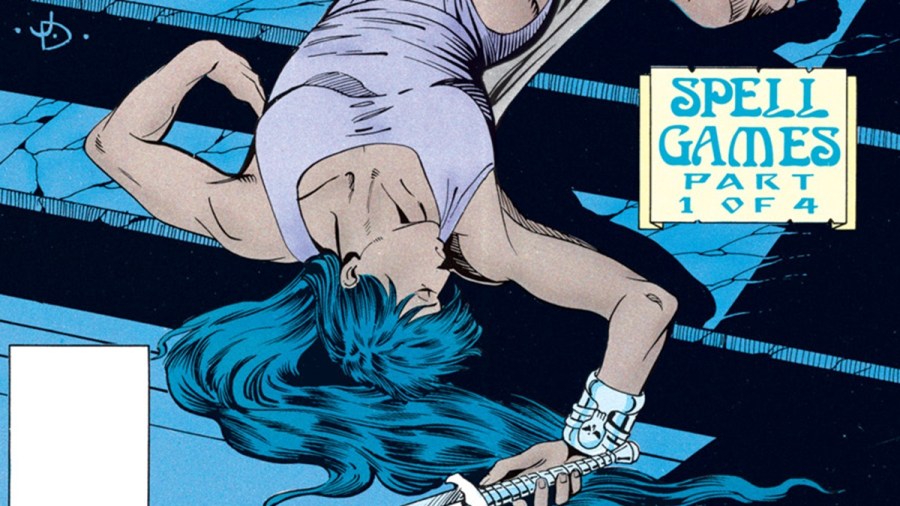
On the whole, I really like the Advanced Dungeons & Dragons comic. There are nonetheless a few things about it that I find grating, and almost all of them are on display in “Spell Games.”
Continue reading “Comics & Quests: Spell Games”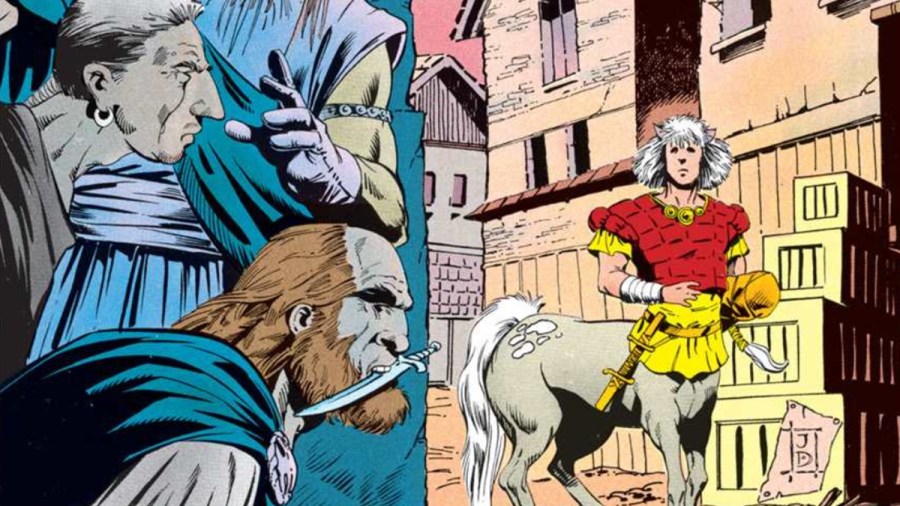
Many a gaming group knows the frustration of not being able to get everyone together on a regular basis. Often, the solution involves splitting the party; some PCs engage in the adventure at hand, while others are missing on other errands. This seems to be a feel that the Advanced Dungeons & Dragons comic was going for. In “The Spirit of Myrrth,” our centaur friend Timoth was notably absent (as was Agrivar). Now, in “Catspaw,” he’s back but the rest of the group, save his buddy Onyx, are out.
Continue reading “Comics & Quests: Catspaw”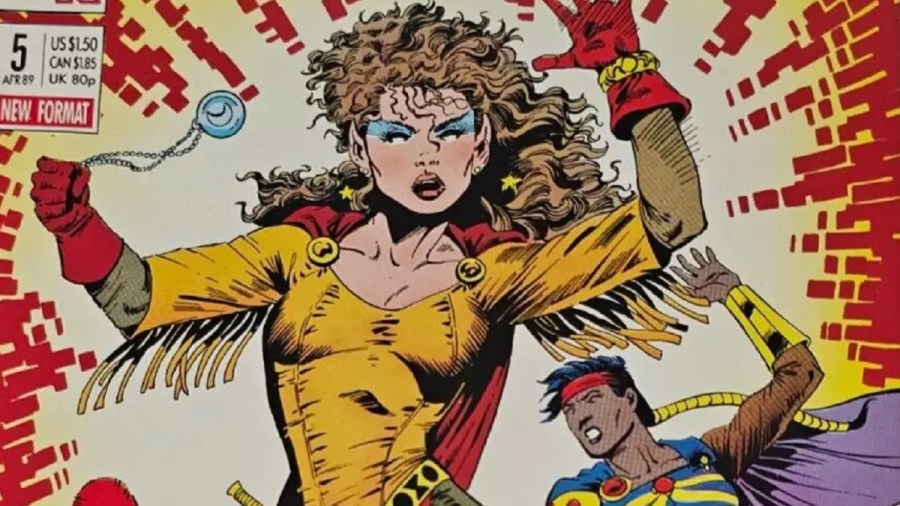
The start of the Advanced Dungeons & Dragons comic book line presented an epic tale in which a motley crew of do-gooders overcame their differences to stop an evil wizard from overrunning the land. It was a good introduction to the setting and our heroes, but it was the sort of giant epic quest that, quite frankly, does not play to D&D‘s strengths.
That’s not to say that D&D can’t be about epic quests and heroism, but a role-playing game is a unique place where group storytelling, whimsical jokes, and unlucky die rolls meet. That combination creates an off-beat sort of tale that stands apart from other fantasy literature. The second story of the comic book line, “The Spirit of Myrrth,” feels more like something that players would experience at a table. Here we find a portal to the underworld, a giant skeleton, and a group of jesters willing to kill to get the respect they think they deserve.
Continue reading “Comics & Quests: The Spirit of Myrrth”
I have many criticisms about the various editions of Dungeons & Dragons, but one thing has remained consistent for at least 35 years: tehe comics based off the games are tons of fun. Since I love trips down memory lane, I’m going to spend some time waxing nostalgic about some comics which readers of this blog may have forgotten, never heard of, or been born well after. First up: the simply-titled Advanced Dungeons & Dragons.
Back in the late 1980s, DC Comics got a license to produce various D&D comics. The first was based on the Dragonlance series, and I have sadly not read that one. The second was set in the Forgotten Realms and introduced a mishmash of hapless adventurers who struggled through adventures that ranged from epic to ludicrous. The first four issues served as their origin story, in a tale dubbed “The Gathering.”
Continue reading “Comics & Quests: The Gathering”
Comic book deaths are a punchline these days. Despite the fact that a comic book death currently translates into little more than a cheap sales gimmick, there have still been some really good ones over the years. Even if they didn’t stick, they were chilling, touching, or otherwise hugely influential. What follows is my totally biased opinion of the best deaths comics has had to offer.
Before I get into the actual deaths, it’s worth noting what I’m not counting. Death by origin story, such as Bruce Wayne’s parents or Uncle Ben, does not count here. A poignant death has to take a character the reader has known for a while and send them off in a way that has lasting emotional impact.
With one exception, I’ve also left off deaths not from the Marvel or DC Universes. That’s partly personal preference, since I read comics from the big two the most. The other part of it is that the Marvel and DC stable of characters are cultural icons recognizable almost worldwide. As such, when one of those iconic characters dies, it has an impact not only on the comic book universe but on society as a whole. The one exception to this rule comes from an ending scene in Y: The Last Man. If you haven’t read through this excellent comic yet, go read those graphic novels instead of this list. The list contains a major spoiler that will totally ruin the emotional impact of Y: The Last Man if you haven’t read it.
Continue reading “Crowning Deaths of Awesome Sadness”
One of the oldest traditions in superhero comics is that the good guys don’t kill. There are exceptions out there, such as Wolverine, who sometimes the secret death squad X-Force or the Punisher, whose body count is somewhere in the thousands. But in general, superheroes haven’t killed since the Silver Age or even before. But the question is, why? Certainly some villains (*cough*Joker*cough*) deserve their necks snapped. Why is it that these guys who dress up in pajamas and pursue vigilante justice don’t do what sometimes needs to be done?
In an attempt to answer that question, or at least look at how the code against killing developed, here’s a look at some of the more iconic superheroes and why they don’t kill.
Continue reading “Thou Shalt not Kill”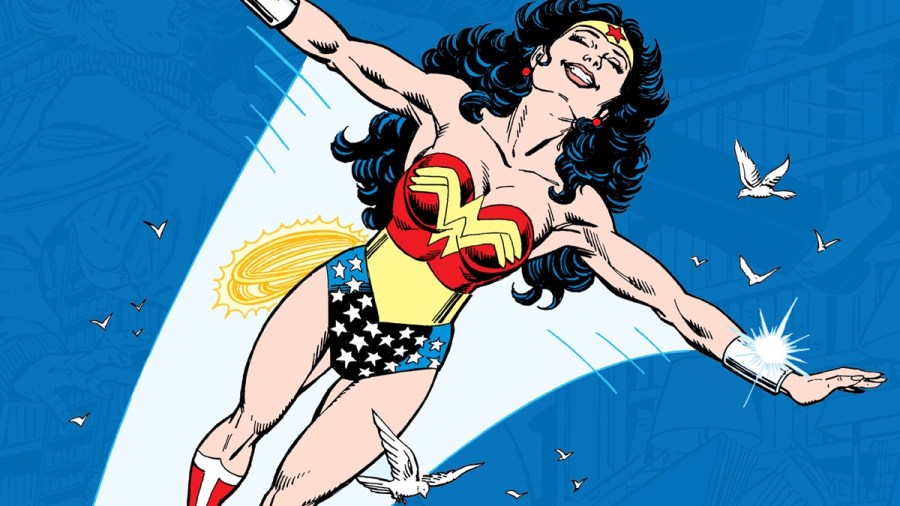
Through the 1980s, Wonder Woman changed a lot due largely to editorial laziness and inconsistent writing. People just couldn’t be bothered to try and keep her consistent from one issue to another up until Perez’s post-Crisis reboot. Going into the 90s, though, Wonder Woman changed even more, not due (entirely) to creator laziness but rather due to attempts to repeatedly market her or reinvent her for a changing crowd.
The 1990s brought a lot of change to superhero comics. Fans veered toward the idea of “grim and gritty” and superheroes who were less idealistic than the Silver Age icons. Paragon heroes like Superman and Wonder Woman suffered as a result. The market also targeted comic book speculators, the folks who mistakenly thought that buying special edition comics was a good investment. As a result, there was a big push to churn out major event after major event in an attempt to convince the speculators to buy variant covers, holo-foil covers, and comics where the iconic superheroes were supposedly “changed forever.” The death of Superman is a good example of this, with people rushing out to buy the issue where he died under the impression that it would make them rich someday. The fact is that such issues A) meant nothing in a comics universe where death was a speedbump, and B) were not rare like the valuable comics of the Golden and Silver Ages, and thus never really increased in value. That didn’t stop speculators from buying into comics, however, nor did it stop Marvel and DC from creating constant upheaval in their stories to appeal to said speculators. Wonder Woman had to face this battle as well as the fact that DC didn’t really know what to do with the iconic female superhero. She was a feminist character in a market primarily composed of adolescent males. So how do you get her to sell to high schoolers?
Continue reading “Superhero Evolutions: Wonder Woman, part two”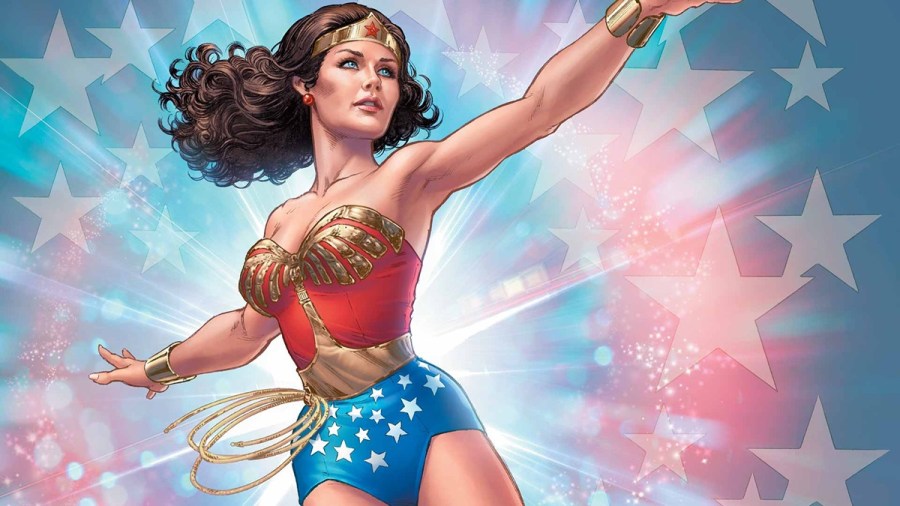
“Go in peace my daughter. And remember that, in a world of ordinary mortals, you are a Wonder Woman.”
Wonder Woman has changed a lot in both powers and looks in her 80-plus years of existence. Even today, in an era where creators try to keep continuity more or less consistent, she changes radically from writer to writer. So let’s look at the greatest of the female superheroes, her origins, and the changes she’s been through over the years.
Continue reading “Superhero Evolutions: Wonder Woman, part one”
“In brightest day, in blackest night, no evil shall escape my sight. Let those who worship evil’s might beware my power…Green Lantern’s light!”
Next to the Incredible Hulk, Hal Jordan is my favorite superhero. As a kid, I liked him because he had the coolest costume and the coolest superpower. As an adult, I like him because he’s fearless and heroic but also a hard-headed moron. I can sympathize with a character who is kind of a jerk at times but who has a good heart and will do the right thing when the chips are down. I don’t really know of too many other characters in comics who are believably flawed like that. Arguably, there’s Guy Gardner, another Green Lantern, and over in Marvel there’s Hank Pym, who is like that but veers more toward overt mental illness at times.
Overall, I find Hal to be a strong enough and believable character to cross over the nostalgia filter and move from my childhood hero to my second favorite superhero ever. The journey hasn’t been easy for Hal, though. He was victim to one of the biggest cases of character derailment in comics, and it took him a full decade to recover from it.
So let’s take a look at the history of Hal Jordan, the Silver Age Green Lantern, as he went from hero to psychopath to hero once again.
Continue reading “Superhero Evolutions: Hal Jordan”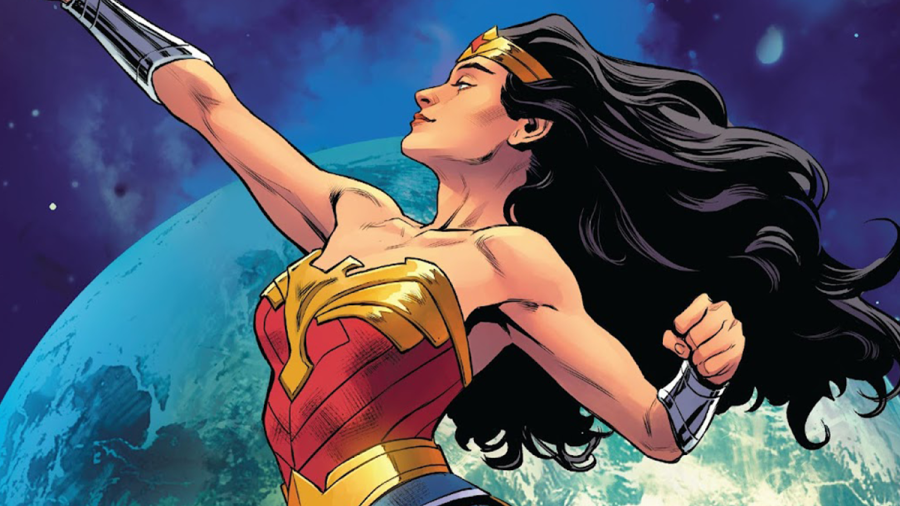
How did I become a Wonder Woman fan? It boils down to the fact that she’s my wife Sarah’s favorite comic book character. Sarah’s not a huge comic nut like I am, but in my attempts to get her more interested in my hobby, I chased down back issues of Wonder Woman. And what I learned is that she is awesome, through and through.
One hard part about listing the most awesome Wonder Woman moments is that I first have to figure out what interpretation of Wonder Woman I’m going with. Unlike Superman and Batman, she’s not automatically a huge seller, despite her iconic status. DC Comics has constantly tried to reinvent her, struggling with the fact that she is the prototypical feminist character in an industry that is dominated by adolescent males who, unfortunately, are not always the most progressive folks when it comes to seeing women as something other than sex objects. She’s been a warrior woman, a pacifist, a female version of Superman, a true goddess, and a waitress as a taco joint – often simultaneously.
For this list, I’m going with what I think makes Diana of Themyscira stand out as unique among superheroes: her focus on the positive aspects of femininity. William Moulton Marston created her as a response to the fact that his society saw femininity as weakness, and that not even women wanted to be womanly. Even in comics today, the feminine aspects of superheroines, except for sexuality, are often downplayed. Yes, they can kick ass alongside the men, but when they are shown to be at their best, their masculine traits are emphasized over their feminine ones. Wonder Woman, by comparison, is at her best when the traits usually downplayed in superhero comics are emphasized. She is tender, compassionate, and peaceful. When she does fly into battle and start kicking ass, she does so with grace and never uses more force than is necessary to win the day. Unlike other superheroes, she doesn’t have a code against killing, but will only do so to protect others. Essentially, Wonder Woman is a mother or a sister, with the entire world as her family. That means that she is very tender and merciful to those she loves, but is a terrifying opponent to those who would harm those she loves – which, in her case, is everybody. So this list is focusing not only on Wonder Woman the ass-kicker, but on the moments where she combines that badassery with the compassion and sense of truth that makes her a paragon even among other paragons.
Continue reading “Crowning Moments of Awesome: Wonder Woman” Babbling Brooks