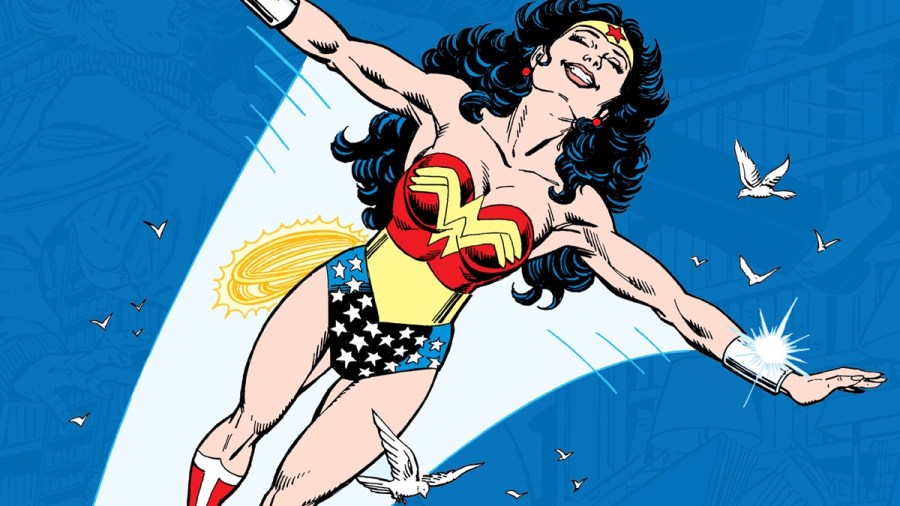
Through the 1980s, Wonder Woman changed a lot due largely to editorial laziness and inconsistent writing. People just couldn’t be bothered to try and keep her consistent from one issue to another up until Perez’s post-Crisis reboot. Going into the 90s, though, Wonder Woman changed even more, not due (entirely) to creator laziness but rather due to attempts to repeatedly market her or reinvent her for a changing crowd.
The 1990s brought a lot of change to superhero comics. Fans veered toward the idea of “grim and gritty” and superheroes who were less idealistic than the Silver Age icons. Paragon heroes like Superman and Wonder Woman suffered as a result. The market also targeted comic book speculators, the folks who mistakenly thought that buying special edition comics was a good investment. As a result, there was a big push to churn out major event after major event in an attempt to convince the speculators to buy variant covers, holo-foil covers, and comics where the iconic superheroes were supposedly “changed forever.” The death of Superman is a good example of this, with people rushing out to buy the issue where he died under the impression that it would make them rich someday. The fact is that such issues A) meant nothing in a comics universe where death was a speedbump, and B) were not rare like the valuable comics of the Golden and Silver Ages, and thus never really increased in value. That didn’t stop speculators from buying into comics, however, nor did it stop Marvel and DC from creating constant upheaval in their stories to appeal to said speculators. Wonder Woman had to face this battle as well as the fact that DC didn’t really know what to do with the iconic female superhero. She was a feminist character in a market primarily composed of adolescent males. So how do you get her to sell to high schoolers?
Continue reading “Superhero Evolutions: Wonder Woman, part two” Babbling Brooks