
The Room of Death

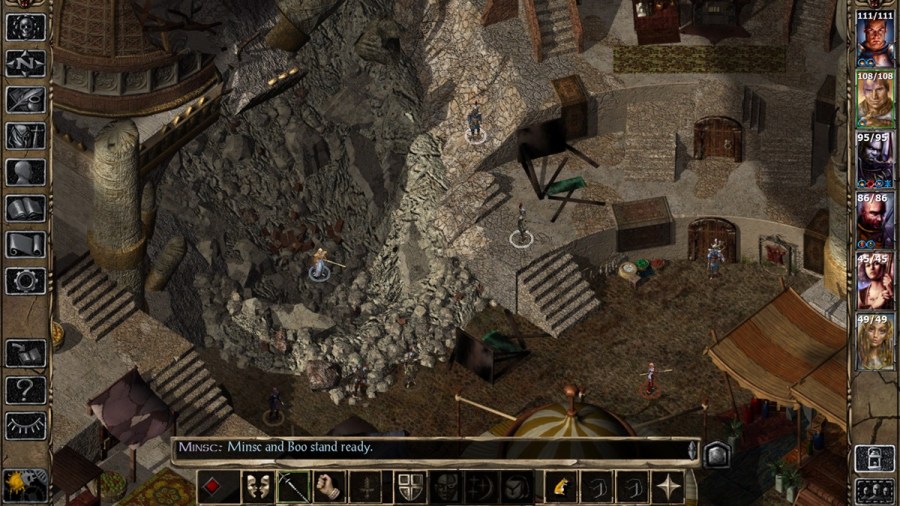
This room appears to be some sort of museum display. Engravings on the wall describe all manner of ancient battle. Nearest the door are a desk and a chair with a vase and a flower sitting on top. Hanging from a hook on the wall next to that is an expensive-looking cloak on it. The veneer of civilization disappears near the far end of the room, however, where a mossy growth creates a sort of wilderness display. Near the far wall is a small stuffed rabbit looking at you through glassy eyes while perched atop an old tree stump.

If this was a standard room in a typical dungeon adventure, the first question the adventurers would be asking themselves is, “Where’s the trap? What’s going to kill me when I step into this room?”

This is the Room of Death. The answer is: everything.

Continue reading “The Room of Death”
The Many Immortals of the Forgotten Realms

The 4th edition of Dungeons & Dragons made the most changes to the system to date. The class structure, level tiers, magic system, and planes of existence all got a top-down overhaul. The difference was too great to reconcile with old continuity, so the Forgotten Realms got hit with an apocalypse and a 100-year time jump.

For a setting that relied on its myriad of established characters and places, this was catastrophic. Much of what people liked about the Realms was destroyed, replaced with elements that made it more generic D&D.

Naturally, when the unpopular 4th edition was swept away and 5th edition opted to woo back fans the game had lost, the Realms largely got reset. The apocalypse was undone, old gods came back, and familiar NPCs returned. But the 100-year time jump had still happened.

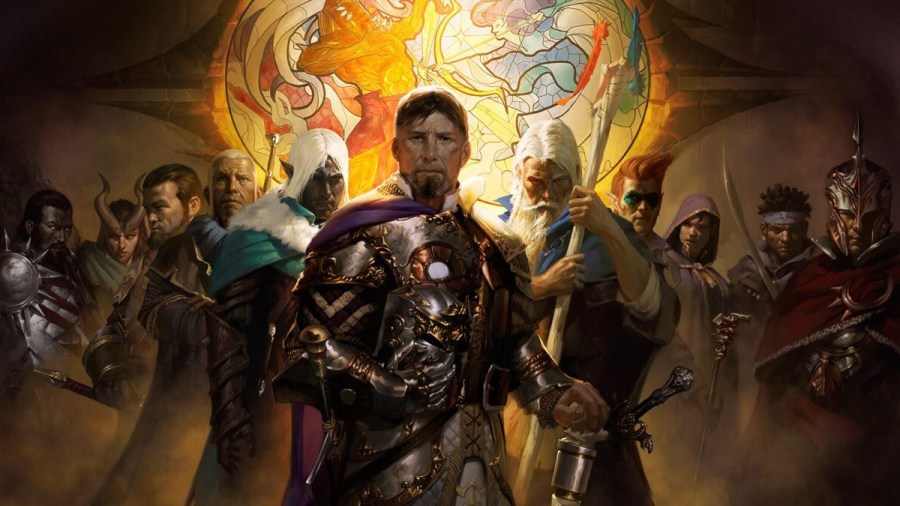
So what happened to the likes of Cattie-Brie, Mirt the Moneylender, and Volo–all humans who would have died of old age during the century between editions? Well, most of them got magicked back to life.

Settle in, folks, because we’re going on a whirlwind tour of the many humans in the Forgotten Realms who should be dead of old age but are still kicking due to their popularity! Can’t tell one immortal from another without a scorecard!

Continue reading “The Many Immortals of the Forgotten Realms”

Down with Fraggle Rock

I’ve written a lot of stuff I’d like forgotten. And then there’s this.

I wrote “Down with Fraggle Rock” for the Fights section of the Screamsheet in the early 2000s, back when one of the site’s main draws was a sarcastic take on fans asking, “Who would win in a fight between X and Y?” Combine that with my tendency to mock things I loved in my childhood and the fact that I was stuck reading Karl Marx’s Communist Manifesto for the first time in college, and you get this.

I present what follows without further comment. It’s not something I would likely write today, but it is something I find kind of funny in an aggressive sort of way, and it’s definitely a good snapshot of the type of person I was in college.

Continue reading “Down with Fraggle Rock”

Ang Lee’s Hulk

As a loud and proud Hulk fan, I get asked my opinion of the character’s film appearances fairly often. When I do, folks tend to be surprised that I’m not a huge fan of his role in the Marvel Cinematic Universe, largely because all his character development happens off-screen. Instead, my absolute favorite film interpretation of the character is Ang Lee’s 2003 movie, which met with mixed critical and box office success. Made in an era where Hollywood was still figuring out the superhero movie, Hulk took risks, showed reverence for the source material, and presented a film that was very much in the vein of the classic monster movies that provided Jack Kirby and Stan Lee inspiration for the character in the first place.

Here’s why I love this movie.

Continue reading “Ang Lee’s Hulk”

So You Want to Have a Conversation with Me…

People are always asking me, “Charlie, why did you just punch me in the face and try to light me on fire?” To which I normally punch them in the face and try to light them on fire because those people didn’t follow the essential etiquette in having a conversation with me.

To avoid that inevitable burning sensation that comes from me touching a lit match to your gasoline-soaked flesh, please follow these simple five steps. Doing so will ensure a healthier, happier, and combustion-free conversation.

So you want to have a conversation with me…

Continue reading “So You Want to Have a Conversation with Me…”

The Last Jedi, Revisited

In 2018, a yer late, I finally sat down and watched The Last Jedi. Knowing that it already had a bad reputation among fans but somehow avoiding spoilers as to why, I was pleasantly surprised and really liked the movie. It did what I thought impossible from the Star Wars franchise and challenged my expectations. The movie broke away from some tired clichés, such as the requirement that someone has to be “born special” to be a fantasy hero, and showcased through Kylo Ren what Luke would have become had he struck the Emperor down in Return of the Jedi.

Given my enjoyment of that film, you’d think that I’d have been all over the then-upcoming The Rise of Skywalker, but to this date I haven’t seen it. The replacement of Colin Trevorrow as director with JJ Abrams, who had delivered an enjoyable but very by-the-numbers film in The Force Awakens signaled to me that Disney was overcompensating for fan backlash and was looking to deliver a “safe” final installment to the trilogy. In my experience, safe filmmaking tends to be boring filmmaking.

What I know of The Rise of Skywalker tells me that my suspicions were correct. Rey was made “special” by way of birth rather than deed, there was much pandering to fans, and the villain was an Emperor that nobody particularly wanted back.

All this preamble brings me to a big question: how has The Last Jedi held up for me? Six years after I first enjoyed it, does it still entertain? And does the fact that it breaks with tone and tradition in the middle of a trilogy hurt its place in the larger franchise?

Continue reading “The Last Jedi, Revisited”

The Bride-to-Be

A longer time ago than it seems, I got married. Sometime around the date of my wedding, I created the following template for Pathfinder first edition. I swear the timing is coincidental and in no way reflects upon my own lovely wife Sarah, who was nothing but composed and gracious all through the planning for our wedding, who is the most gorgeous and intelligent woman I know, and who would be even more attractive if she stopped threatening me with a fire axe as I type this.

Continue reading “The Bride-to-Be”

The Infinity Engine and Beyond: A Look Back at Classic D&D cRPGs

The success of Baldur’s Gate 3 has Hasbro seeing potential gold mines in the video game industry. Unfortunately for them (and us), Larian Studios won’t be working on more Baldur’s Gate games. Not to be deterred, Hasbro is investing $1 billion in new D&D computer RPGs, hoping to catch lightning in a bottle several times over. It’s amusing in its own way, because the company had a pipeline of consistent high-quality video games for a solid decade and let that dry up.

While D&D has seen several periods of success in the video game industry, the one that I experienced directly was the string of releases between Baldur’s Gate, which came out in 1998, and Neverwinter Nights 2, which saw its last official expansion in 2009. Developed mostly by Bioware (and the now-defunct Black Isle Studios), these games expanded the genre in sometimes innovative ways and delivered a consistently fun D&D experience on personal computers.

I’m going to touch on each of the games I’ve played, which covers all the D&D cRPG games released from 1998 through 2009 with the exception of Pool of Radiance: The Ruins of Myth Drannor, The Temple of Elemental Evil, and Icewind Dale 2. The latter two games sit in my GOG account waiting to be played in the future. As to Pool of Radiance…well, based on the reviews I’ve read I might just go back in time and play the SSI “Gold Box” games instead.

Continue reading “The Infinity Engine and Beyond: A Look Back at Classic D&D cRPGs”

Fiction: The Yellow Dart

Originally published in The Lyndon Review.

The purpose to her moving my computer into the bedroom was twofold. First of all, that meant that she didn’t have to go into the living room, which by then had become the victim of a hostile takeover led by spilled ashtrays, moldy bread, dusty furniture, and several roaches, each of whom I had jokingly named Fred. Secondly, it meant that she could keep an eye on me and make sure that I didn’t spend too much time at the keyboard. She made the move while I was working the night shift at the gas station down the street. By the time that I got home I had been up for seventy-two hours straight and I didn’t care enough to make a complaint. Thus I became shackled to the bedroom, leaving only to work and to make my occasional and vain attempts at putting the house back into a state that remotely resembled clean.

Continue reading “Fiction: The Yellow Dart”