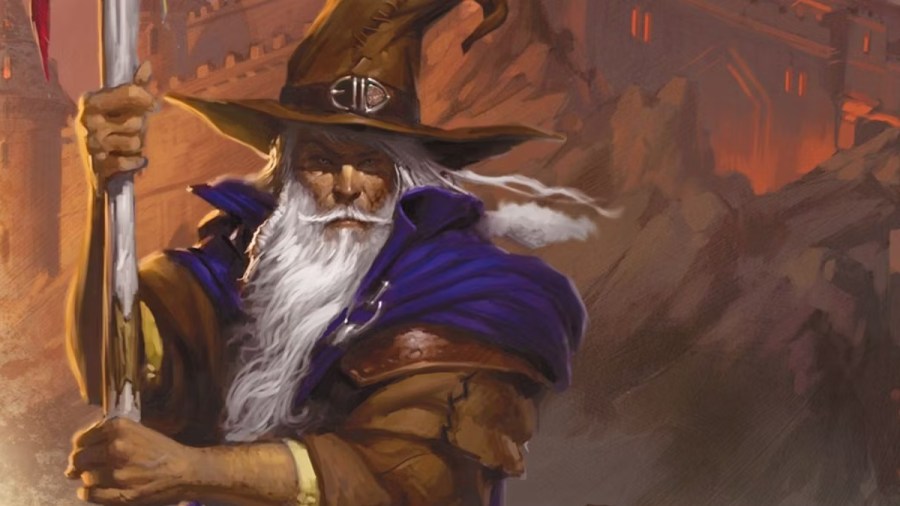
Troubled Times, Troubled Adventures: Shadowdale, part five

Chapter 5 of Shadowdale is essentially the insurance chapter to make sure the PCs are following the plot. It’s even got events planned specifically to keep them on the intended course. As always, in order to actually create a story of their own, the DM and players have to rely on random encounters.

I’ve suggested that these modules are the worst ever, but I guess in a way they could be seen as the perfect modules – not in terms of fun, but in terms of defining the difference between AD&D 1st and 2nd editions. 1st edition was all about exploration and dungeon crawling. There was very little in terms of an overarching plot and the world was built slowly. A lot of times, folks would play without a setting at all – just a dungeon and a loosely-defined home town. 2nd edition is the edition for those who love campaign settings. The Forgotten Realms hit the height of its popularity then, and innovative settings such as Dark Sun and Planescape came about. The adventures became more about heroism on an epic scale. But, at the same time, the settings got routinely demolished by novels, which TSR ranked as their big money-makers. Dark Sun was totally redesigned in the span of five books that came out immediately after its release. The Realms got wrecked numerous times, so much so that it became a tradition that remains even today.

Even when the PCs pursued these epic adventures, TSR’s official canon was constantly determined by novels. Case in point: Dead Gods, a Planescape adventure. The PCs, if they win, prevent the resurrection of the demon lord Orcus…except that later publications established Orcus’ resurrection as canon. So even if the PCs saved the day, the official material for D&D undoes their achievement.

These modules are a bridge between AD&D editions in more ways than one. They’re meant to provide a transition rules-wise, but they also highlight the shift in publication style for TSR in this era. The random encounters have a number of different solutions to them and can be a lot of fun, a la the old dungeons of 1st edition. But they don’t have any effect on the plot. The actual plot events are rigid – the PCs can’t change them, largely because they’re based on novels that became a part of the official Forgotten Realms canon. They’re effectively the more story-based adventures of 2nd edition, taken to such an extreme that the PCs have no leeway at all.

That synopsis is probably not fair to 2nd edition AD&D, which I do think was a legitimate improvement over 1st edition system-wise and flavor-wise. But the edition happened to occur in the era of Lorraine Williams’ run as CEO of TSR, during which time she regularly produced products that took a big ol’ dump on long-time gamers and ran the company into bankruptcy as a result. 2nd edition had great ideas, but often poor follow-up…a lot like these modules.

Personal rant aside, let’s get back to Shadowdale…if you dare.

Continue reading “Troubled Times, Troubled Adventures: Shadowdale, part five”
Troubled Times, Troubled Adventures: Shadowdale, part three

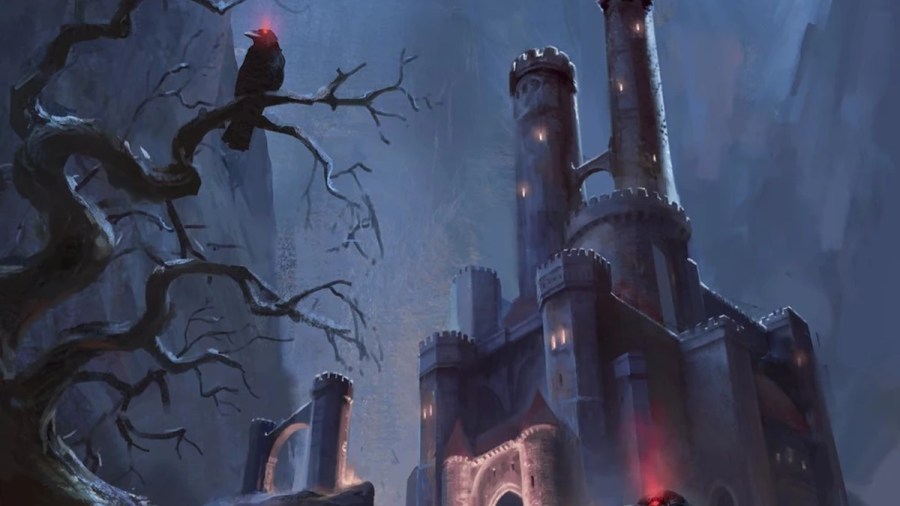
Chapter 2 of Shadowdale allowed some actual adventuring, but even still almost everything that has happened so far has come through random encounters. When it comes to the plot, the PCs have had no power whatsoever. They couldn’t help Midnight, they had to take Caitlin’s quest, and they had to allow Midnight to travel with them. Chapter 3 brings the PCs to Castle Kilgrave, which is such a hilarious name that I don’t think I could read the flavor text straight. (In other words, it’s perfect for D&D.)

But the castle provides the adventure with a dungeon, which is great for breaking up a plot railroad. Once you get in the dungeon, you’re in control to at least some extent. You choose which rooms to go into, when to look for traps, and what route to take.

Well, you normally do that. But not in this adventure, as we’ll soon see.

Continue reading “Troubled Times, Troubled Adventures: Shadowdale, part three”

Troubled Times, Troubled Adventures: Shadowdale, part two

Chapter 2 of Shadowdale opens with the PCs actually being given the quest that will get the game moving. For those keeping score, it starts on page 12. The adventure part of the module runs 36 pages. So we’re almost at the 1/3 point in the story, and the only action the PCs have seen is in whatever random encounters the DM threw together.

Continue reading “Troubled Times, Troubled Adventures: Shadowdale, part two”

Troubled Times, Troubled Adventures: Shadowdale, part one

The year was 1989, and Advanced Dungeons & Dragons was hitting its second edition. The game was being sanitized–no more demons or devils, no more half-orcs and assassins. And the focus of the game was shifting from exploration-based adventures to epic stories about heroic adventure. To make these changes work in the popular Forgotten Realms setting, TSR launched the Avatar Trilogy. The series of novels would cause the gods to fall and forever change the face of the Realms. But why stop there? As a tie-in, TSR decided to create a parallel set of adventures that allowed the PCs to play a role in the cataclysmic Time of Troubles. What could be more fun?

Considering the final product, anything.

For reasons I will harp upon over and over again, the Avatar Trilogy was a huge bust as an adventure. It took everything away from the PCs, reducing them to tourists on a grand tour of the Realms. It also highlighted everything that sucked about the setting and went out of its way to screw certain player types. And, because I have too much free time, I’m going to go over all three modules, chapter by chapter. So let’s jump right into the first module, Shadowdale, and witness the trainwreck!

Continue reading “Troubled Times, Troubled Adventures: Shadowdale, part one”

AD&D’s Planescape: The Good, the Bad, and the Mixed Bags

My interest in Dungeons & Dragons history recently led me to the Advanced D&D product Well of Worlds, released in 1994 as part of the Planescape line. That setting was beloved by fans for its weirdness and the way it turned abstract philosophy into adventuring material. Since D&D recently went back to the Planescape well with a boxed set, now seems like a good time to delve into the classic setting as it appeared in the 90s. As I tour the Well of Worlds, here’s my thoughts on what I like, dislike, and have mixed feelings about in this beloved setting.

Continue reading “AD&D’s Planescape: The Good, the Bad, and the Mixed Bags”

The Most Game-Tastic Moments in Dungeons & Dragons: Honor Among Thieves

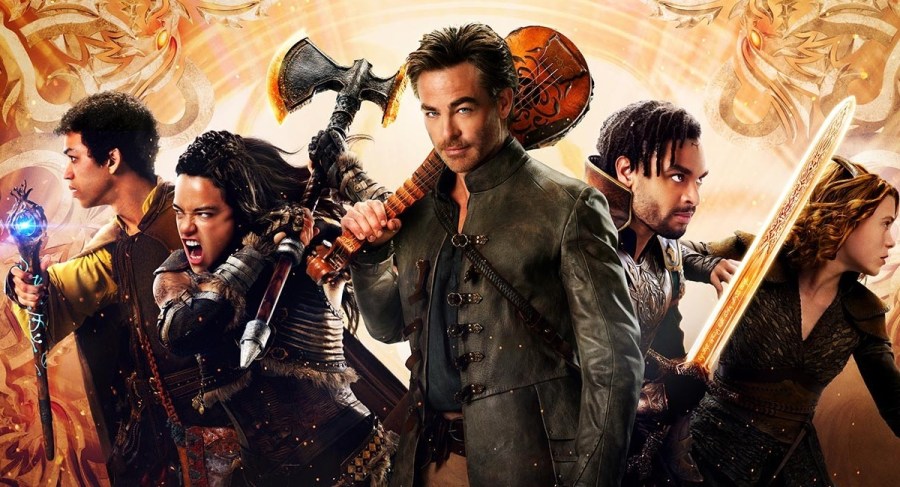
After so many years where mention of a Dungeons & Dragons movie meant some of the cringiest moments in film history, it is an absolute joy to have a good D&D movie with 2023’s Honor Among Thieves. That film managed to provide a solid, fun story spurred on by a likeable cast, and it caught a good among of accurate game lore in it as well.

Most remarkably, I found that Honor Among Thieves managed to feel like an authentic D&D session captured on the big screen. Just about everything that happened in the movie could occur in a D&D session, including stuff that isn’t in the rules but which every gamer has experienced. Here are the moments in Honor Among Thieves that really sold this film to me as a game come to life.

Continue reading “The Most Game-Tastic Moments in Dungeons & Dragons: Honor Among Thieves”

Three Editions Later: Baldur’s Gate and the Development of D&D

With its incredibly deep game play and commitment for Forgotten Realms lore (even when I wish they would ignore said lore), Baldur’s Gate 3 is a triumph for the Dungeons & Dragons franchise. More than any other computer game I’ve ever played, it feels like I’m playing a tabletop game with the production values of a Hollywood blockbuster.

But the game’s predecessors are no slouches, either. In fact, for the past 25 years, Baldur’s Gate 1 and Baldur’s Gate 2 have been unicorns that other RPGs chased. While other D&D games have strengths of their own, none quite replicated the deep and massive story of those old games while also maintaining a distinctly D&D feel.

Yet those older games, despite making Baldur’s Gate 3 possible, feel very different from the newest iteration of the franchise. Some of that is merely a matter of scope and funding; Baldur’s Gate 1 and 2 came out in older days with less technological power and far less money behind them. But a lot of it has to do with the fact that Dungeons & Dragons has changed dramatically over the years. The original used the 2nd edition rules, while Baldur’s Gate 3 uses 5th edition as its base. The rules have changed, but so have the types of stories fans want to see.

Continue reading “Three Editions Later: Baldur’s Gate and the Development of D&D”

Baldur’s Gate and the Happy Ending Override

Baldur’s Gate 3 is taking the video game world by storm. It takes the unenviable task of following up on a beloved franchise that has lain dormant for years and not only proves itself worthy but may be the best entry in the series. But while there is no curbing my excitement to return to old stomping grounds, there are some sharp pangs of regret as I see the fate of certain individuals who deserved better.

Any follow-up to the epic conclusion of Baldur’s Gate 2: Throne of Bhaal was going to have to make some decisions in how things ended canonically, since the game offers many different possible fates for Gorion’s ward and their companions. Unfortunately, that canon proves to be quite unkind to some returning faces. Some of that could have been avoided through different storytelling approaches, but much of it unfortunately comes down to how the Dungeons & Dragons has been mismanaged since the 2001 finale of Throne of Bhaal.

Naturally, spoilers for Baldur’s Gate 3 (and its much older predecessors) follow.

Continue reading “Baldur’s Gate and the Happy Ending Override”

On Character Death

Character death is a touchy subject in RPGs. Some people think the PCs should always be at risk, and that an adventure is an outright failure if at least one character doesn’t get killed off during the action. Others never have PCs bite the dust, using house rules that cause a hero to go unconscious but not die when the rules as written would have them pushing up daisies. And, as with any divisive topic with extreme opposite stances, the majority of players fall somewhere in the middle of that scale.

Continue reading “On Character Death”