Those Blasted Superfriends: Sirena, Empress of Evil

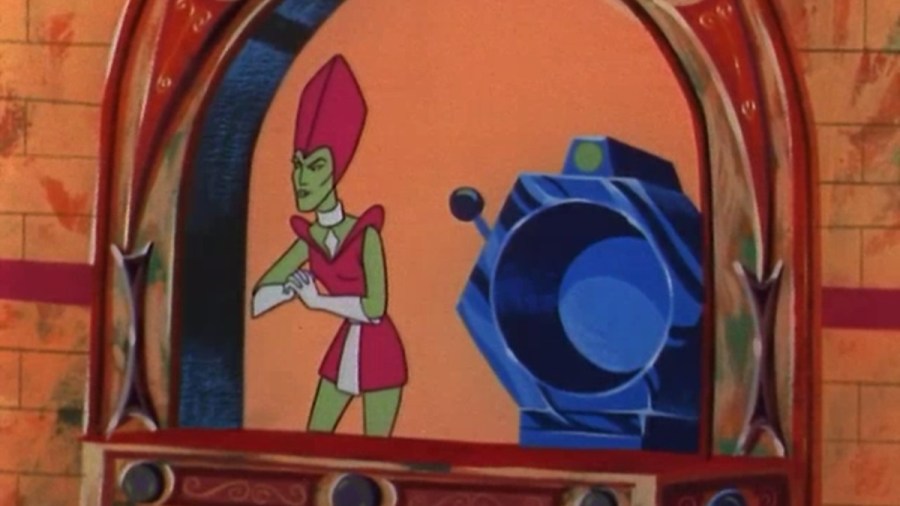
Of all the bad shows I loved as a kid, none were dearer to my heart than Superfriends. It was where I learned to loved Green Lantern, he of the cool costume and even cooler power ring. Nowadays, I recognize it as very schlocky, basically thrown together because folks figured any bright lights and weird noises could keep school-aged children entertained.

In my case, they were right.

Looking back at Superfriends, it’s like McDonald’s food: terrible, but I still get a craving for it every now and then. Thus, I am happy to share my thoughts and commentary about certain episodes, beginning with my favorite Superfriend Green Lantern taking on Sirena, the so-called Empress of Evil.

Continue reading “Those Blasted Superfriends: Sirena, Empress of Evil”

Ang Lee’s Hulk

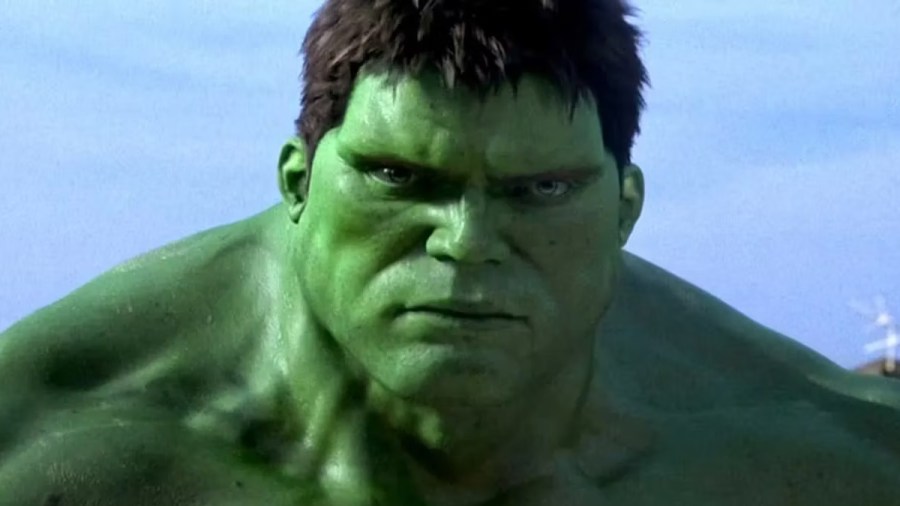
As a loud and proud Hulk fan, I get asked my opinion of the character’s film appearances fairly often. When I do, folks tend to be surprised that I’m not a huge fan of his role in the Marvel Cinematic Universe, largely because all his character development happens off-screen. Instead, my absolute favorite film interpretation of the character is Ang Lee’s 2003 movie, which met with mixed critical and box office success. Made in an era where Hollywood was still figuring out the superhero movie, Hulk took risks, showed reverence for the source material, and presented a film that was very much in the vein of the classic monster movies that provided Jack Kirby and Stan Lee inspiration for the character in the first place.

Here’s why I love this movie.

Continue reading “Ang Lee’s Hulk”

The Last Jedi, Revisited

In 2018, a yer late, I finally sat down and watched The Last Jedi. Knowing that it already had a bad reputation among fans but somehow avoiding spoilers as to why, I was pleasantly surprised and really liked the movie. It did what I thought impossible from the Star Wars franchise and challenged my expectations. The movie broke away from some tired clichés, such as the requirement that someone has to be “born special” to be a fantasy hero, and showcased through Kylo Ren what Luke would have become had he struck the Emperor down in Return of the Jedi.

Given my enjoyment of that film, you’d think that I’d have been all over the then-upcoming The Rise of Skywalker, but to this date I haven’t seen it. The replacement of Colin Trevorrow as director with JJ Abrams, who had delivered an enjoyable but very by-the-numbers film in The Force Awakens signaled to me that Disney was overcompensating for fan backlash and was looking to deliver a “safe” final installment to the trilogy. In my experience, safe filmmaking tends to be boring filmmaking.

What I know of The Rise of Skywalker tells me that my suspicions were correct. Rey was made “special” by way of birth rather than deed, there was much pandering to fans, and the villain was an Emperor that nobody particularly wanted back.

All this preamble brings me to a big question: how has The Last Jedi held up for me? Six years after I first enjoyed it, does it still entertain? And does the fact that it breaks with tone and tradition in the middle of a trilogy hurt its place in the larger franchise?

Continue reading “The Last Jedi, Revisited”

Doctor Who: An Unearthly Pilot

In November 1963, the world got its first taste of Doctor Who. The first serial, often known by the name of its first episode “An Unearthly Child,” brought a pair of schoolteachers to a junkyard to investigate a strange student of theirs and wound up sending them careening through space and time. It set the formula for many stories to come, served as a key moment in the character arc of the mysterious Doctor, and is generally a must-watch for those who want to get a feel for the classic series.

What makes “An Unearthly Child” so great? Here’s my take on a few of the key elements.

Continue reading “Doctor Who: An Unearthly Pilot”

Doctor Who’s Storybook Season

Doctor Who just finished Season One…which is really Series 14 or Season 40, depending on how you count. The season offered many new features, from a new Doctor played by Ncuti Gatwa to more money behind the scenes courtesy of a deal with Disney. It also offered new (or at least underexplored) themes to the show, including a heavy lean toward the supernatural.

If there’s one thing that defines this most recent season of Doctor Who, it’s the theme of stories. The season is structured like a fairy tale, and the stories the characters experience–and one they invent–drives the narrative of the Doctor’s latest adventure.

To illustrate what I mean, let’s go episode by episode through the tale of Ruby Sunday.

Continue reading “Doctor Who’s Storybook Season”

Doctor Who’s Emotional Growth (Revival Era)

Continued from last time, the Doctor ended his classic era as a fairly well-rounded individual…or as well-rounded as the Doctor ever gets, at least. Paul McGann’s Eighth Doctor was a culmination of the classic Doctors that had showcased the series from 1963 to 1989. He was brilliant, compassionate, quirky, and more open with his emotions than he had ever been before.

Then the Time War happened.

Between the 1996 TV movie and the 2005 series revival, the Time Lords of Gallifrey went to war with the Daleks of Skaro and nearly destroyed the universe in the process. Off-screen, the Doctor ultimately made the decision to destroy both sides, leaving him as the last of his people and carrying the weight of a double genocide on his conscience.

The revival era Doctor is basically a person going through the stages of grief. More dangerous and volatile than before, they were no longer a mere explorer but often verged on being a vengeful god–someone who wanted to save lives, but who could do terrible things when angered.

Continue reading “Doctor Who’s Emotional Growth (Revival Era)”

Doctor Who’s Emotional Growth (Classic Era)

The Fifteenth Doctor has landed, and he seems to be the most emotionally healthy version of the character that we’ve seen in the show’s 60-year history. Still carrying his flaws and trauma, he has nonetheless shown openness about his past and a willingness to express his emotions rather than hide behind a stoic facade.

While the Doctor will undoubtedly have new traumas and occasional reversions in personality in the years to come, a relatively healthy Time Lord is a refreshing change for the character. It’s also a culmination of 15 different regenerations, each of which shaped him into the man he is today.

While the concept of regeneration is mostly a conceit to keep the show going even after the departure of a lead actor, the long-running nature of Doctor Who allows a bigger scope for character development than you typically find in serial fiction. Each of the Doctor’s previous incarnations made him the person he is today, and this is how.

Continue reading “Doctor Who’s Emotional Growth (Classic Era)”

A Kind of Magic: Highlander: The Search for Vengeance

There is one more.

Twenty-one years after the original Highlander showed off potential that would never be fully realized, a decade after the TV series had hit the skids, I watched the Russian version of Highlander: The Source and completely gave up on this franchise. Then, in the midst of my throes of agony, someone tipped me off as to the existence of an anime called Highlander: The Search for Vengeance.

This movie has all the elements that make up a bad Highlander film. A post-apocalyptic future. Magic. Ghosts. But you know what? It is awesome.

Continue reading “A Kind of Magic: Highlander: The Search for Vengeance”

A Kind of Magic: Highlander: The Source, part two

Picking up from where we left off last time

After Joe casually drops the fact that the the Watcher organization no longer exists, he informs Duncan that Methos and the other remaining immortals are looking for the Source, and Duncan is required to come along because Anna is joining up with them. Wait, what?!

Continue reading “A Kind of Magic: Highlander: The Source, part two”

A Kind of Magic: Highlander: The Source, part one

Highlander: The Source is the suckiest thing that ever sucked.

Believe it or not, it is worse than Highlander II. It has worse characterization than Highlander: Endgame. It was intended to be the first part of a trilogy of films, but instead stands as one final middle finger to fans. It systematically goes through everything that is iconic about the Highlander franchise and destroys it.

I have a really hard time not calling Highlander: The Source the single worst movie I have ever seen. Triumph of the Will has always stood out as the iconic terrible film to me, with monstrous content supporting the Nazi party and a pace that makes it feel like a week of torture, but it at least had some artful directing to it. The Russian version of Solaris is boring as all hell, but has something thought-provoking and eerie in its conclusion. Even Tommy Wiseau’s The Room, one of the single poorest examples of acting, writing, and directing in modern cinema, is at least so bad it’s funny. The Source isn’t even something I can laugh at. It’s like somebody systematically set out to make the worst movie of all time and proceeded to accomplish that goal with all the precision efficiency of an unstoppable bad movie-making machine.

Between Highlander II and Highlander: The Source, this single franchise has not one, but two of the worst movies ever made. How is that even possible?

Continue reading “A Kind of Magic: Highlander: The Source, part one”