A Kind of Magic: Highlander: The Source, part two

Picking up from where we left off last time

After Joe casually drops the fact that the the Watcher organization no longer exists, he informs Duncan that Methos and the other remaining immortals are looking for the Source, and Duncan is required to come along because Anna is joining up with them. Wait, what?!

Continue reading “A Kind of Magic: Highlander: The Source, part two”

A Kind of Magic: Highlander: The Source, part one

Highlander: The Source is the suckiest thing that ever sucked.

Believe it or not, it is worse than Highlander II. It has worse characterization than Highlander: Endgame. It was intended to be the first part of a trilogy of films, but instead stands as one final middle finger to fans. It systematically goes through everything that is iconic about the Highlander franchise and destroys it.

I have a really hard time not calling Highlander: The Source the single worst movie I have ever seen. Triumph of the Will has always stood out as the iconic terrible film to me, with monstrous content supporting the Nazi party and a pace that makes it feel like a week of torture, but it at least had some artful directing to it. The Russian version of Solaris is boring as all hell, but has something thought-provoking and eerie in its conclusion. Even Tommy Wiseau’s The Room, one of the single poorest examples of acting, writing, and directing in modern cinema, is at least so bad it’s funny. The Source isn’t even something I can laugh at. It’s like somebody systematically set out to make the worst movie of all time and proceeded to accomplish that goal with all the precision efficiency of an unstoppable bad movie-making machine.

Between Highlander II and Highlander: The Source, this single franchise has not one, but two of the worst movies ever made. How is that even possible?

Continue reading “A Kind of Magic: Highlander: The Source, part one”

Superhero Evolutions: Wonder Woman, part two

Through the 1980s, Wonder Woman changed a lot due largely to editorial laziness and inconsistent writing. People just couldn’t be bothered to try and keep her consistent from one issue to another up until Perez’s post-Crisis reboot. Going into the 90s, though, Wonder Woman changed even more, not due (entirely) to creator laziness but rather due to attempts to repeatedly market her or reinvent her for a changing crowd.

The 1990s brought a lot of change to superhero comics. Fans veered toward the idea of “grim and gritty” and superheroes who were less idealistic than the Silver Age icons. Paragon heroes like Superman and Wonder Woman suffered as a result. The market also targeted comic book speculators, the folks who mistakenly thought that buying special edition comics was a good investment. As a result, there was a big push to churn out major event after major event in an attempt to convince the speculators to buy variant covers, holo-foil covers, and comics where the iconic superheroes were supposedly “changed forever.” The death of Superman is a good example of this, with people rushing out to buy the issue where he died under the impression that it would make them rich someday. The fact is that such issues A) meant nothing in a comics universe where death was a speedbump, and B) were not rare like the valuable comics of the Golden and Silver Ages, and thus never really increased in value. That didn’t stop speculators from buying into comics, however, nor did it stop Marvel and DC from creating constant upheaval in their stories to appeal to said speculators. Wonder Woman had to face this battle as well as the fact that DC didn’t really know what to do with the iconic female superhero. She was a feminist character in a market primarily composed of adolescent males. So how do you get her to sell to high schoolers?

Continue reading “Superhero Evolutions: Wonder Woman, part two”

Superhero Evolutions: Wonder Woman, part one

“Go in peace my daughter. And remember that, in a world of ordinary mortals, you are a Wonder Woman.”

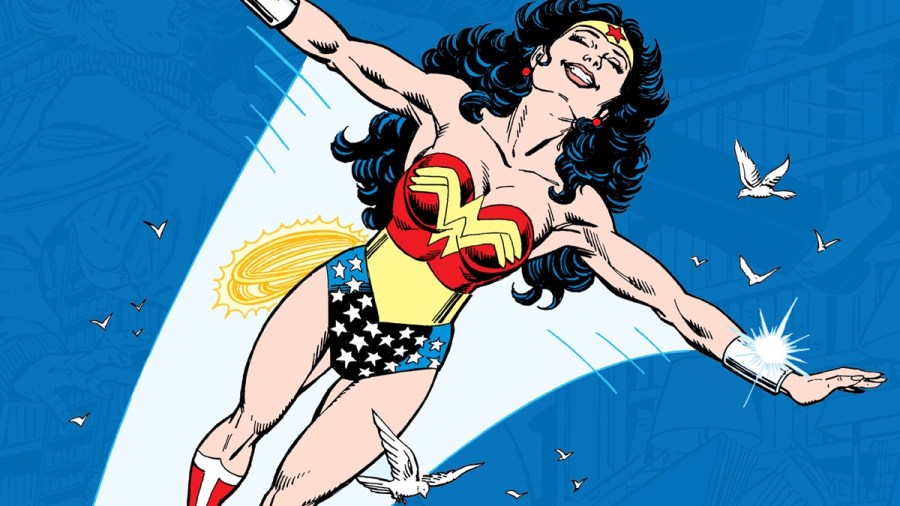
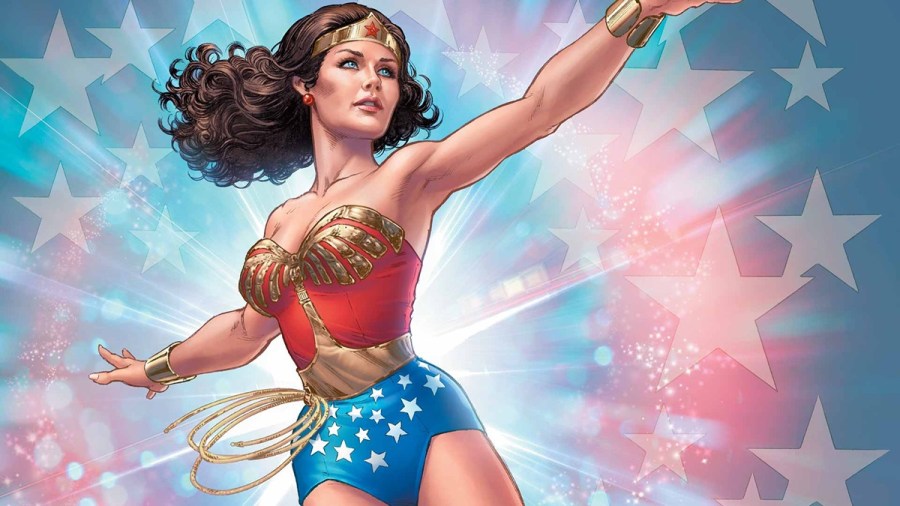
Wonder Woman has changed a lot in both powers and looks in her 80-plus years of existence. Even today, in an era where creators try to keep continuity more or less consistent, she changes radically from writer to writer. So let’s look at the greatest of the female superheroes, her origins, and the changes she’s been through over the years.

Continue reading “Superhero Evolutions: Wonder Woman, part one”

Troubled Times, Troubled Adventures: Tantras, part six

And now we’re on the final chapter of Tantras. In a good module, this would be a massive and memorable set-piece that would have the players talking about it years later. Bane is about to invade Tantras, meaning that he’s going to do battle with Torm. While chaos rages in the city, the PCs have to find their way to the Tablet of Fate, all the while dodging the two brawling gods in the streets.

But this is the Avatar Trilogy, meaning that interesting choices and perilous scenarios aren’t really allowed. The PCs are accompanied by Midnight, Adon, and Kelemvor, who will do everything for them if necessary. Additionally, Elminster is around this time, grabbing the heroes by the wrist and leading them along the way.

Continue reading “Troubled Times, Troubled Adventures: Tantras, part six”

Troubled Times, Troubled Adventures: Tantras, part five

The old saying from Spaceballs is that evil will always triumph because good is dumb. In the Forgotten Realms, it’s the other way around – evil is so very, very stupid. To illustrate that point, Chapter 5 opens up with the following off-screen event:

“Cyric arrives in Scardale, leading a Zhentilar force. To test this rising star in his ranks, Bane has sent him (along with Durrock, the assassin who led the assault on the PCs) to Tantras, to kill Kelemvor for his treachery and to capture Midnight. Bane is worried that the PCs are getting close to the Tablet of Fate.”

You would think that Bane curing Kelemvor of his panther-itis would have come with a price, but it didn’t. Bane gave Kelemvor everything he needed on good faith that the warrior would betray his friends. Moreover, he’s worried that the PCs are getting close to the Tablet of Fate…didn’t he just capture them last chapter? It’s a case of, “Why don’t you just kill them?” He knows that Midnight is the one of value, and she was sitting bound and drugged in a cell when either Adon or the PCs saved her. Had Bane just killed the helper characters, he wouldn’t have had to make his idiot bargain with Kelemvor in the first place. Not that I’m advocating that the PCs should have been killed off, but it would have been nice to see a villain show some competence. Bane supposedly got his divinity by tricking the old god of death, Jergal, into relinquishing his power. Did Jergal have the intelligence of a tree stump, or has Bane just become really stupid in his later years?

Before the events begin, the PCs finally arrive in Tantras. A guardsman calls out to them as they dock:

“Ho, the ship!” bellows one, from a raised stone deck ahead of you. “Lose way – you’re too fast in, by far! Fend you off from these” – he waves at three gigantic, seagull-covered spires, rising dark and glistening from the water – “and turn in here. That beyond’s for larger boats. Turn in, I say!”

Around the officer, as he speaks, a dozen archers come to look down at you, and ready shafts to their bows.

Wait…what?

This is going a bit far…the designer is begging to give the PCs an excuse to get killed here. The docking could have gone nice and smooth, but instead the PCs’ first impression of Tantras is thirty archers aiming bows at them for what amounts to illegal parking. If the PCs ignore the warning, they become perforated. If they have common sense, they dock and everything goes smoothly. An adventure is perilous enough as is…is it really necessary for a module to contain the possibility of the PCs getting killed by overzealous traffic cops?

Continue reading “Troubled Times, Troubled Adventures: Tantras, part five”

Troubled Times, Troubled Adventures: Tantras, part four

Chapter 4 picks up after the PCs have been captured and brought to Scardale. They had to go to Scardale to get to Tantras anyway, so I’m not totally sure why there was such a need to have them captured. Maybe the capture was actually meant to enforce the plot in case the players have any resistance left. I haven’t read the novels in a long while, so maybe this was a scene from the novel. Or maybe the capture was put in after the fact because the module was a bit short page-count wise and they needed to beef it up. Either way, the PCs are bound for Scardale no matter what.

Continue reading “Troubled Times, Troubled Adventures: Tantras, part four”

Troubled Times, Troubled Adventures: Tantras, part three

Chapter 3 starts off with a big block of off-stage events for the DM that is not meant to be shared with the PCs. The NPC Kelemvor continues to hunt the PCs, but has doubts about doing so because he feels they were wrongly imprisoned. In an editorial oversight, the text also refers to the PCs as “his former companions,” when he hasn’t been introduced directly in the adventure. Like Adon, Kelemvor is being shoved into the plot because he was in the novels. It seems like Shadowdale was set up to at least try to allow the PCs some wiggle-room away from the events of the book, but that Tantras is running lock-step with the novel. I’m thinking some tight deadlines were involved, resulting in this module (and probably the whole series) getting rushed out before it was even proofread or playtested. The latter might be a moot point, because I’m not entirely sure that TSR under Lorraine Williams ever actually playtested their products.

In other off-stage events, Myrkul has restored Bane after his battle against Elminster at the end of Shadowdale. Bane’s new goal is to capture Midnight, whom he correctly believes to be linked to the now-dead Mystra.

Continue reading “Troubled Times, Troubled Adventures: Tantras, part three”

Troubled Times, Troubled Adventures: Tantras, part two

Chapter 2 is about as close as Tantras gets to resembling an actual adventure. It details the trip down the Ashaba River, which is a tumultuous one thanks to the magical chaos effecting the land. It really boils down to a series of random encounters that don’t have a huge effect on the plot, but those encounters are particularly precious in these adventures. After all, they’re the only times when the PCs get to actually go something for themselves.

Continue reading “Troubled Times, Troubled Adventures: Tantras, part two”

Troubled Times, Troubled Adventures: Tantras, part one

Elminster has been murdered.

And to make matters worse, the player characters who helped save Shadowdale from the armies of Zhentil Keep in Shadowdale (FRE1) have been sentenced to death for killing the old sage. They’re innocent, of course, but in this time of troubles in the Realms, truth and justice are not always served. Imprisoned in the Tower of Ashaba, the heroes must escape if they are to survive!

Later, when the heroes start their quest for the first of the mysterious Tablets of Fate – mighty artifacts stolen from the overlord of the gods himself – they come up against an even greater peril: Bane, the God of Strife, and his ally, the God of Death, have set in motion a plot to capture the heroes and their companions. You must face deadly assassins, nightmarish monsters, and violent storms on your way across the Dalelands. And the worst threat of all is an unexpected one – the man who helped you earlier has now joined the side of Bane and the forces of Zhentil Keep.

Perhaps it’s the rushed ending of Shadowdale, but the blurb for Tantras doesn’t nearly seem as appealing as the one from the previous module did. Maybe it’s because of the whole “sentenced to death” line – the last module ended with the PCs being accused of killing Elminster, but not sentenced. One would assume that Lord Mourngrym, a fair man who the heroes had a chance to speak with in the last adventure, would give them a just trial. But if we’re really starting off with being sentenced to death, it looks like the opportunity for the PCs to defend themselves will never really get realized. A shame, as trials in RPGs can be amazingly satisfying when done well.

Continue reading “Troubled Times, Troubled Adventures: Tantras, part one”