Troubled Times, Troubled Adventures: Tantras, part one

Elminster has been murdered.

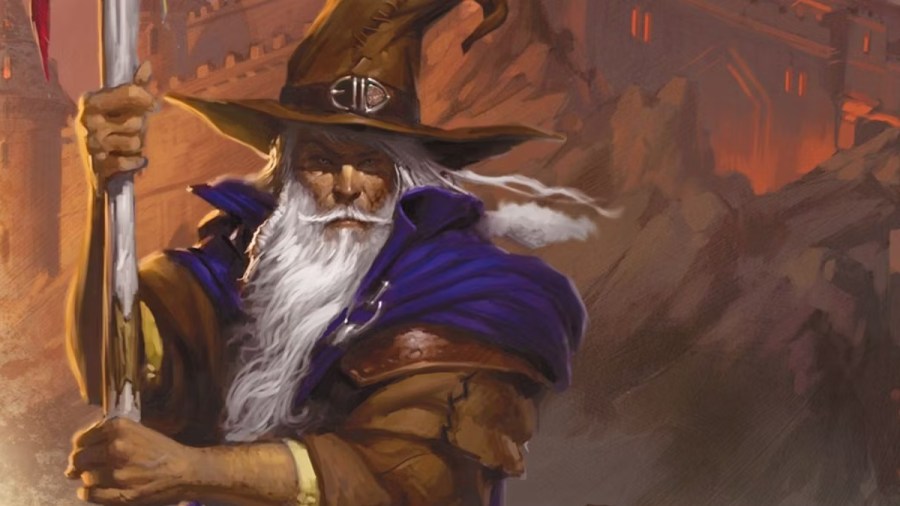
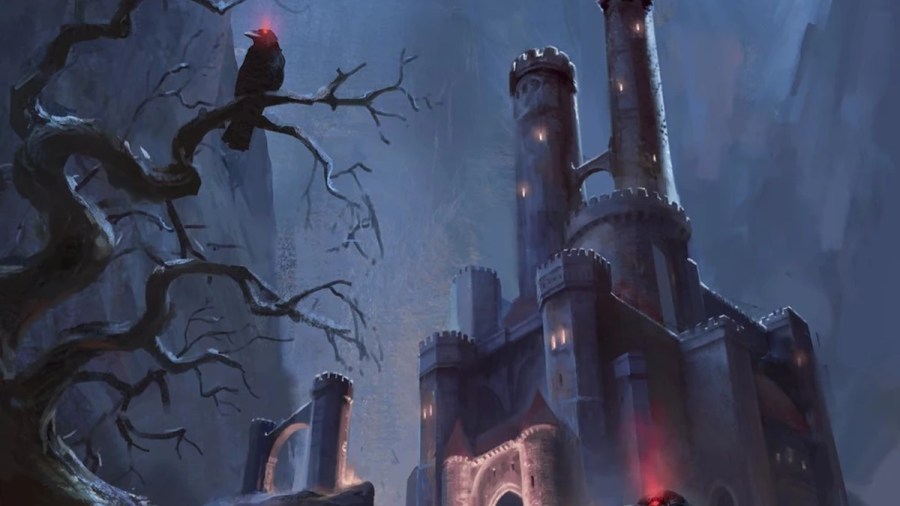
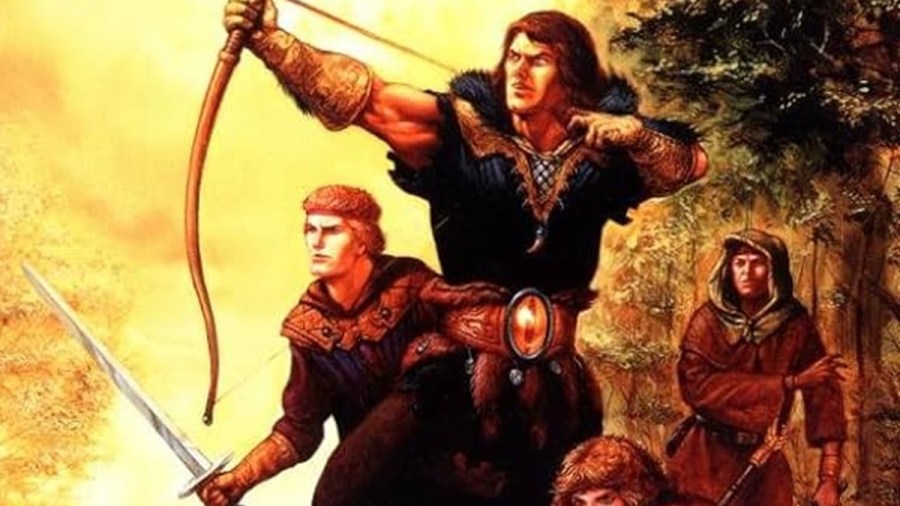
And to make matters worse, the player characters who helped save Shadowdale from the armies of Zhentil Keep in Shadowdale (FRE1) have been sentenced to death for killing the old sage. They’re innocent, of course, but in this time of troubles in the Realms, truth and justice are not always served. Imprisoned in the Tower of Ashaba, the heroes must escape if they are to survive!

Later, when the heroes start their quest for the first of the mysterious Tablets of Fate – mighty artifacts stolen from the overlord of the gods himself – they come up against an even greater peril: Bane, the God of Strife, and his ally, the God of Death, have set in motion a plot to capture the heroes and their companions. You must face deadly assassins, nightmarish monsters, and violent storms on your way across the Dalelands. And the worst threat of all is an unexpected one – the man who helped you earlier has now joined the side of Bane and the forces of Zhentil Keep.

Perhaps it’s the rushed ending of Shadowdale, but the blurb for Tantras doesn’t nearly seem as appealing as the one from the previous module did. Maybe it’s because of the whole “sentenced to death” line – the last module ended with the PCs being accused of killing Elminster, but not sentenced. One would assume that Lord Mourngrym, a fair man who the heroes had a chance to speak with in the last adventure, would give them a just trial. But if we’re really starting off with being sentenced to death, it looks like the opportunity for the PCs to defend themselves will never really get realized. A shame, as trials in RPGs can be amazingly satisfying when done well.

Continue reading “Troubled Times, Troubled Adventures: Tantras, part one”

Superhero Evolutions: Hal Jordan

In brightest day, in blackest night, no evil shall escape my sight. Let those who worship evil’s might beware my power…Green Lantern’s light!”

Next to the Incredible Hulk, Hal Jordan is my favorite superhero. As a kid, I liked him because he had the coolest costume and the coolest superpower. As an adult, I like him because he’s fearless and heroic but also a hard-headed moron. I can sympathize with a character who is kind of a jerk at times but who has a good heart and will do the right thing when the chips are down. I don’t really know of too many other characters in comics who are believably flawed like that. Arguably, there’s Guy Gardner, another Green Lantern, and over in Marvel there’s Hank Pym, who is like that but veers more toward overt mental illness at times.

Overall, I find Hal to be a strong enough and believable character to cross over the nostalgia filter and move from my childhood hero to my second favorite superhero ever. The journey hasn’t been easy for Hal, though. He was victim to one of the biggest cases of character derailment in comics, and it took him a full decade to recover from it.

So let’s take a look at the history of Hal Jordan, the Silver Age Green Lantern, as he went from hero to psychopath to hero once again.

Continue reading “Superhero Evolutions: Hal Jordan”

Troubled Times, Troubled Adventures: Shadowdale, part six

And now we’re at Chapter 6, the last section of this adventure. There are no random encounters in this chapter – everything that happens from here on out is plot-related.

To summarize the story so far:

  • In Chapter 1, there was a really bad storm. A bunch of important stuff happened, but the PCs didn’t get to see any of it.
  • In Chapter 2, a mysterious woman named Caitlan begged the PCs to help find her mysterious mistress who was being held captive at Castle Kilgrave. Whether it was the chance for adventure, the inviting sound of the castle’s name, or the fact that Caitlan cried and groveled if they refused, the PCs took the job. They were also joined by a magic-user named Midnight, whether they wanted her or not.
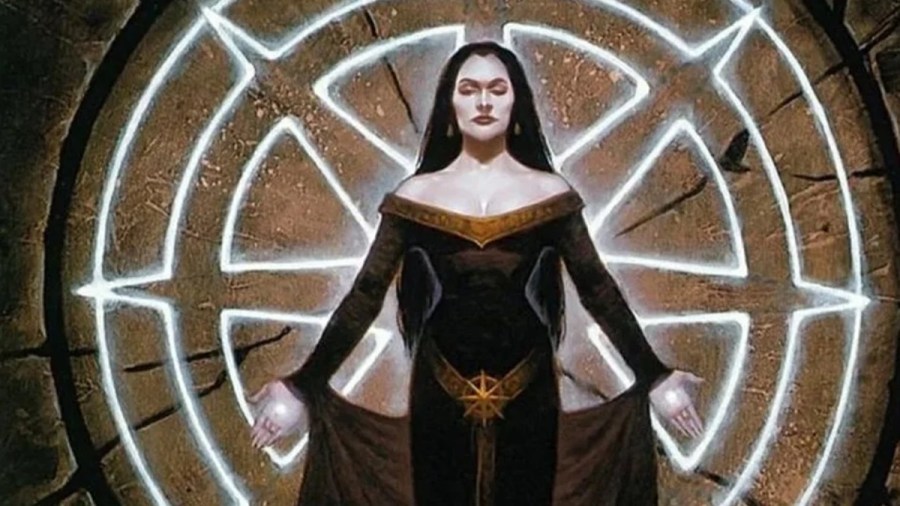
  • In Chapter 3, a bunch of ill-defined stuff happened at Castle Kilgrave. The text is vague, leaving it up to the DM to come up with personalized material for each of the players. I thought that modules were supposed to make less work for the DM, but whatever. What is defined is that Caitlan was actually an avatar of Mystra, the goddess of magic, who had been captured by Bane, the god of strife. Mystra merged with Caitlan and took a plot MacGuffin from Midnight.
  • In Chapter 4, a ton of cool stuff happened, including the death of Mystra and the PCs finally being informed that the gods have all been cast down from the heavens. Unfortunately, the PCs didn’t get to take part in any of these events – it was all just read aloud by the DM.
  • In Chapter 5, the PCs and Midnight had to set out for Shadowdale to meet Elminster the Sage. If they didn’t, a 14th-level paladin showed up to kill them.

Let’s see if this chapter goes any better…

Continue reading “Troubled Times, Troubled Adventures: Shadowdale, part six”

Troubled Times, Troubled Adventures: Shadowdale, part five

Chapter 5 of Shadowdale is essentially the insurance chapter to make sure the PCs are following the plot. It’s even got events planned specifically to keep them on the intended course. As always, in order to actually create a story of their own, the DM and players have to rely on random encounters.

I’ve suggested that these modules are the worst ever, but I guess in a way they could be seen as the perfect modules – not in terms of fun, but in terms of defining the difference between AD&D 1st and 2nd editions. 1st edition was all about exploration and dungeon crawling. There was very little in terms of an overarching plot and the world was built slowly. A lot of times, folks would play without a setting at all – just a dungeon and a loosely-defined home town. 2nd edition is the edition for those who love campaign settings. The Forgotten Realms hit the height of its popularity then, and innovative settings such as Dark Sun and Planescape came about. The adventures became more about heroism on an epic scale. But, at the same time, the settings got routinely demolished by novels, which TSR ranked as their big money-makers. Dark Sun was totally redesigned in the span of five books that came out immediately after its release. The Realms got wrecked numerous times, so much so that it became a tradition that remains even today.

Even when the PCs pursued these epic adventures, TSR’s official canon was constantly determined by novels. Case in point: Dead Gods, a Planescape adventure. The PCs, if they win, prevent the resurrection of the demon lord Orcus…except that later publications established Orcus’ resurrection as canon. So even if the PCs saved the day, the official material for D&D undoes their achievement.

These modules are a bridge between AD&D editions in more ways than one. They’re meant to provide a transition rules-wise, but they also highlight the shift in publication style for TSR in this era. The random encounters have a number of different solutions to them and can be a lot of fun, a la the old dungeons of 1st edition. But they don’t have any effect on the plot. The actual plot events are rigid – the PCs can’t change them, largely because they’re based on novels that became a part of the official Forgotten Realms canon. They’re effectively the more story-based adventures of 2nd edition, taken to such an extreme that the PCs have no leeway at all.

That synopsis is probably not fair to 2nd edition AD&D, which I do think was a legitimate improvement over 1st edition system-wise and flavor-wise. But the edition happened to occur in the era of Lorraine Williams’ run as CEO of TSR, during which time she regularly produced products that took a big ol’ dump on long-time gamers and ran the company into bankruptcy as a result. 2nd edition had great ideas, but often poor follow-up…a lot like these modules.

Personal rant aside, let’s get back to Shadowdale…if you dare.

Continue reading “Troubled Times, Troubled Adventures: Shadowdale, part five”

Troubled Times, Troubled Adventures: Shadowdale, part three

Chapter 2 of Shadowdale allowed some actual adventuring, but even still almost everything that has happened so far has come through random encounters. When it comes to the plot, the PCs have had no power whatsoever. They couldn’t help Midnight, they had to take Caitlin’s quest, and they had to allow Midnight to travel with them. Chapter 3 brings the PCs to Castle Kilgrave, which is such a hilarious name that I don’t think I could read the flavor text straight. (In other words, it’s perfect for D&D.)

But the castle provides the adventure with a dungeon, which is great for breaking up a plot railroad. Once you get in the dungeon, you’re in control to at least some extent. You choose which rooms to go into, when to look for traps, and what route to take.

Well, you normally do that. But not in this adventure, as we’ll soon see.

Continue reading “Troubled Times, Troubled Adventures: Shadowdale, part three”

Troubled Times, Troubled Adventures: Shadowdale, part two

Chapter 2 of Shadowdale opens with the PCs actually being given the quest that will get the game moving. For those keeping score, it starts on page 12. The adventure part of the module runs 36 pages. So we’re almost at the 1/3 point in the story, and the only action the PCs have seen is in whatever random encounters the DM threw together.

Continue reading “Troubled Times, Troubled Adventures: Shadowdale, part two”

Troubled Times, Troubled Adventures: Shadowdale, part one

The year was 1989, and Advanced Dungeons & Dragons was hitting its second edition. The game was being sanitized–no more demons or devils, no more half-orcs and assassins. And the focus of the game was shifting from exploration-based adventures to epic stories about heroic adventure. To make these changes work in the popular Forgotten Realms setting, TSR launched the Avatar Trilogy. The series of novels would cause the gods to fall and forever change the face of the Realms. But why stop there? As a tie-in, TSR decided to create a parallel set of adventures that allowed the PCs to play a role in the cataclysmic Time of Troubles. What could be more fun?

Considering the final product, anything.

For reasons I will harp upon over and over again, the Avatar Trilogy was a huge bust as an adventure. It took everything away from the PCs, reducing them to tourists on a grand tour of the Realms. It also highlighted everything that sucked about the setting and went out of its way to screw certain player types. And, because I have too much free time, I’m going to go over all three modules, chapter by chapter. So let’s jump right into the first module, Shadowdale, and witness the trainwreck!

Continue reading “Troubled Times, Troubled Adventures: Shadowdale, part one”

Plans for the Future

Although it has moved web addresses here and there, the Screamsheet has been my online home for 24 years. It started as a creative outlet during the darkest period of my life and evolved into a sprawling blog, complete with a fair number of offensive and immature rants that thankfully have been sent into the abyss of deletion.

Regardless of what the site has been or how frequently I update it, this place serves an important role in my life. It’s an opportunity for me to embrace my passions, document where I’ve been, and share my life with people.

One thing it has not been for some time is a place where I can advertise my fiction and gaming writing. For some time, I have relegated ChBrooks.com as the place where I announce new publications. Back when I started that site, it was necessary because my rantings at the Screamsheet were not something I wanted associated with my writing life.

Time and maturity have smoothed out some of my rough spots, however, and I’m weighing the cost and benefits of having another site. If it goes the way I’m thinking, I might wind down ChBrooks.com over the coming months and shift content over here. That would mean an influx of fiction and occasional announcements when I have a new publication coming out.

Writing is a major part of my life, and since the Screamsheet is a reflection of who I am, it probably makes sense to folds those two worlds together again. Nothing is set in stone yet, but don’t be surprised if you find some short stories popping up now and again amidst my rantings about old comics and movies.

Featured Image: Mike Haufe, CC BY-NC 2.0 Deed, cropped and resized

AD&D’s Planescape: The Good, the Bad, and the Mixed Bags

My interest in Dungeons & Dragons history recently led me to the Advanced D&D product Well of Worlds, released in 1994 as part of the Planescape line. That setting was beloved by fans for its weirdness and the way it turned abstract philosophy into adventuring material. Since D&D recently went back to the Planescape well with a boxed set, now seems like a good time to delve into the classic setting as it appeared in the 90s. As I tour the Well of Worlds, here’s my thoughts on what I like, dislike, and have mixed feelings about in this beloved setting.

Continue reading “AD&D’s Planescape: The Good, the Bad, and the Mixed Bags”