Originally published on BabyCenter.com October 8, 2015
Superhero comics are a big part of my life, and it seems I’ve handed that down to my kids as well. Reading a comic book every night as part of the bedtime routine has certainly helped. One problem with mainstream comics, though, is that they’re quite often very sexist.
With the birth of our daughter, I made a more concerted effort to find comics that had strong female characters in them. This meant stuff like Wonder Woman and She-Hulk (though you still need to be careful of which writer is handling those characters) as well as non-superhero fare such as Fables.
How can you tell if a story has a strong female character? Basically, if you can remove the woman and replace her with a pot of gold or other material reward, it fails the test. Even stories with women front and center often turn them into prizes to be won instead of real characters.
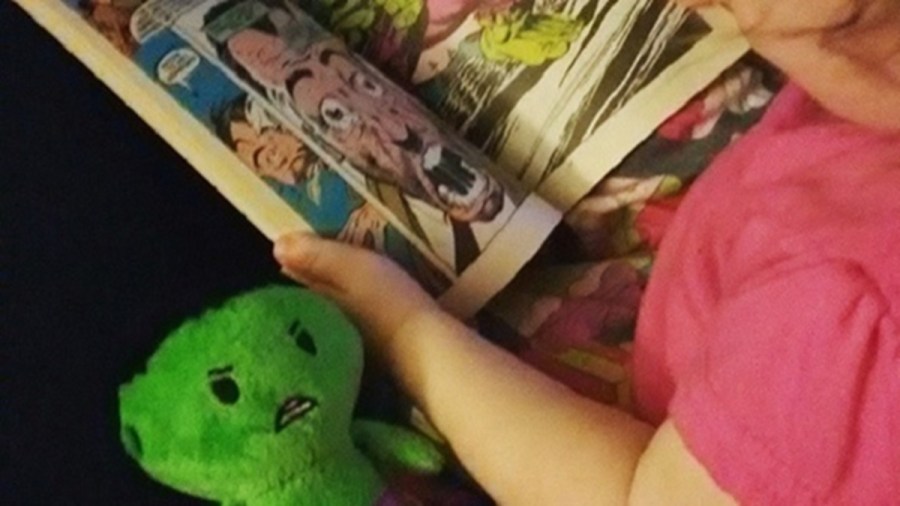
The end result of my attempt to offer equal representation to both superhero genders is this: my son’s favorite superhero is Wonder Woman, and my daughter’s is the Hulk.
This makes plenty of sense. After all, it’s not like there’s a law saying that the character you most identify with has to be the same gender as you or even be anything like you at all. You just have to find something about them that sparks your imagination in just the right way.
The revelation also shows a difference between myself and my kids. My son likes Wonder Woman because he sees her as a friend. My daughter likes the Hulk because we have a bunch of Hulk toys and he makes a good playmate. My kids are looking for characters they can have fun with.
As a kid, I usually projected myself onto the characters. I liked Superman because he was a wish fulfillment and I liked to imagine myself flying. I like the Hulk because his messed-up head is similar to mine. I do more role-playing with my fiction, while my kids do more normal playing.
I don’t know what to make of that difference, but my kids’ selection of their favorite characters does tell me something. It tells me that I made a good choice in trying to introduce more diverse characters, and that I should have been doing that much earlier on.
The assumption that kids will automatically go for characters who have the same gender, skin color, or what have you gets regurgitated often in media. It’s why when DC Comics markets toward girls, they create an entirely new show with an all-female cast instead of toning down the boys’ club mentality in their normal stories.
In the end, I think it’s important to offer up as diverse an experience as possible to let your kids find the stuff they like best. Let your kids watch Frozen and follow it up with Teenage Mutant Ninja Turtles. They’ll latch on to what they enjoy the most.
The idea that boys and girls will only like certain things is something that pervades our media and our culture. The more you expose your kids to a wide range of options, the easier they’ll find their own voices and the more they’ll surprise you.
Featured Image: Sarah Brooks
 Babbling Brooks