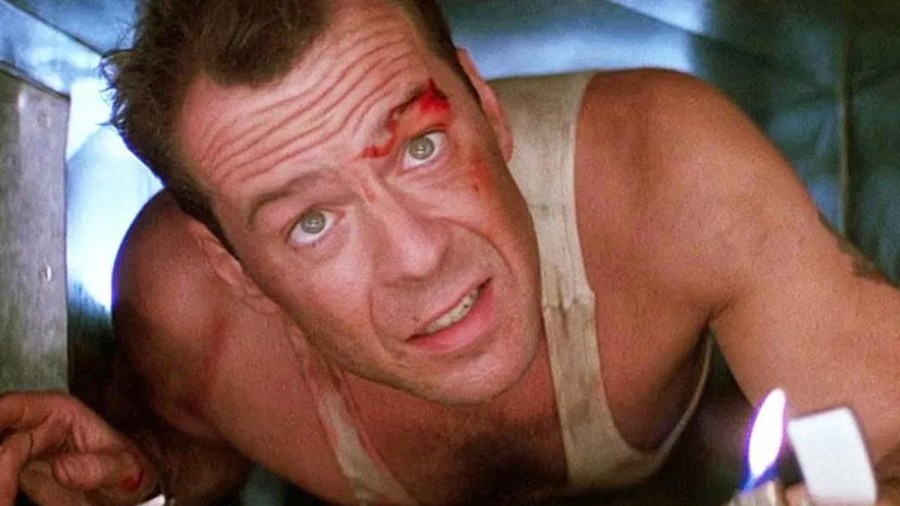
Die Hard counts as a Christmas movie. Yes it does.
Things Just Came Together
In terms of history, I can’t imagine what must have been going on in the studio when the film was conceptualized. It is based on Rockerick Thorp’s novel Nothing Lasts Forever, and was originally conceived of as a sequel to the Arnold Schwarzenegger movie Commando. But when Schwarzenegger’s other sequel, Conan the Destroyer, turned into a box office bomb, he backed out of the project, forcing them to rework the film as the start of a new franchise. Somewhere along the way, in recasting Schwarzenegger’s role, someone must have said, “Hey, why don’t we go get that guy from Moonlighting?”
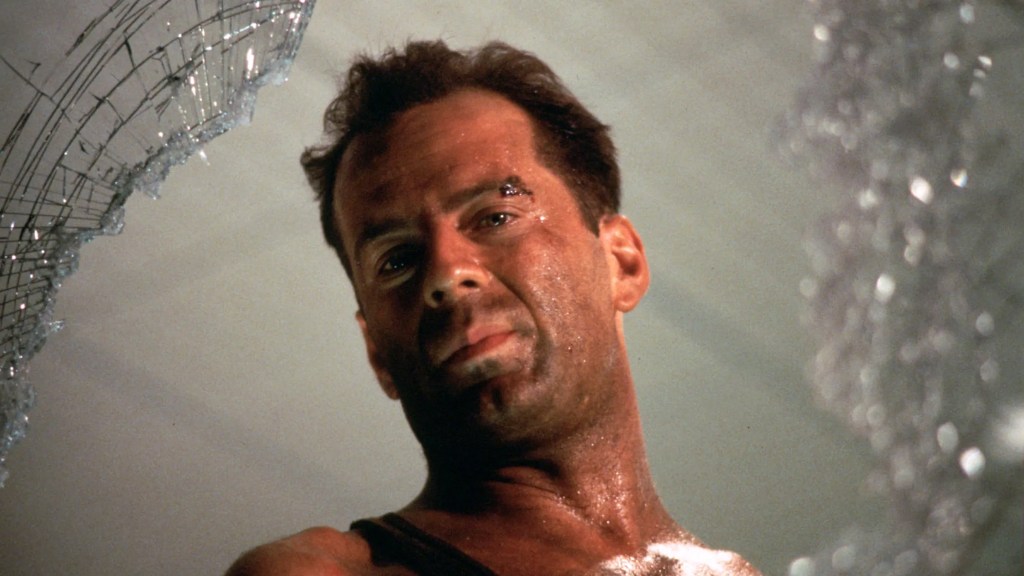
Bruce Willis at the time was a comedian, not an action hero. He got big as one of the stars of the TV show Moonlighting, and was known more for his wisecracks than his action potential. I can’t fathom how this comedian turned into an action hero, but him landing in Die Hard has to be a Christmas miracle in and of itself. In the end, though, his comedic roots helped this movie a lot. While the Schwarzenegger-style action hero had some one-liners and deadpan jokes, Bruce Willis as John McClane had a lot of charisma due to his ability to point out how ridiculous the situation he was in really was. Through facial expressions, the timing of his delivery, and his generally likable persona, he really helped to make John McClane a great everyman, which is key in Die Hard‘s success both as an action movie and a Christmas film.
With Bruce Willis as the likable protagonist and Alan Rickman as a ruthless thief/former terrorist, there is no disputing the quality of Die Hard as an action movie. There is some disputing the film as a Christmas movie, though. After all, despite the fact that it takes place on Christmas Eve, there doesn’t seem to be too much linking Die Hard to the holiday spirit, does there?
Well, let’s put it this way: if Alan Rickman had been in green body paint and a Santa Claus outfit, would this have been the best adaptation ever of How the Grinch Stole Christmas?
Yes. Yes it would have.
Greed versus Compassion
Die Hard hits at the heart of the Christmas holiday, and arguably of American society in general, by exploring the theme of greed versus compassion.
To start the movie, the Nakatomi Corporation celebrates their most prosperous year ever with a grand old Christmas party. Hans Gruber and his compatriots use the opportunity to steal $60 million of that wealth. The film’s multiple antagonists are driven by their greed and nothing else. That doesn’t just go for Hans, either. Be it a news reporter who puts the McClane household in danger by giving a live interview of their children on television, or some overly enthusiastic FBI agents who play right into Hans Gruber’s hands through their desire to act like war heroes, everyone who has a selfish motivation in the movie is a villain in some way or another.
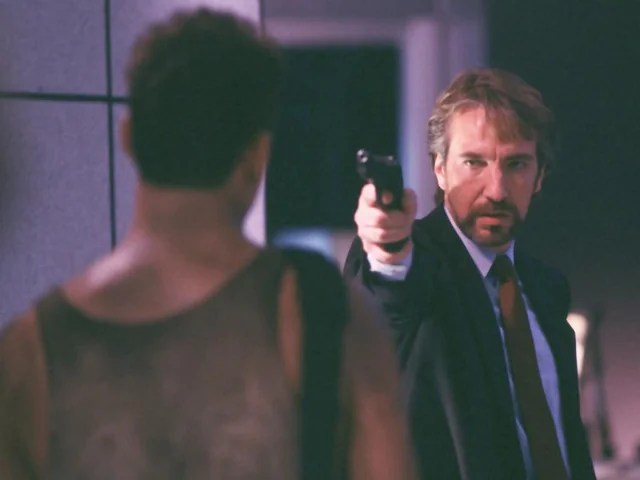
By contrast, John McClane is selfless in his motivation to save innocent lives and his estranged wife. His wife Holly stands up to the terrorists on behalf of her coworkers, who look to her as a head of household of sorts in the wake of the death of Mr. Takagi. The other major sympathetic character, police Sergeant Al Powell, is introduced through a scene where he almost immediately mentions his pregnant wife. Moreover, Al becomes like a family member for John, keeping him going by getting him to talk about his children and sharing a moment when he and John discuss the future possibility of their kids playing together. The bad guys in this film are all driven by greed. The good guys all have their family as their primary focus.
The themes of money versus family go deeper than just good guys versus bad guys, though. Overshadowed by the action for most of the film is John’s desire to reconcile with his wife. John’s character flaw boils down to another form of greed – Holly got a great job with the Nakatomi Corporation, and John felt threatened by her success. As the man in the relationship, he was supposed to be the bread winner, and he almost let his marriage fall apart because of that (we’ll ignore the sequels where his marriage actually does fall apart and focus on this film as its own entity here). Through the course of the movie and the extreme circumstances he finds himself in, John must rediscover what is really important – not money or financial status, but the people he loves. That is an extremely Christmas-like theme.
You’ve probably seen a million Christmas stories that follow this basic formula: man finds himself alienated from his family at Christmas, extreme circumstances force him to reconsider where he is in life, man realizes that what is really important is his family. It is a theme that is found elsewhere in media, true, but it is a staple of Christmas stories. Die Hard comes with all of that, plus a great script pairing Bruce Willis and Alan Rickman in two of the best roles of their careers, plus action that places it at the top of a long list of American shoot-em-up films. Don’t let all the funny dialogue and pretty explosions fool you; this is really and truly a Christmas movie. If anything, we need more Christmas specials to take a page from Die Hard. Screw Charlie Brown finding a Christmas tree – I want my holiday to have some gunfire, explosions, and the immortal words, “Yippee kai yay, motherfucker.”
 Babbling Brooks
What a fantastic deep dive into the layers of *Die Hard*! I love how you highlighted Bruce Willis’s transition from comedy to action—he really brought a unique charm to the character of John McClane. The theme of family versus greed resonates so strongly, especially during the holiday season. It’s fascinating how a film packed with action can also deliver such a heartfelt message. And yes, who wouldn’t want more holiday movies with a bit of gunfire and humor? Yippee ki yay indeed!
LikeLike