I spend a lot of time ranting about superhero comics, especially the ones from Marvel and DC. Mainstream comics usually hold the most intrigue for me. They not only serve as a rare example of serial fiction that has lasted for decades on end, but also provide a good cultural snapshot of American society. Characters like Captain America and Wonder Woman are as ingrained in our popular consciousness as folklore legends like Paul Bunyan.
When it comes to sheer quality of storytelling in comics, though, superhero comics usually aren’t the way to go. Not that they are inherently inferior or anything, but they are so continuity-laden, riddled with conflicting interpretations, and driven by corporate agendas that the very best storytelling in comics tends to be divorced from that genre. Luckily, comics are a versatile medium with lots to offer beyond flights and tights. Here’s a look at some of my favorite non-superhero comics. I don’t mention them a lot in rants, but that’s largely because they’re so good that I don’t often have anything to say but, “This is awesome.”
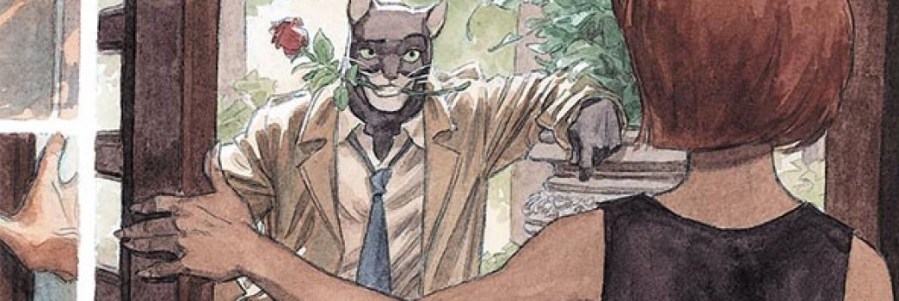
Blacksad
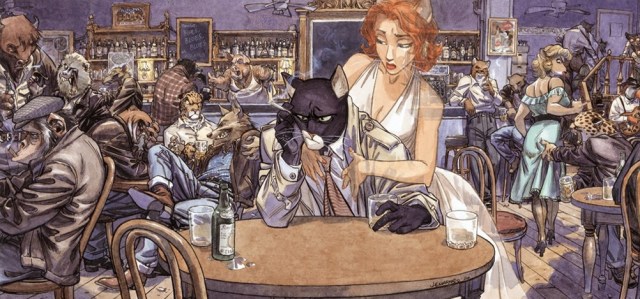
I love almost any noir story, but the art really drew me into Blacksad. Juanjo Guarnido drew a comic that’s so pretty that I wish I could frame every single page. Paired with excellent dialogue and strong plotting from Juan Díaz Canales, it’s even better.
Blacksad is pretty much a straight film noir series that features anthropomorphic animals. There story doesn’t linger overly much on this element, but it does come up now and then. For example, an issue regarding racism has somebody commenting on the main character’s black fur coupled with the white patch on his snout. The animals also serve as an immediate identifier of the characters’ roles in a story. Supporting characters include a gorilla boxer, a small fox who serves as the wily sidekick, and so on.
If you took the animal element out of each story and just used human characters, the tales would still stand out as amazing hard-boiled detective stories. Each issue features moody scenes, crisp dialogue, and emotional gut-punches. The use of animals provides an extra layer of symbolism, and each page dazzles with amazing art.
This is a European book, but the first three issues are collected for American audiences in the Blacksad hardcover. You can also pick up two other books, A Silent Hell and Amarillo, for more Blacksad goodness.
Fables
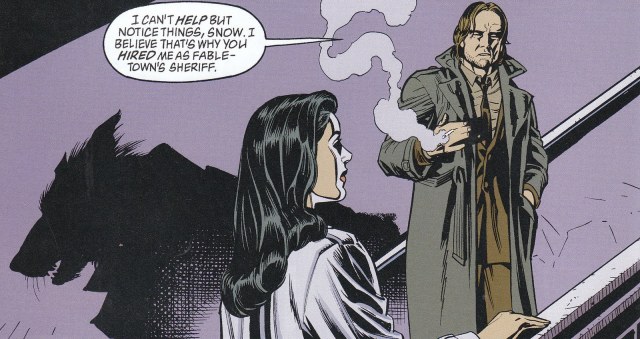
Describing Fables to a modern TV watching public, I would call it a much better Once Upon a Time that doesn’t shill so hard for Disney. Of course, Fables came out well before Once Upon a Time and features over 100 issues of compelling stories, not counting equally interesting spin-off comics.
In Fables, the characters we know from fairy tales live in hiding among us. Although they aren’t running around killing giants and dealing with wicked witches every day, they still have a lot of action and intrigue going on in their lives. Conflicts range from the simple, such as Beauty and the Beast having marital difficulties, to sweeping epics as the Fables deal with the great enemy that banished them.
The first volume of Fables is a murder mystery, and future volumes change in theme and style slightly depending on which characters they follow. All of them are excellently plotted and feature solid art that fits very well with the stories being told.
Contrary to most comics, Fables has a sizable female following. It’s no wonder, either—the women in this comic are awesome, especially no-nonsense deputy mayor Snow White. All characters are great regardless of their gender, but Fables stands out as a great beacon of light in an industry that tends to be too exclusionary of women.
If you like intriguing plots, interesting characters, and terrific art, check out Fables. I recommend starting at the first volume, Legends in Exile, but the whole line is great.
2000 AD
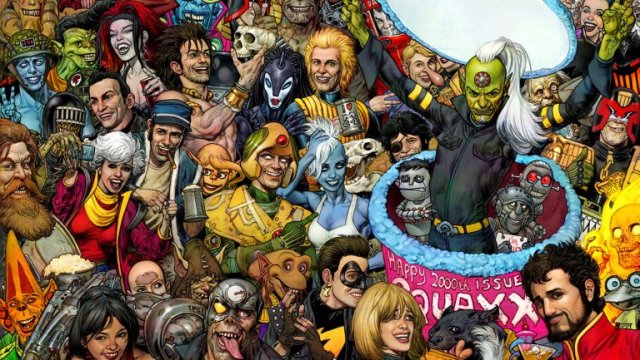
Ever wonder where top-tier comic writers like Alan Moore, Grant Morrison, and Al Ewing got their start? Many of them did work for the British comic mag 2000 AD. This series focuses mostly on “Future Shocks,” which are short stand-alone comics of one to five pages with a twist at the end. If you want excellent but brief storytelling with a strong sense of irony, this is the place to go.
Not every story in the 2000 AD family can wrap up in five pages or less, and the series has delivered some longer-running classics like Alan Moore’s The Ballad of Halo Jones. Most famously, this comic introduced the world to Judge Dredd, whose comic delivers twisted humor and in-depth commentary on fascism with every issue.
If you like stories that are thought-provoking, sharply written, and full of dark wit, 2000 AD is the comic for you.
Y: The Last Man
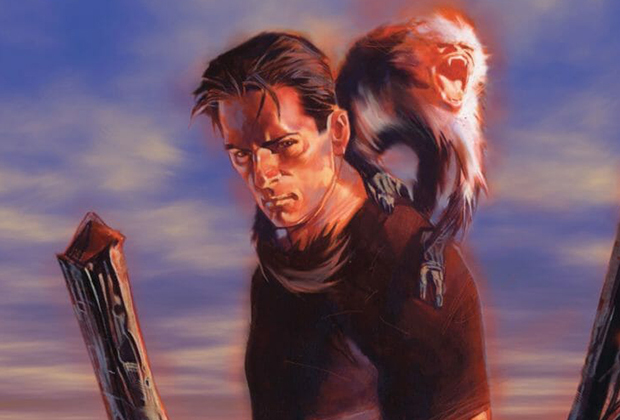
Look, Brian K. Vaughn is just a great writer. The only reason Saga isn’t on this list is because I haven’t finished reading it yet. So instead I’ll focus on one of the best complete comic book stories I’ve ever read: Y: The Last Man.
A lot of authors talk about how much work they’ve put in behind the scenes to make sure they know all the details of the story, but I very rarely get the feeling that such planning makes a difference in the tale itself. Y: The Last Man is an example of how this can work really well. You don’t find out all the answers you want, but you always get the feeling that they’re there somewhere, forcing you to read and re-read the comics to see what you might have missed the first time.
The comic tells the tale of an apocalypse that wipes out all the men on the planet except for two: our protagonist Yorick and his pet monkey. As a post-apocalyptic story, it delivers. The globe-trotting story feels tense, and you never know whether characters might make it out of the story alive.
If you read Y: The Last Man, you’d best be ready for some tragedy. Some of your favorite characters won’t make it out alive, some will be changed for the worse, but a very few will live happily ever after. Each element of tragedy feels important and moves the story forward with precision strikes that make you more intrigued while cutting away at your heartstrings.
In short, Y: The Last Man is a comic that tells a deeply satisfying story, even if you desperately want things to turn out differently from time to time. It’s one of the most complete comics out there, has obvious vision and foresight, and really makes you grow attached to these characters and their eventual fates.
Great Comics are Out There
The purpose of this ramble isn’t really to plug these specific comics (although they are awesome) but rather to demonstrate that comics are quite a great form of entertainment even when you step away from the superhero genre. In fact, you can make a very good argument that superheroes are taking attention away from stories that are often much better than what you’ll find in the mainstream Marvel and DC Universes.
 Babbling Brooks