The Editions of Dungeons & Dragons

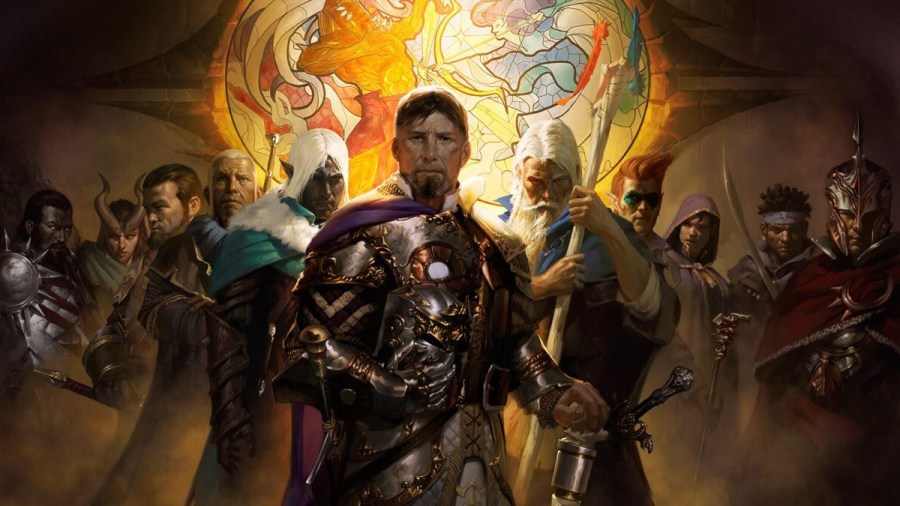
Wizards of the Coast still claims that the new Dungeons & Dragons rulebooks released in time with the game’s 50th anniversary is still part of the game’s 5th edition, but that number is really just a marketing decision. The game has really undergone at least ten different edition changes across two brand names. That doesn’t include optional rulebooks that, if incorporated, radically changed the way the game played.

So what edition are we really on? Here’s my subjective scorecard on the many faces of D&D.

Continue reading “The Editions of Dungeons & Dragons”

Comics & Quests: The Ostus Legacy

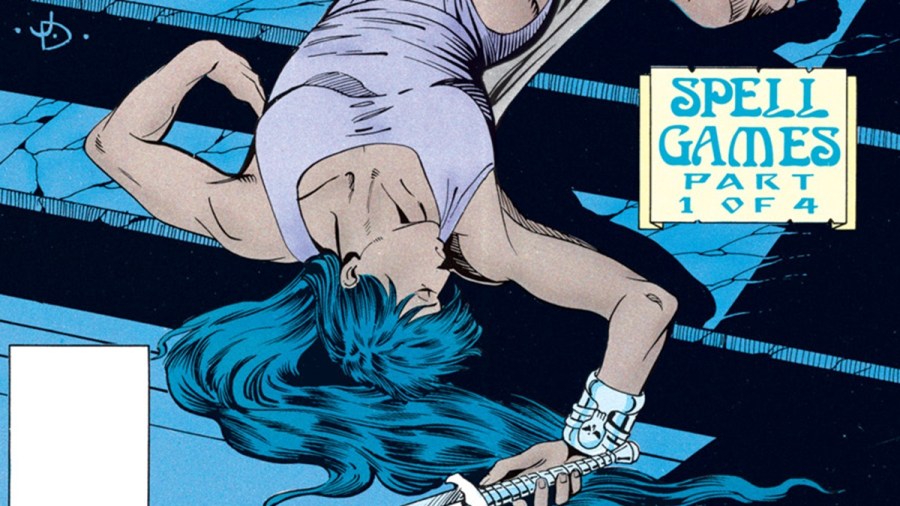
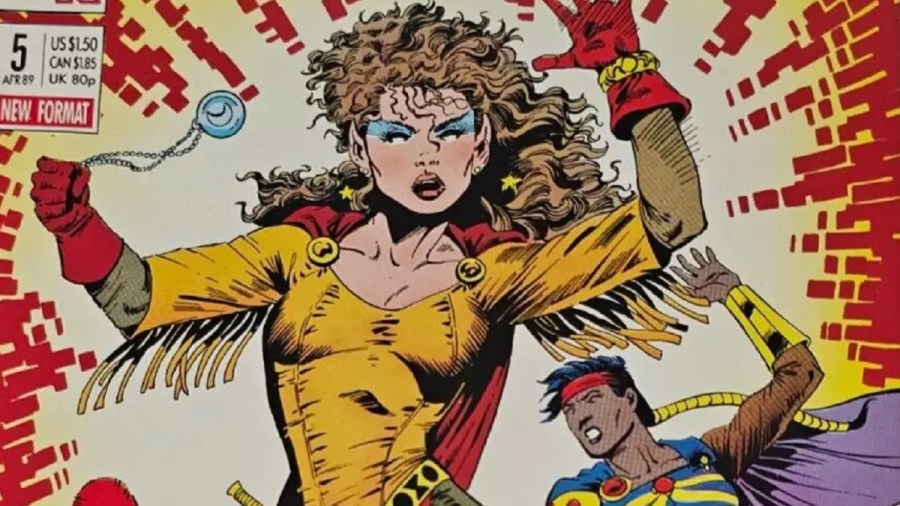
I spent a good long time complaining about how “Spell Games” misused Vajra, who should have been the protagonist of that story. The next tale in the Advanced Dungeons & Dragons comic line, “The Ostus Legacy,” deals with the other heroine in our rotating cast, Kyriani. Like Vajra, Kyriani has some issues because she is a product of a 90s pop culture view on female characters. Ultimately, though, I feel that “The Ostus Legacy” comes to a stronger conclusion and gives Kyriani more agency than “Spell Games” did for Vajra.

And, if I’m wrong, at least “The Ostus Legacy” is two issues shorter.

Continue reading “Comics & Quests: The Ostus Legacy”

The Room of Death

This room appears to be some sort of museum display. Engravings on the wall describe all manner of ancient battle. Nearest the door are a desk and a chair with a vase and a flower sitting on top. Hanging from a hook on the wall next to that is an expensive-looking cloak on it. The veneer of civilization disappears near the far end of the room, however, where a mossy growth creates a sort of wilderness display. Near the far wall is a small stuffed rabbit looking at you through glassy eyes while perched atop an old tree stump.

If this was a standard room in a typical dungeon adventure, the first question the adventurers would be asking themselves is, “Where’s the trap? What’s going to kill me when I step into this room?”

This is the Room of Death. The answer is: everything.

Continue reading “The Room of Death”

The Many Immortals of the Forgotten Realms

The 4th edition of Dungeons & Dragons made the most changes to the system to date. The class structure, level tiers, magic system, and planes of existence all got a top-down overhaul. The difference was too great to reconcile with old continuity, so the Forgotten Realms got hit with an apocalypse and a 100-year time jump.

For a setting that relied on its myriad of established characters and places, this was catastrophic. Much of what people liked about the Realms was destroyed, replaced with elements that made it more generic D&D.

Naturally, when the unpopular 4th edition was swept away and 5th edition opted to woo back fans the game had lost, the Realms largely got reset. The apocalypse was undone, old gods came back, and familiar NPCs returned. But the 100-year time jump had still happened.

So what happened to the likes of Cattie-Brie, Mirt the Moneylender, and Volo–all humans who would have died of old age during the century between editions? Well, most of them got magicked back to life.

Settle in, folks, because we’re going on a whirlwind tour of the many humans in the Forgotten Realms who should be dead of old age but are still kicking due to their popularity! Can’t tell one immortal from another without a scorecard!

Continue reading “The Many Immortals of the Forgotten Realms”

The Infinity Engine and Beyond: A Look Back at Classic D&D cRPGs

The success of Baldur’s Gate 3 has Hasbro seeing potential gold mines in the video game industry. Unfortunately for them (and us), Larian Studios won’t be working on more Baldur’s Gate games. Not to be deterred, Hasbro is investing $1 billion in new D&D computer RPGs, hoping to catch lightning in a bottle several times over. It’s amusing in its own way, because the company had a pipeline of consistent high-quality video games for a solid decade and let that dry up.

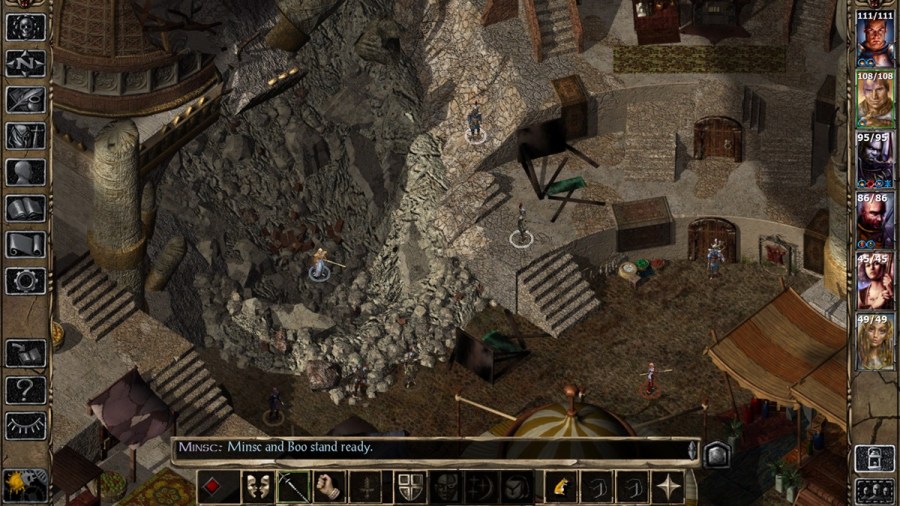
While D&D has seen several periods of success in the video game industry, the one that I experienced directly was the string of releases between Baldur’s Gate, which came out in 1998, and Neverwinter Nights 2, which saw its last official expansion in 2009. Developed mostly by Bioware (and the now-defunct Black Isle Studios), these games expanded the genre in sometimes innovative ways and delivered a consistently fun D&D experience on personal computers.

I’m going to touch on each of the games I’ve played, which covers all the D&D cRPG games released from 1998 through 2009 with the exception of Pool of Radiance: The Ruins of Myth Drannor, The Temple of Elemental Evil, and Icewind Dale 2. The latter two games sit in my GOG account waiting to be played in the future. As to Pool of Radiance…well, based on the reviews I’ve read I might just go back in time and play the SSI “Gold Box” games instead.

Continue reading “The Infinity Engine and Beyond: A Look Back at Classic D&D cRPGs”

Comics & Quests: Catspaw

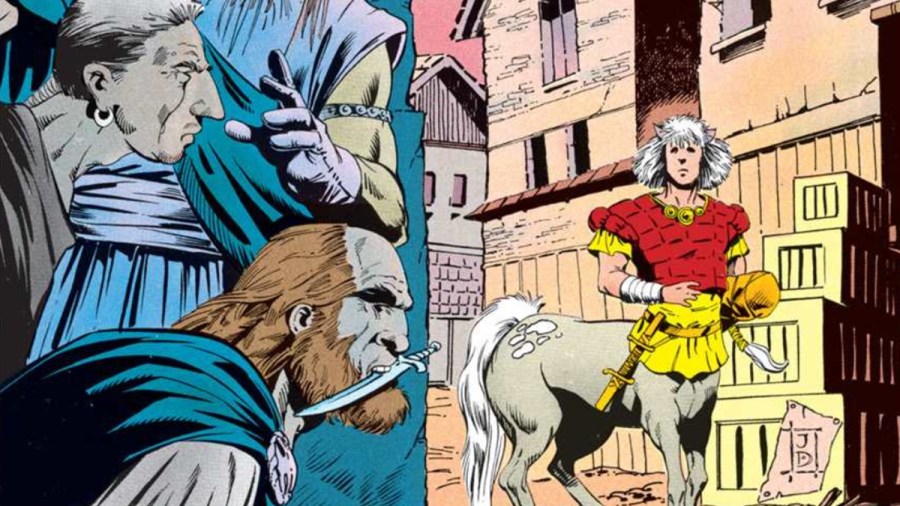
Many a gaming group knows the frustration of not being able to get everyone together on a regular basis. Often, the solution involves splitting the party; some PCs engage in the adventure at hand, while others are missing on other errands. This seems to be a feel that the Advanced Dungeons & Dragons comic was going for. In “The Spirit of Myrrth,” our centaur friend Timoth was notably absent (as was Agrivar). Now, in “Catspaw,” he’s back but the rest of the group, save his buddy Onyx, are out.

Continue reading “Comics & Quests: Catspaw”

Comics & Quests: The Spirit of Myrrth

The start of the Advanced Dungeons & Dragons comic book line presented an epic tale in which a motley crew of do-gooders overcame their differences to stop an evil wizard from overrunning the land. It was a good introduction to the setting and our heroes, but it was the sort of giant epic quest that, quite frankly, does not play to D&D‘s strengths.

That’s not to say that D&D can’t be about epic quests and heroism, but a role-playing game is a unique place where group storytelling, whimsical jokes, and unlucky die rolls meet. That combination creates an off-beat sort of tale that stands apart from other fantasy literature. The second story of the comic book line, “The Spirit of Myrrth,” feels more like something that players would experience at a table. Here we find a portal to the underworld, a giant skeleton, and a group of jesters willing to kill to get the respect they think they deserve.

Continue reading “Comics & Quests: The Spirit of Myrrth”

Comics & Quests: The Gathering

I have many criticisms about the various editions of Dungeons & Dragons, but one thing has remained consistent for at least 35 years: tehe comics based off the games are tons of fun. Since I love trips down memory lane, I’m going to spend some time waxing nostalgic about some comics which readers of this blog may have forgotten, never heard of, or been born well after. First up: the simply-titled Advanced Dungeons & Dragons.

Back in the late 1980s, DC Comics got a license to produce various D&D comics. The first was based on the Dragonlance series, and I have sadly not read that one. The second was set in the Forgotten Realms and introduced a mishmash of hapless adventurers who struggled through adventures that ranged from epic to ludicrous. The first four issues served as their origin story, in a tale dubbed “The Gathering.”

Continue reading “Comics & Quests: The Gathering”