Doctor Who’s Storybook Season

Doctor Who just finished Season One…which is really Series 14 or Season 40, depending on how you count. The season offered many new features, from a new Doctor played by Ncuti Gatwa to more money behind the scenes courtesy of a deal with Disney. It also offered new (or at least underexplored) themes to the show, including a heavy lean toward the supernatural.

If there’s one thing that defines this most recent season of Doctor Who, it’s the theme of stories. The season is structured like a fairy tale, and the stories the characters experience–and one they invent–drives the narrative of the Doctor’s latest adventure.

To illustrate what I mean, let’s go episode by episode through the tale of Ruby Sunday.

Continue reading “Doctor Who’s Storybook Season”
Fiction: An Hour Off

Originally published in The Lyndon Review.

I woke up in bed next to a naked woman. Not a Hollywood-style naked woman with skin smelling like fresh soap and the blanket conveniently covering her nipples to keep a PG-13 rating. Instead it was a northern Vermont-style naked woman, with breasts like old yogurt and a small puddle of drool soaking into her pillow. She tightened her grip on the blanket as I eased myself to the waking world. When I saw her reddened knuckles, I began wondering where I was.

Continue reading “Fiction: An Hour Off”

Fiction: Fantasy As You Like It

Originally published in the Chaffin Journal (as Charlie Martin)
Winner of the 2006 Chaffin Award for Fiction

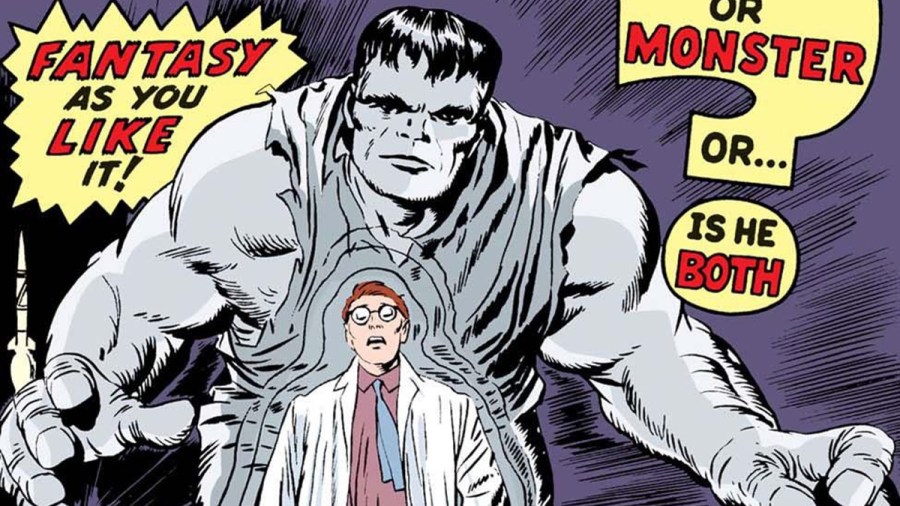
A man in a lab coat stands in the middle of the desert. His mouth hangs open in an extended scream as his body twists and grows. His glasses fall off and his clothes tear at the seams. American soldiers surround him on all sides, their jaws slack in shock as they watch an ordinary man become a seven foot tall gray-skinned behemoth. A giant question mark hangs in the air behind the scene, invisible to all but the reader and posing one apparently all-important question.

IS HE MAN OR MONSTER OR…IS HE BOTH?

Continue reading “Fiction: Fantasy As You Like It”

New Publication: Looking for Love

A strange heart-shaped cavern lies in a remote spot by the sea. Music permeates the area, as though coming from the stones themselves. At the center of the grotto stands a trio of statues. Are they the source of the strange music? Many have sought to learn the secrets of the melody, and the adventurers may be the ones to unravel it…for good or ill.

“Looking for Love” is my latest mini-adventure for En5ider, a weekly publication that offers new options and stories for any D&D campaign. This scenario, crafted for 5th-level characters, provides a mystery in a seaside cavern with several possible conclusions.

When you buy into the En5ider Patreon, you get access to this adventure and almost 600 other articles. Check it out here!

Doctor Who’s Emotional Growth (Revival Era)

Continued from last time, the Doctor ended his classic era as a fairly well-rounded individual…or as well-rounded as the Doctor ever gets, at least. Paul McGann’s Eighth Doctor was a culmination of the classic Doctors that had showcased the series from 1963 to 1989. He was brilliant, compassionate, quirky, and more open with his emotions than he had ever been before.

Then the Time War happened.

Between the 1996 TV movie and the 2005 series revival, the Time Lords of Gallifrey went to war with the Daleks of Skaro and nearly destroyed the universe in the process. Off-screen, the Doctor ultimately made the decision to destroy both sides, leaving him as the last of his people and carrying the weight of a double genocide on his conscience.

The revival era Doctor is basically a person going through the stages of grief. More dangerous and volatile than before, they were no longer a mere explorer but often verged on being a vengeful god–someone who wanted to save lives, but who could do terrible things when angered.

Continue reading “Doctor Who’s Emotional Growth (Revival Era)”

Doctor Who’s Emotional Growth (Classic Era)

The Fifteenth Doctor has landed, and he seems to be the most emotionally healthy version of the character that we’ve seen in the show’s 60-year history. Still carrying his flaws and trauma, he has nonetheless shown openness about his past and a willingness to express his emotions rather than hide behind a stoic facade.

While the Doctor will undoubtedly have new traumas and occasional reversions in personality in the years to come, a relatively healthy Time Lord is a refreshing change for the character. It’s also a culmination of 15 different regenerations, each of which shaped him into the man he is today.

While the concept of regeneration is mostly a conceit to keep the show going even after the departure of a lead actor, the long-running nature of Doctor Who allows a bigger scope for character development than you typically find in serial fiction. Each of the Doctor’s previous incarnations made him the person he is today, and this is how.

Continue reading “Doctor Who’s Emotional Growth (Classic Era)”

A Kind of Magic: Highlander: The Search for Vengeance

There is one more.

Twenty-one years after the original Highlander showed off potential that would never be fully realized, a decade after the TV series had hit the skids, I watched the Russian version of Highlander: The Source and completely gave up on this franchise. Then, in the midst of my throes of agony, someone tipped me off as to the existence of an anime called Highlander: The Search for Vengeance.

This movie has all the elements that make up a bad Highlander film. A post-apocalyptic future. Magic. Ghosts. But you know what? It is awesome.

Continue reading “A Kind of Magic: Highlander: The Search for Vengeance”

Crowning Deaths of Awesome Sadness

Comic book deaths are a punchline these days. Despite the fact that a comic book death currently translates into little more than a cheap sales gimmick, there have still been some really good ones over the years. Even if they didn’t stick, they were chilling, touching, or otherwise hugely influential. What follows is my totally biased opinion of the best deaths comics has had to offer.

Before I get into the actual deaths, it’s worth noting what I’m not counting. Death by origin story, such as Bruce Wayne’s parents or Uncle Ben, does not count here. A poignant death has to take a character the reader has known for a while and send them off in a way that has lasting emotional impact.

With one exception, I’ve also left off deaths not from the Marvel or DC Universes. That’s partly personal preference, since I read comics from the big two the most. The other part of it is that the Marvel and DC stable of characters are cultural icons recognizable almost worldwide. As such, when one of those iconic characters dies, it has an impact not only on the comic book universe but on society as a whole. The one exception to this rule comes from an ending scene in Y: The Last Man. If you haven’t read through this excellent comic yet, go read those graphic novels instead of this list. The list contains a major spoiler that will totally ruin the emotional impact of Y: The Last Man if you haven’t read it.

Continue reading “Crowning Deaths of Awesome Sadness”

Troubled Times, Troubled Adventures: Making the Avatar Trilogy Work

I’ve made my feelings on the Avatar Trilogy painfully clear. But one question remains: if I hate the adventures, why do I know so much about them? Well, I did it to myself.

Years ago, I picked up Waterdeep at a yard sale. I tried to run it, but never got it off the ground – very few of my campaigns lasted beyond the first few levels, and I usually shied away from doing mid-level one-shots. Years later, in a 3rd edition game, I decided that I wanted to shake things up in my campaign setting with a Time of Troubles-style event, so I hunted down Shadowdale and Tantras on eBay.

Yeah…I actually bought these monstrosities of my own volition.

And you know what? The game I ran with them turned out to be a lot of fun.

Any adventure module can be fun if the DM puts work into it. In the case of the Avatar Trilogy, it was still a waste of money on my part because the amount of work I put into the adventures to make them playable exceeded the work I would have needed to write my own adventure from scratch. Adventure modules are supposed to make things easier for a DM, not harder.

That said, let’s say you somehow wound up with these modules and you want to put them to use. How can you make this mess of an adventure into something enjoyable? Well, here are my suggestions…

Continue reading “Troubled Times, Troubled Adventures: Making the Avatar Trilogy Work”