Meddling Heroes: Another World, Another Time

“Einstein told the President to make a bomb. Instead, they made a man.”

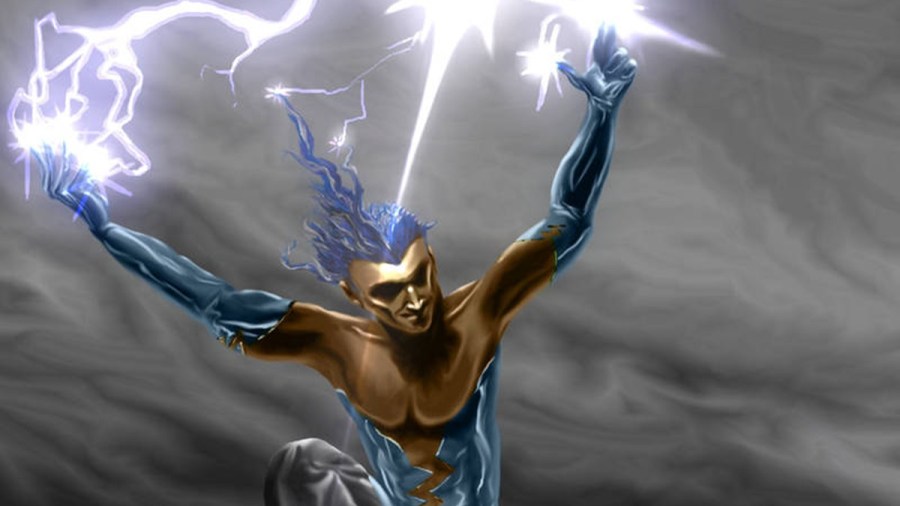
Meddling Heroes is a superhero murder mystery where the laws of our reality don’t always apply. Starting in World War II, superheroes became a fact of life. That touched every part of the world’s history, culminating in the mystery that former villain Roosevelt Pythagoras aims to solve.

Continue reading “Meddling Heroes: Another World, Another Time”

Meddling Heroes: The Most Dangerous Man on Earth

Every day, my captors wake me up, strip me naked, and check for microchips in my brain.

This morning, three armed guards stand on the far end of the corridor facing my cell. Dressed in riot gear, they keep assault rifles trained on me as I remove my clothes. Two more guards stand in
front of the locked door, pistols ready.

I count four regulars and one rookie on mad scientist detail today. The new kid hangs in back, keeping his finger on the trigger and ignoring proper gun safety. New blood makes my mornings more exciting, but also increases my odds of catching a bullet if I unbutton my fly too quickly. Fear makes people do stupid things.

I didn’t earn nine PhDs and shrink the state of Delaware to pocket size just so I could die in prison because somebody thinks the naked super-genius wants to take over the world from his cell. I just want some toast and oatmeal.

Continue reading “Meddling Heroes: The Most Dangerous Man on Earth”

Hit Points and Armor Class

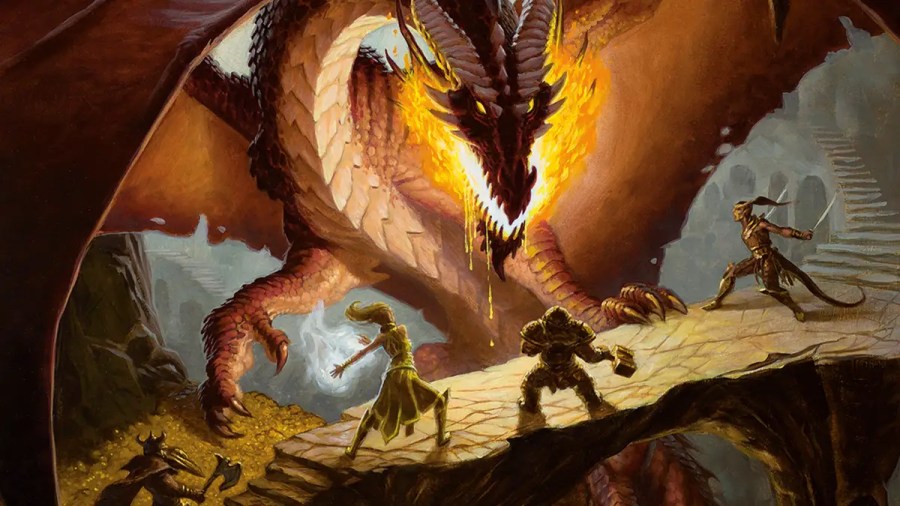
Dungeons & Dragons uses an abstract combat system, and many role-playing games afterward used said abstraction as a model. While the game has at times become a more tactical system over the years, certain elements of the combat engine have remained constant. Most notably, hit points and armor class have remained largely the same since the game’s inception.

True, the number of hit points a character has have gone up and AC has gone from a high-to-low to low-to-high number, but the core concept remains: roll a d20, beat a target number, and subtract damage from a target’s hit points. It’s simple, it’s fast, and it has worked for decades.

It’s also one element of the game that drives those wishing for a more realistic system nuts.

Continue reading “Hit Points and Armor Class”

The Editions of Dungeons & Dragons

Wizards of the Coast still claims that the new Dungeons & Dragons rulebooks released in time with the game’s 50th anniversary is still part of the game’s 5th edition, but that number is really just a marketing decision. The game has really undergone at least ten different edition changes across two brand names. That doesn’t include optional rulebooks that, if incorporated, radically changed the way the game played.

So what edition are we really on? Here’s my subjective scorecard on the many faces of D&D.

Continue reading “The Editions of Dungeons & Dragons”

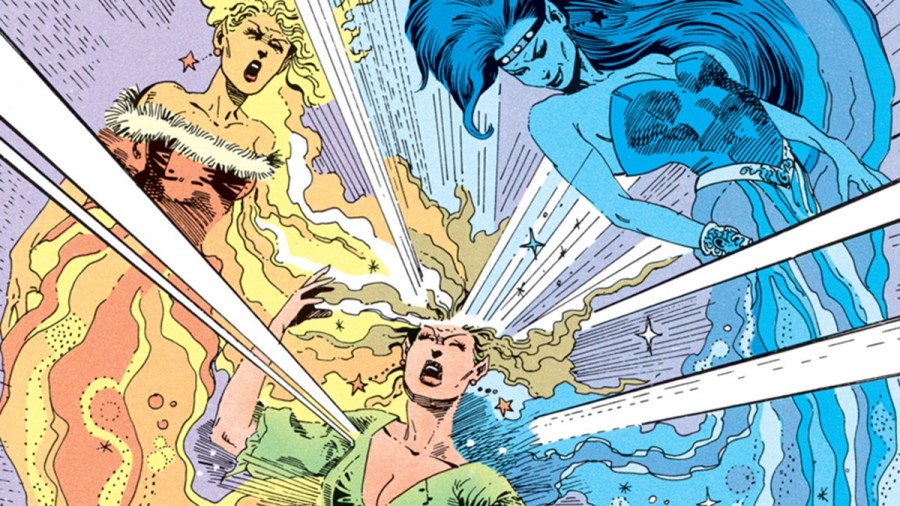
Those Blasted Superfriends: Sirena, Empress of Evil

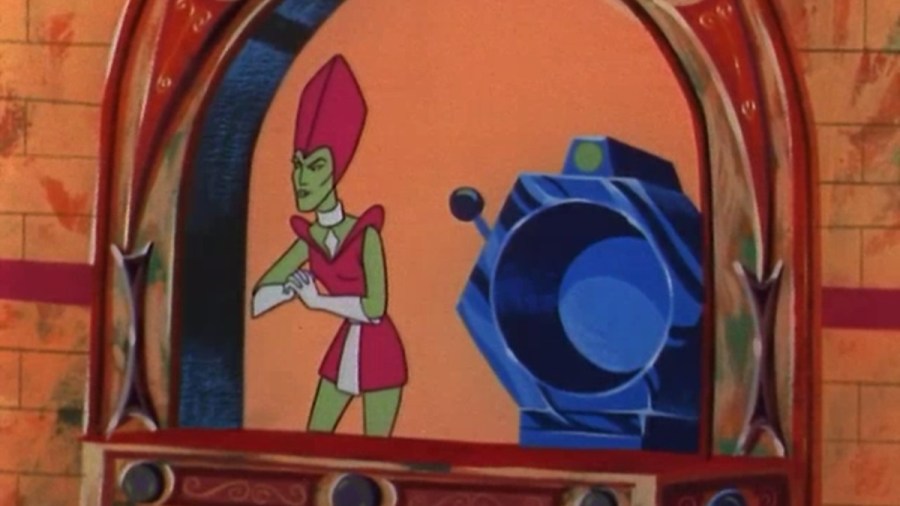
Of all the bad shows I loved as a kid, none were dearer to my heart than Superfriends. It was where I learned to loved Green Lantern, he of the cool costume and even cooler power ring. Nowadays, I recognize it as very schlocky, basically thrown together because folks figured any bright lights and weird noises could keep school-aged children entertained.

In my case, they were right.

Looking back at Superfriends, it’s like McDonald’s food: terrible, but I still get a craving for it every now and then. Thus, I am happy to share my thoughts and commentary about certain episodes, beginning with my favorite Superfriend Green Lantern taking on Sirena, the so-called Empress of Evil.

Continue reading “Those Blasted Superfriends: Sirena, Empress of Evil”

Poetry: Dad

Originally published in In Other Words.
Honorable mention,
ByLine Magazine‘s 2006 “Poem of Loss” contest.

(What’s in the box?) “He was”
(It all came down) “a good man.”
“He will be missed.” (to a case –)
(The case he’s in?) “He’s in heaven,” (No.)
“He’s in heaven now.” (A case of writer’s block.)

“He just wasn’t –” (I started)
(crying) “–wasn’t the same,”
“wasn’t the same afterward.” (, but before that)
“You’re lucky.” (I started)
(to write him a story) “He wasted away.”
“You’re lucky you didn’t see him in the end”
(Never tell me that I’m lucky because of that.)

(It’s the last thing) “Who would want”
“to keep him” (I would) “suffering like that?”
(have wanted to see.) “He can’t feel” “anything now.”
“He gave you” (I wanted to give him)
(my love) “all his love.” (in a story.)
“Who would want” (I wanted)
(him to read it) “to keep him suffering?”
(, and smile through his pain.)

“You –” (Got a case of writer’s block)
(just before he died.) “you’ll be fine” (Like they know…)
“Your suffering,” (I caused it)
(the moment) “it’s ended too.” (I put my pen down.)
“He knew that you loved him.”
(I loved him, and he died when I turned my back on him.)

Featured Image: Suzy Hazelwood

Comics & Quests: The Ostus Legacy

I spent a good long time complaining about how “Spell Games” misused Vajra, who should have been the protagonist of that story. The next tale in the Advanced Dungeons & Dragons comic line, “The Ostus Legacy,” deals with the other heroine in our rotating cast, Kyriani. Like Vajra, Kyriani has some issues because she is a product of a 90s pop culture view on female characters. Ultimately, though, I feel that “The Ostus Legacy” comes to a stronger conclusion and gives Kyriani more agency than “Spell Games” did for Vajra.

And, if I’m wrong, at least “The Ostus Legacy” is two issues shorter.

Continue reading “Comics & Quests: The Ostus Legacy”

The Room of Death

This room appears to be some sort of museum display. Engravings on the wall describe all manner of ancient battle. Nearest the door are a desk and a chair with a vase and a flower sitting on top. Hanging from a hook on the wall next to that is an expensive-looking cloak on it. The veneer of civilization disappears near the far end of the room, however, where a mossy growth creates a sort of wilderness display. Near the far wall is a small stuffed rabbit looking at you through glassy eyes while perched atop an old tree stump.

If this was a standard room in a typical dungeon adventure, the first question the adventurers would be asking themselves is, “Where’s the trap? What’s going to kill me when I step into this room?”

This is the Room of Death. The answer is: everything.

Continue reading “The Room of Death”

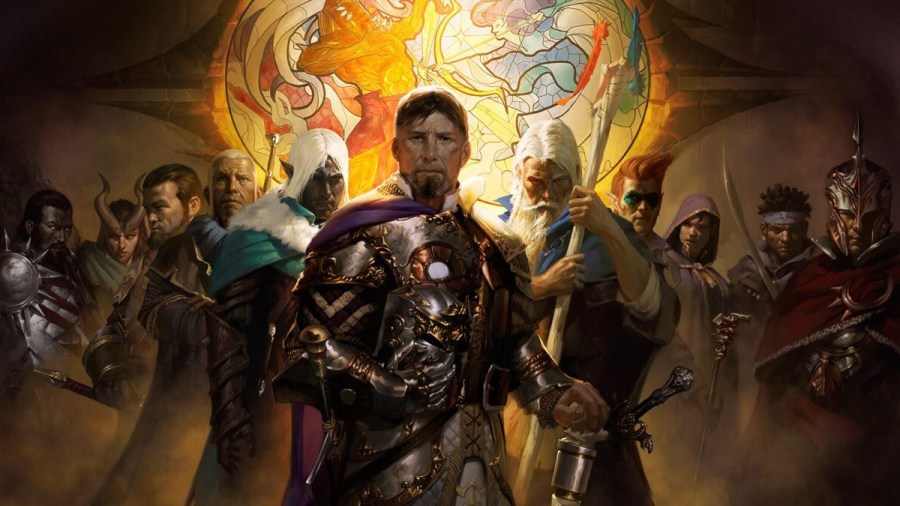
The Many Immortals of the Forgotten Realms

The 4th edition of Dungeons & Dragons made the most changes to the system to date. The class structure, level tiers, magic system, and planes of existence all got a top-down overhaul. The difference was too great to reconcile with old continuity, so the Forgotten Realms got hit with an apocalypse and a 100-year time jump.

For a setting that relied on its myriad of established characters and places, this was catastrophic. Much of what people liked about the Realms was destroyed, replaced with elements that made it more generic D&D.

Naturally, when the unpopular 4th edition was swept away and 5th edition opted to woo back fans the game had lost, the Realms largely got reset. The apocalypse was undone, old gods came back, and familiar NPCs returned. But the 100-year time jump had still happened.

So what happened to the likes of Cattie-Brie, Mirt the Moneylender, and Volo–all humans who would have died of old age during the century between editions? Well, most of them got magicked back to life.

Settle in, folks, because we’re going on a whirlwind tour of the many humans in the Forgotten Realms who should be dead of old age but are still kicking due to their popularity! Can’t tell one immortal from another without a scorecard!

Continue reading “The Many Immortals of the Forgotten Realms”