Crowning Deaths of Awesome Sadness

Comic book deaths are a punchline these days. Despite the fact that a comic book death currently translates into little more than a cheap sales gimmick, there have still been some really good ones over the years. Even if they didn’t stick, they were chilling, touching, or otherwise hugely influential. What follows is my totally biased opinion of the best deaths comics has had to offer.

Before I get into the actual deaths, it’s worth noting what I’m not counting. Death by origin story, such as Bruce Wayne’s parents or Uncle Ben, does not count here. A poignant death has to take a character the reader has known for a while and send them off in a way that has lasting emotional impact.

With one exception, I’ve also left off deaths not from the Marvel or DC Universes. That’s partly personal preference, since I read comics from the big two the most. The other part of it is that the Marvel and DC stable of characters are cultural icons recognizable almost worldwide. As such, when one of those iconic characters dies, it has an impact not only on the comic book universe but on society as a whole. The one exception to this rule comes from an ending scene in Y: The Last Man. If you haven’t read through this excellent comic yet, go read those graphic novels instead of this list. The list contains a major spoiler that will totally ruin the emotional impact of Y: The Last Man if you haven’t read it.

Continue reading “Crowning Deaths of Awesome Sadness”
Thou Shalt not Kill

One of the oldest traditions in superhero comics is that the good guys don’t kill. There are exceptions out there, such as Wolverine, who sometimes the secret death squad X-Force or the Punisher, whose body count is somewhere in the thousands. But in general, superheroes haven’t killed since the Silver Age or even before. But the question is, why? Certainly some villains (*cough*Joker*cough*) deserve their necks snapped. Why is it that these guys who dress up in pajamas and pursue vigilante justice don’t do what sometimes needs to be done?

In an attempt to answer that question, or at least look at how the code against killing developed, here’s a look at some of the more iconic superheroes and why they don’t kill.

Continue reading “Thou Shalt not Kill”

Superhero Evolutions: Wonder Woman, part two

Through the 1980s, Wonder Woman changed a lot due largely to editorial laziness and inconsistent writing. People just couldn’t be bothered to try and keep her consistent from one issue to another up until Perez’s post-Crisis reboot. Going into the 90s, though, Wonder Woman changed even more, not due (entirely) to creator laziness but rather due to attempts to repeatedly market her or reinvent her for a changing crowd.

The 1990s brought a lot of change to superhero comics. Fans veered toward the idea of “grim and gritty” and superheroes who were less idealistic than the Silver Age icons. Paragon heroes like Superman and Wonder Woman suffered as a result. The market also targeted comic book speculators, the folks who mistakenly thought that buying special edition comics was a good investment. As a result, there was a big push to churn out major event after major event in an attempt to convince the speculators to buy variant covers, holo-foil covers, and comics where the iconic superheroes were supposedly “changed forever.” The death of Superman is a good example of this, with people rushing out to buy the issue where he died under the impression that it would make them rich someday. The fact is that such issues A) meant nothing in a comics universe where death was a speedbump, and B) were not rare like the valuable comics of the Golden and Silver Ages, and thus never really increased in value. That didn’t stop speculators from buying into comics, however, nor did it stop Marvel and DC from creating constant upheaval in their stories to appeal to said speculators. Wonder Woman had to face this battle as well as the fact that DC didn’t really know what to do with the iconic female superhero. She was a feminist character in a market primarily composed of adolescent males. So how do you get her to sell to high schoolers?

Continue reading “Superhero Evolutions: Wonder Woman, part two”

Superhero Evolutions: Wonder Woman, part one

“Go in peace my daughter. And remember that, in a world of ordinary mortals, you are a Wonder Woman.”

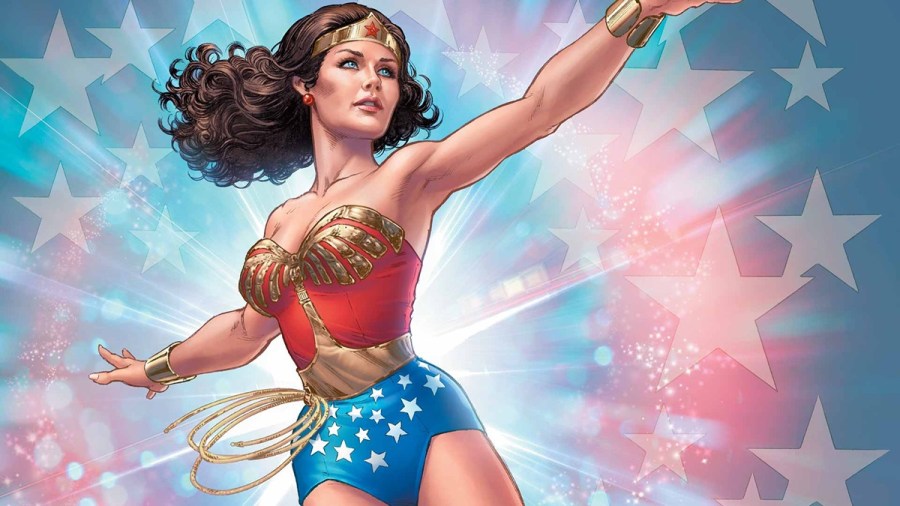
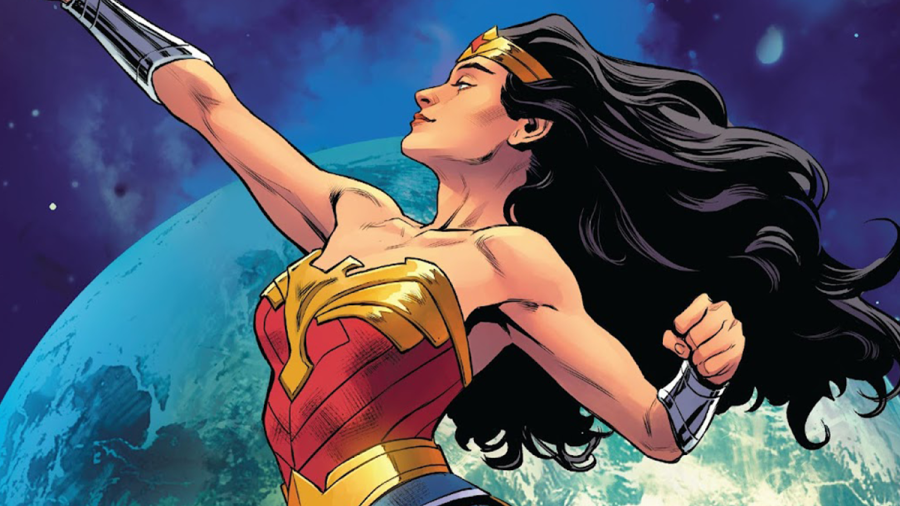
Wonder Woman has changed a lot in both powers and looks in her 80-plus years of existence. Even today, in an era where creators try to keep continuity more or less consistent, she changes radically from writer to writer. So let’s look at the greatest of the female superheroes, her origins, and the changes she’s been through over the years.

Continue reading “Superhero Evolutions: Wonder Woman, part one”

Superhero Evolutions: Hal Jordan

In brightest day, in blackest night, no evil shall escape my sight. Let those who worship evil’s might beware my power…Green Lantern’s light!”

Next to the Incredible Hulk, Hal Jordan is my favorite superhero. As a kid, I liked him because he had the coolest costume and the coolest superpower. As an adult, I like him because he’s fearless and heroic but also a hard-headed moron. I can sympathize with a character who is kind of a jerk at times but who has a good heart and will do the right thing when the chips are down. I don’t really know of too many other characters in comics who are believably flawed like that. Arguably, there’s Guy Gardner, another Green Lantern, and over in Marvel there’s Hank Pym, who is like that but veers more toward overt mental illness at times.

Overall, I find Hal to be a strong enough and believable character to cross over the nostalgia filter and move from my childhood hero to my second favorite superhero ever. The journey hasn’t been easy for Hal, though. He was victim to one of the biggest cases of character derailment in comics, and it took him a full decade to recover from it.

So let’s take a look at the history of Hal Jordan, the Silver Age Green Lantern, as he went from hero to psychopath to hero once again.

Continue reading “Superhero Evolutions: Hal Jordan”

Crowning Moments of Awesome: Wonder Woman

How did I become a Wonder Woman fan? It boils down to the fact that she’s my wife Sarah’s favorite comic book character. Sarah’s not a huge comic nut like I am, but in my attempts to get her more interested in my hobby, I chased down back issues of Wonder Woman. And what I learned is that she is awesome, through and through.

One hard part about listing the most awesome Wonder Woman moments is that I first have to figure out what interpretation of Wonder Woman I’m going with. Unlike Superman and Batman, she’s not automatically a huge seller, despite her iconic status. DC Comics has constantly tried to reinvent her, struggling with the fact that she is the prototypical feminist character in an industry that is dominated by adolescent males who, unfortunately, are not always the most progressive folks when it comes to seeing women as something other than sex objects. She’s been a warrior woman, a pacifist, a female version of Superman, a true goddess, and a waitress as a taco joint – often simultaneously.

For this list, I’m going with what I think makes Diana of Themyscira stand out as unique among superheroes: her focus on the positive aspects of femininity. William Moulton Marston created her as a response to the fact that his society saw femininity as weakness, and that not even women wanted to be womanly. Even in comics today, the feminine aspects of superheroines, except for sexuality, are often downplayed. Yes, they can kick ass alongside the men, but when they are shown to be at their best, their masculine traits are emphasized over their feminine ones. Wonder Woman, by comparison, is at her best when the traits usually downplayed in superhero comics are emphasized. She is tender, compassionate, and peaceful. When she does fly into battle and start kicking ass, she does so with grace and never uses more force than is necessary to win the day. Unlike other superheroes, she doesn’t have a code against killing, but will only do so to protect others. Essentially, Wonder Woman is a mother or a sister, with the entire world as her family. That means that she is very tender and merciful to those she loves, but is a terrifying opponent to those who would harm those she loves – which, in her case, is everybody. So this list is focusing not only on Wonder Woman the ass-kicker, but on the moments where she combines that badassery with the compassion and sense of truth that makes her a paragon even among other paragons.

Continue reading “Crowning Moments of Awesome: Wonder Woman”

Superhero Evolutions: The Incredible Hulk, part four

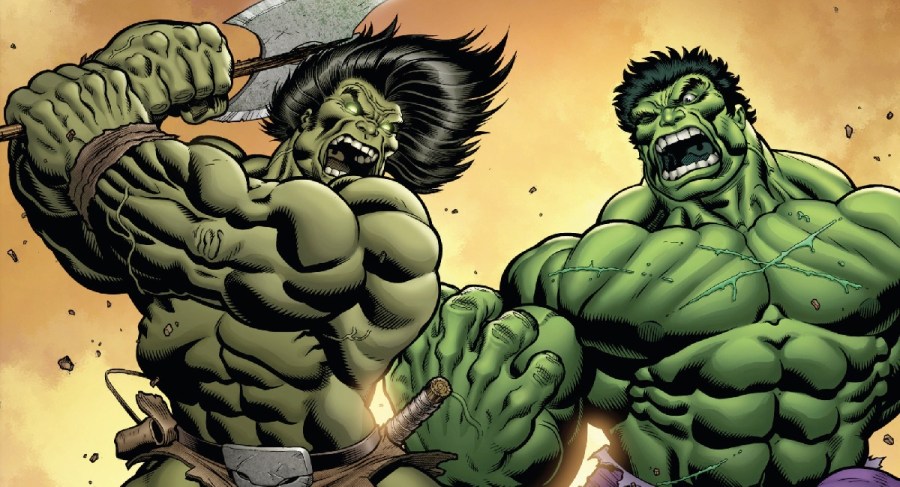
In case the first three parts of this breakdown didn’t make it clear enough, the Hulk has changed a lot…arguably more than any other comic book hero. He’s been a tough one to fit into the Marvel Universe. Conceived as a cross between the Frankenstein monster, Dr. Jekyll and Mr. Hyde, and a cautionary tale about nuclear warfare, he has never quite fit in with other superheroes, save for his run with the team known as the Defenders – a group whose whole hook is that its members don’t really fit together on a traditional superhero team. Whenever the Hulk did get some stability, some external factor shook that up, be it Bill Mantlo getting exhausted with the character and passing it over to John Byrne or editorial getting in the way of a long-term story planned by Peter David. As the character headed into the 2000s, he was in for more of the same, with a lot of changes in a short period of time. Fortunately, at the end of it, the Hulk got a brief renaissance that produced a modern classic for the character.

Continue reading “Superhero Evolutions: The Incredible Hulk, part four”

Crowning Moments of Fatherhood

Superhero comics are filled with daddy issues. Be it parents who have died as part of a character’s origin story, abusive stepfathers, or children who are somehow their own father, a lot of superhero comics place focus on the importance of father figures. Here’s my list of the most awesome and heartwarming father-child moments in superhero comics.

All of these moments, of course, get the asterisk next to them that good parenting in comic-land is vastly different than good parenting in the real world. For example, Batman serves as a father figure to Robin, but in real life he’d be considered a monster for putting a child in harm’s way every night. So, placing on our reality-altering filters that allow spandex-clad vigilantes to be considered responsible figures, let’s dive into the list.

Continue reading “Crowning Moments of Fatherhood”

Superhero Evolutions: The Incredible Hulk, part three

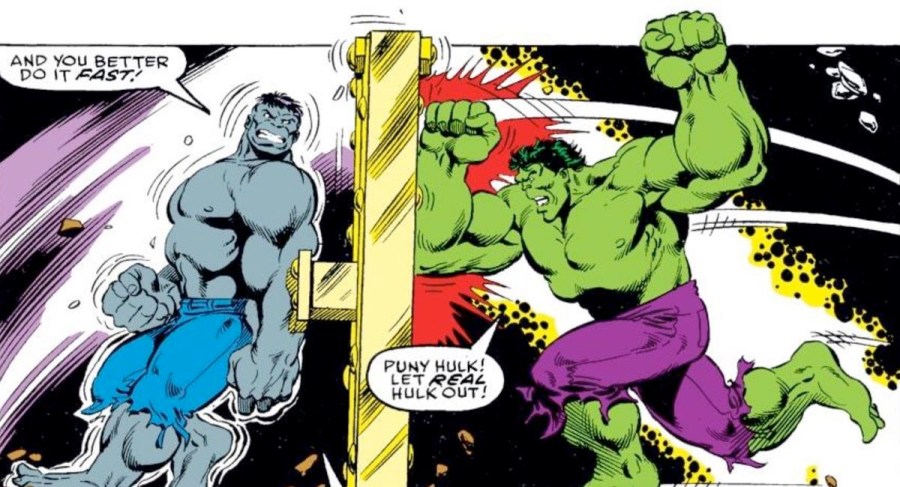
When we last left Bruce Banner, he had been cured of being the Hulk. Yeah…that never actually holds. Banner has actually been cured of the Hulk many times over, but it didn’t get mentioned here because it’s always at most a one- or two-issue fix. This time around is no exception.

With John Byrne come and gone, Al Milgrom would be the next guy in line to start something he couldn’t finish. He left before the story arc he began with Banner’s apparent cure was even finished. That was a symptom of a bigger problem for the Hulk in the 80s: nobody wanted to write the character. Driven into a funk by attempts to cash in on the TV show in a medium that lacked the acting and soundtrack that made the TV show huge, the character had become stagnant. That’s what forced Bill Mantlo to introduce a Banner-controlled Hulk and then a completely mindless Hulk – he had started to run out of ideas for the classic savage Hulk. But since his departure, and since Byrne’s plans to recreate the Hulk his way had been stopped short, the character was basically seen as a dead end. It got bad enough that the book was eventually handed over to some marketing guy named Peter David. And what did Peter David do with the book? Started a twelve-year long stint that turned the Hulk into one of Marvel’s hottest franchises, of course.

Continue reading “Superhero Evolutions: The Incredible Hulk, part three”

The Failures of the Flash, and Why the DC Extended Universe Flopped

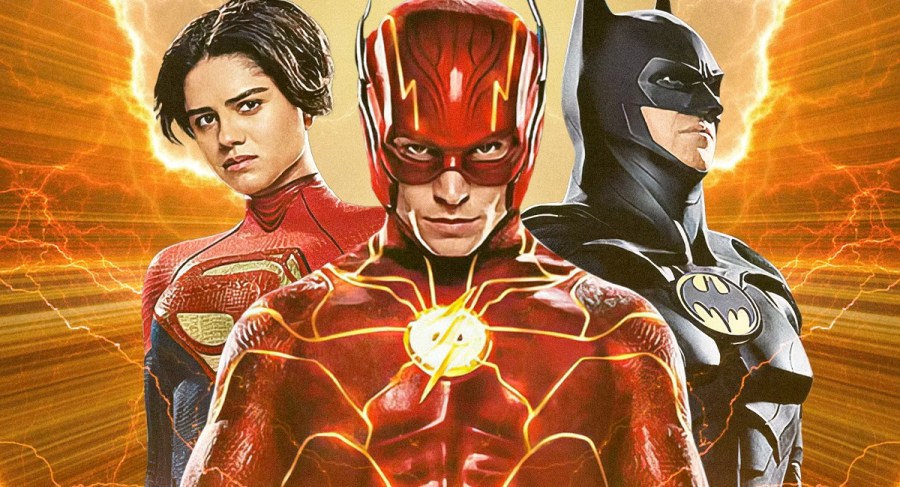
The Flash is the latest in a line of movies set in the DC Universe to flop critically, disappoint financially, or both. Despite trying to repeat the success of Spider-Man: No Way Home by giving fans a return of some of their favorite actors, in this case Michael Keaton as Batman, the film has greatly disappointed at the box office, spending a full month to reach the $250 million mark, all but guaranteeing that the film will lose a massive amount of money when all is said and done. It’s symptomatic of broader failures across the DC Cinematic Universe, which tried to replicate what Marvel accomplished with its films but has failed at almost every turn.

There are lots of reasons that these movies didn’t succeed, but I’m going to focus on what I think many critics ignore when they dissect these cinematic misses: the DC movies never took the time to earn the fan buy-in that they think they deserve.

Continue reading “The Failures of the Flash, and Why the DC Extended Universe Flopped”