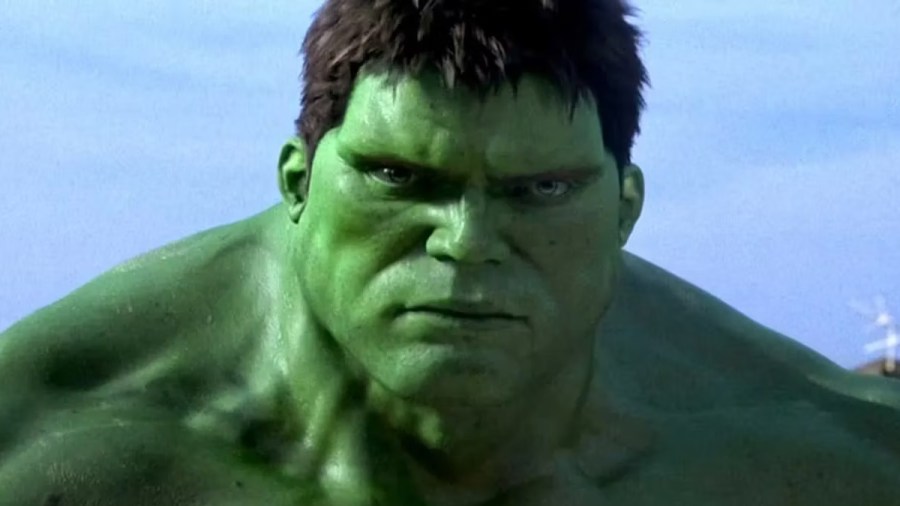
As a loud and proud Hulk fan, I get asked my opinion of the character’s film appearances fairly often. When I do, folks tend to be surprised that I’m not a huge fan of his role in the Marvel Cinematic Universe, largely because all his character development happens off-screen. Instead, my absolute favorite film interpretation of the character is Ang Lee’s 2003 movie, which met with mixed critical and box office success. Made in an era where Hollywood was still figuring out the superhero movie, Hulk took risks, showed reverence for the source material, and presented a film that was very much in the vein of the classic monster movies that provided Jack Kirby and Stan Lee inspiration for the character in the first place.
Here’s why I love this movie.
The Visual Style
The first thing that jumps out as Hulk gets going is Ang Lee’s style in directing it. The film physically looks like a comic book. The most obvious aspect of this similarity is when the screen breaks into different panels, but it can also be seen often in more subtle ways. During a closeup of a character, for instance, the camera will switch angles without breaking away, changing the way you see the character. If two people are having an intense conversation from across the room, the camera will give us a closeup of both of them at once, so we see the people rather than the scenery. Many people consider this style of camerawork to be gimmicky, and in a way it is. However, it also sets the tone of the movie. This is a comic book film; the characters and the action all have that larger than life aspect to them. When you see the Hulk swat missiles away later on, don’t be too surprised.
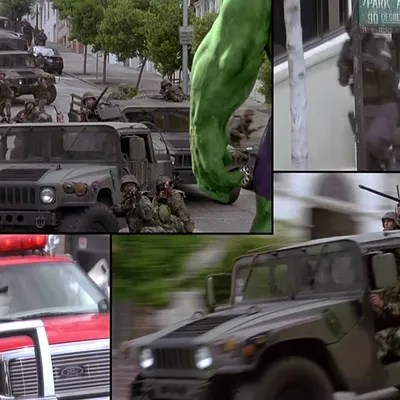
There are also several key points during the film where the comic-style transitions work particularly well. When Edith Banner is giving birth to Bruce, the scene swells and bursts through the middle of the screen, emphasizing the pain of childbirth. When Bruce meets Glenn Talbot, a former lover of his own beloved Betty Ross, the screen splits to give us a view of how each of them reacts within the love triangle. When Banner is finally captured by the military, the multiple panels give us a quick layout of the desert base where he is brought, showing us exactly how securely Bruce is kept.
it would have been easy to keep the visuals to simple boxes, but Ang Lee uses the film in the same way that Jack Kirby used a comic book page. He creates dynamic shots that allow the borders of the pictures to tell the story more effectively.
Strong Acting
Hulk came out in 2003, when the superhero movie was still a largely disrespected genre. While Blade, X-Men, and Spider-Man had established that there was money in Marvel movies, it was nothing like the modern scene where every actor under the sun is eager to become part of the Marvel Universe. Nonetheless, Ang Lee brought in some very big names who would take this movie about a giant green behemoth seriously. Nick Nolte had been nominated for two Academy Awards, Jennifer Connelly had just won an Oscar for Best Supporting Actress for her role in A Beautiful Mind, and Sam Elliott was a well-established character actor. The biggest unknown was Eric Bana as Bruce Banner, and he had already received rave reviews for his role in Chopper.
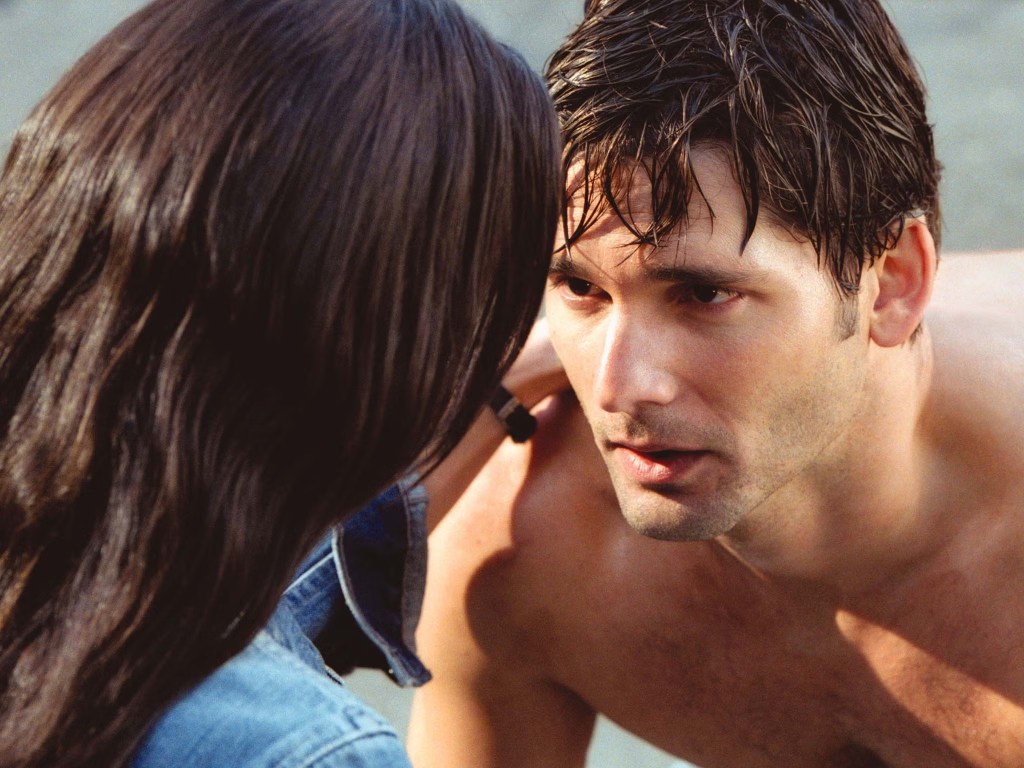
Lee did not approach Hulk as a straightforward summer action flick, and his choices led to some great acting moments. Even when he goes off the deep end as Bruce Banner’s abusive and ultimately superhuman father, Nick Nolte delivers a believable performance as someone whose obsession and selfishness puts everyone else at risk. Sam Elliott delivers the sort of “Thunderbolt” Ross that I’ve always wanted to see, presenting him as intense, obsessed, but ultimately honorable. And because the movie takes the time to consider its themes of trauma and abuse well, it touches upon some of the darker elements of the comics that all other adaptations have ignored.
Built Like a Monster Movie
Hulk was marketed as a summer blockbuster, which set expectations for a different movie than what we got. Rather than something in the vein of Spider-Man or X-Men, we got an old-fashioned monster movie akin to Frankenstein or Godzilla. As a result, much of the early film involves the laying of groundwork for the psychological aspect of the monster. The Hulk doesn’t physically show up until a third of the way through the movie, but his presence can be felt much earlier.
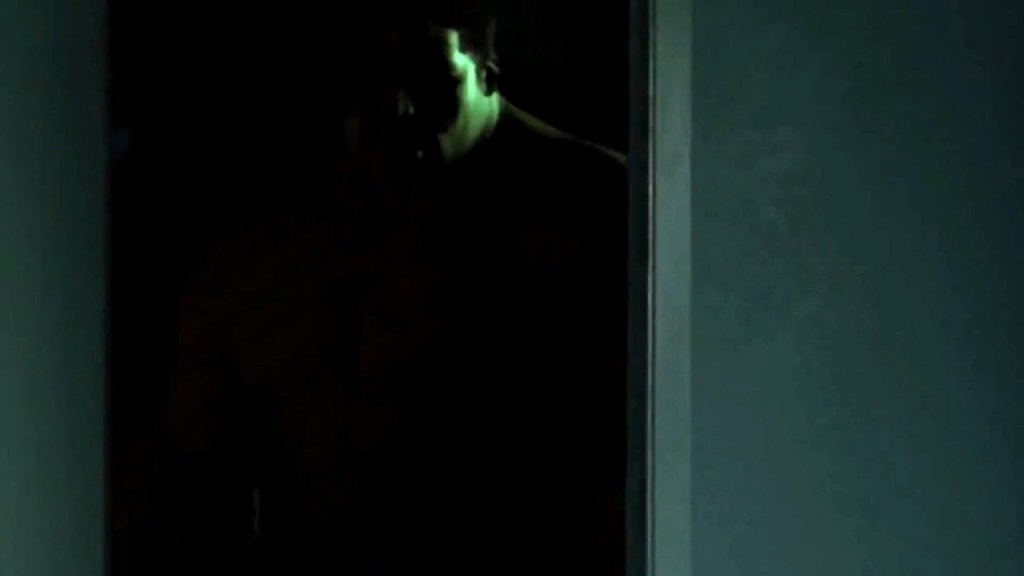
The first 40 minutes focus on Bruce Banner and what made him who he is. This is essential groundwork for the Hulk, because Banner is another personality entirely. When we see Spider-Man swinging around on the screen, we know that he’s Peter Parker wearing a mask. When the Hulk is on the screen, Banner isn’t.
To offset the Hulk’s rage and chaos, the film gives us a Banner who is extremely controlled in everything he does. We see his schedule of misting desert flowers at night and his slow, careful strokes as he shaves. This is the same formula that horror films and monsters use: first we see life as it should be, ordered and neat. Then the monster shows up and starts smashing.
For Bruce Banner, things fall apart at an alarming rate. After receiving what should be a lethal dose of gamma radiation in a lab accident, he first discovers that his real father has been stalking him. Then he has to deal with a potential hostile takeover of his lab from Glenn Talbot. Finally, when Betty tries using her high-ranking general of a father to exert some pressure and get rid of Talbot, she instead finds out that he is more concerned about Bruce as a potential danger. Eventually, Banner loses his temper and turns into the Hulk, and the carnage begins.
Special Effects of Ages Past
The Hulk himself is a major controversy regarding the film. In the trailers, the computer graphics weren’t finished, and as a result the creature wasn’t fully defined, leading to many complaints about the special effects before the film was even released. The final product is quite good for 2003 technology, although the Hulk still looks jerky in some spots and unrealistic due to his lime green skin (later films would make it more of an olive green).
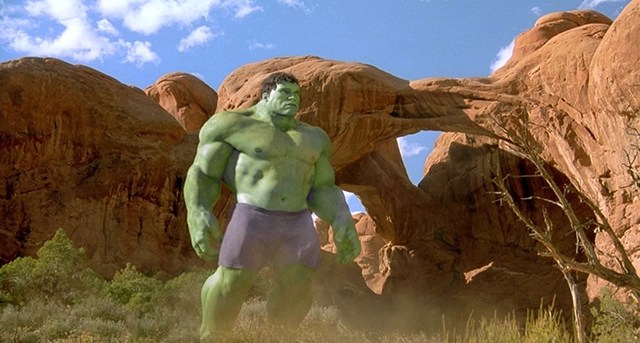
Of course, the Hulk is a 15-foot tall creature with bright green skin, so the film was never going to achieve photo-realism. The special effects do manage to make the Hulk look like he’s a part of the environment. When he’s in the desert, his skin gets dusty. He gets wet when exposed to water, and the environment around him changes based on how he interacts (or smashes) it. Whether these special effects hold up is largely dependent on how much of a pass you’re willing to give the technology of the time.
I think I should note here one minor observation that I’ve made regarding Banner’s pants. Many people have asked why the Hulk’s pants don’t fall off when he transforms. The simple answer is that no one wants to see a massive irradiated penis. But the film does explain this, in a way. When Banner first transforms, he isn’t as big as he becomes later in the film, and so his pants are only torn. The next time he shows up, his pants do fall off after he transforms back into Banner, with the Hulk’s growth having torn them to shred. Later on, he’s wearing stretchy pants, and in the fourth and final transformation we don’t see how big the Hulk has become because he is fighting another monster. Just an observation on my part…don’t think too hard about why I’ve been tracking the Hulk’s pants situation.
The Hulk actually combines elements of several actors thanks to motion capture. For obvious reasons, he looks vaguely like Eric Bana. Jennifer Connelly was used for his facial expressions, allowing him to convey a great deal of emotion (which is important since he only speaks twice). Finally, Ang Lee himself did most of the Hulk’s actions, which must have been physically exhausting considering how much carnage he causes. During the span of the film, the Hulk trashes Banner’s lab, tangles with mutated dogs, takes on tanks, helicopters, and jet planes, and battles with the aforementioned other monster. There is a lot of action here, showcasing the Hulk’s power. But while the Hulk is a creature of rage, he also has a human side. There is a surprisingly low body count, mainly because the Hulk shows enough control not to kill people. He also has several moments when he is alone in the desert or facing Betty where the gentle aspects of his nature show through. In short, the crew managed to create a monster with a soul very effectively.
Comic Book Weirdness
Above you might have noticed that I mentioned mutated dogs. It sounds silly to talk about gamma-irradiated dogs, but the actual fight is possibly the best battle in the film. It’s a silly concept taken seriously, and that’s a take on the comic book story that remains consistent throughout the film.
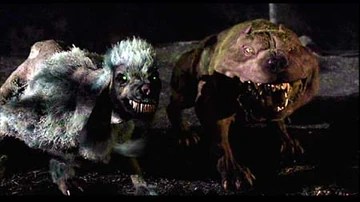
Hulk is a serious story, but it doesn’t lack humor. Much of the humor comes from the strange situations that Banner’s adventures put him in, such as the appearance of an irradiated poodle. Others happen as part of the action, such as when the Hulk grabs a missile, bites the head off, and spits it back at the copter that shot it at him. And still others happen as a result of the shooting, such as when Glen Talbot dies due to a misstep on his part and gets a “splash page” of sorts as the movie resorts to its comic-book roots to show the results of him getting caught in an explosion.
Hulk takes itself seriously, but it provides moments of levity. The big difference between this film and a typical post-Iron Man Marvel movie is that the comedy aspects go unremarked upon, allowing the audience a chuckle but not breaking the larger narrative. More modern superhero movies take time to mug for the audience a bit as the punchlines land.
Hulk does have its flaws. At certain points the script is a bit cumbersome and causes the actors to stumble through their lengthier lines. The lack of a body count is sometimes contrived, and as I mentioned before, the Hulk sometimes looks odd due to the special effect limitations of the time. However, the film is overall very powerful, working not just as a superhero and monster film but as a very good metaphor of rage, repression, and trauma. It is a very good movie, and I think it’s one of the best Marvel movies out there. It got panned by fans and critics when it came out, but I believe it has aged well and will be looked upon increasingly fondly as time goes on.
Images: Universal Studios
 Babbling Brooks