
In 2018, a yer late, I finally sat down and watched The Last Jedi. Knowing that it already had a bad reputation among fans but somehow avoiding spoilers as to why, I was pleasantly surprised and really liked the movie. It did what I thought impossible from the Star Wars franchise and challenged my expectations. The movie broke away from some tired clichés, such as the requirement that someone has to be “born special” to be a fantasy hero, and showcased through Kylo Ren what Luke would have become had he struck the Emperor down in Return of the Jedi.
Given my enjoyment of that film, you’d think that I’d have been all over the then-upcoming The Rise of Skywalker, but to this date I haven’t seen it. The replacement of Colin Trevorrow as director with JJ Abrams, who had delivered an enjoyable but very by-the-numbers film in The Force Awakens signaled to me that Disney was overcompensating for fan backlash and was looking to deliver a “safe” final installment to the trilogy. In my experience, safe filmmaking tends to be boring filmmaking.
What I know of The Rise of Skywalker tells me that my suspicions were correct. Rey was made “special” by way of birth rather than deed, there was much pandering to fans, and the villain was an Emperor that nobody particularly wanted back.
All this preamble brings me to a big question: how has The Last Jedi held up for me? Six years after I first enjoyed it, does it still entertain? And does the fact that it breaks with tone and tradition in the middle of a trilogy hurt its place in the larger franchise?
The Lack of a Story Bible
In the spirit of challenging expectations, I’ll put my conclusion first: The Last Jedi does a good job as a film, but was a terrible idea for a franchise movie, especially the middle of a trilogy. Viewed as part of a series, this film is simultaneously the one thing keeping the sequel trilogy from being a boring rehash of the original three films and the reason the trilogy turned into such a disappointment.
Well, not the biggest reason. The biggest reason the sequel trilogy disappointed is because, inexplicably, Disney didn’t have any story bible or plan for where the movies were going.
Maybe the folks in charge reasoned that the original trilogy had turned out fine despite George Lucas not really having a plan, so this one would work out, too. But Lucas didn’t realize how big Star Wars would become when he started working in 1977, while Disney expected this trilogy to be the start of something even bigger. Given the high expectations, you would think that the studio would want to series plotted out ahead of time, especially since the original plan was to have three very different directors each take one movie.
Instead, Disney treated Star Wars like a round robin. JJ Abrams put together the first film, left it on a cliffhanger, and Rian Johnson was expected to follow through without having any knowledge of how the story was supposed to end. And, as with many round robin projects, one person decided to do his own thing and left someone else to try to tie it all together.
On its own, The Last Jedi is a pretty good deconstruction of the tropes that made Star Wars. The problem is that a deconstruction doesn’t really work if it’s directly linked to the thing its tearing apart. The second film took every plot thread from the first and either tossed it aside or outright destroyed it. As a result, it’s not surprising that the third entry in the trilogy had to go back to the past and become a confusing mess.
This trilogy should have had a bible or outline that the directors used as a guideline. The folks in charge of these stories should have know where they were going. Inexplicably for a project of this scope, there was no plan.
What I Like About this Movie
Years later, there’s still a lot about The Last Jedi that I like:
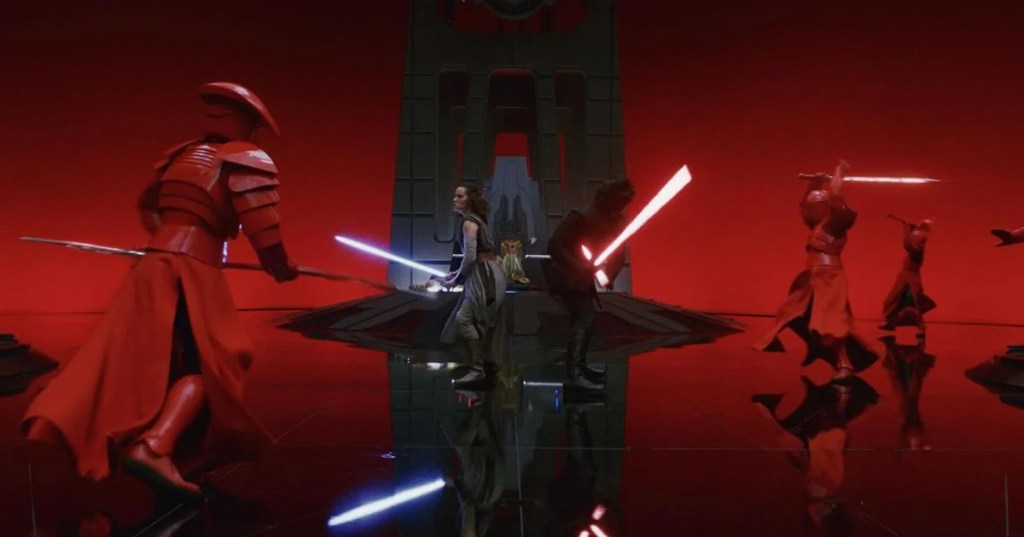
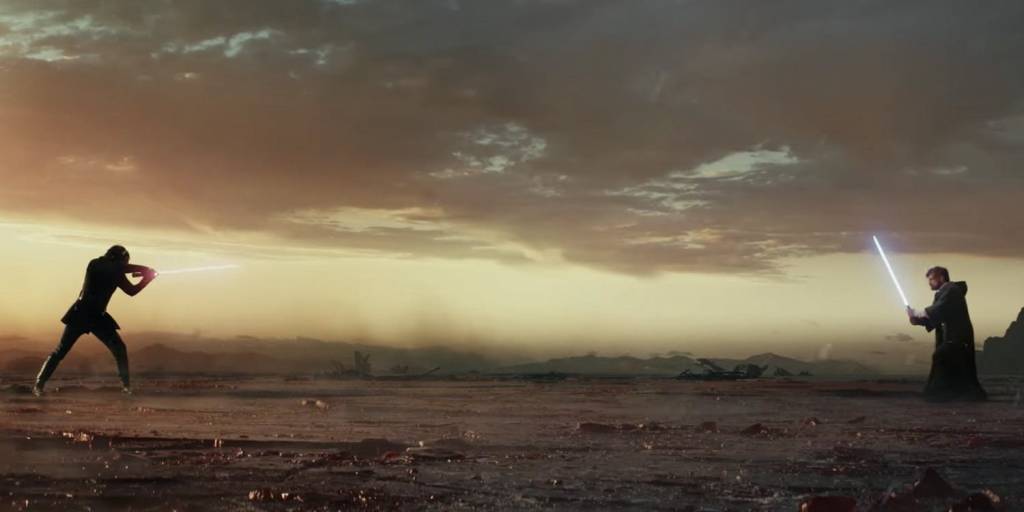
It’s gorgeous. In a franhise known for its visually stunning images, The Last Jedi might be the prettiest of the bunch. The throne room fight, the space battles, and the climactic showdown on a field of salt are all beautiful. Filmmaking is a visual medium, and The Last Jedi gets the most out of its visuals.
It challenges some tired tropes. Fantasy stories have spent too long connected to the “chosen one” idea where winning the genetic lottery makes someone a hero. The whole concept was basically invented to make sure that the powerful had a claim to stay in power, and while it’s not necessarily a bad story it gets annoying when it’s the only one out there. The idea that Rey was a nobody who earned her power through her adventures was a very good one. The ending shot of a random kid being inspired and possibly becoming a future hero is wonderful. Of all the things that made me bounce hard out of the trilogy, the decision to make Rey another descendant of a powerful ancestor disappointed me the most about The Rise of Skywalker.
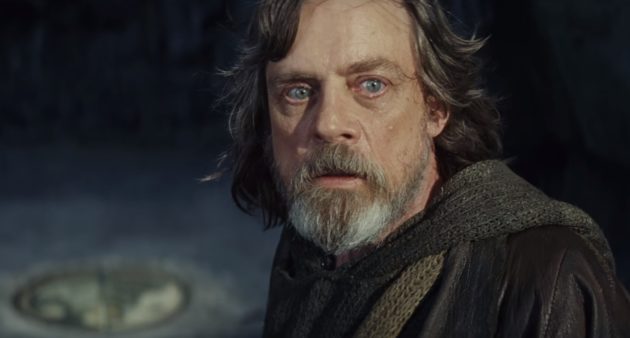
It pushes Luke as a character. Luke Skywalker could have been brought back into the franchise as a clone of Obi-Wan Kenobi, there to provide some morsels of wisdom and maybe die in a sword fight. Instead, he showed up as a fallen hero in need of redemption due to his part in turning Ben Solo to the Dark Side. Luke as a jaded, sad former hero wasn’t particularly possible, but I liked the choice. Specifically, I liked that his fall was just a single moment of weakness–he didn’t intend to kill Ben, but he considered it for a second. It’s a sad truth in our modern society that the worst people get pass after pass while those who could be heroes get a broken pedestal after a single mistake. Luke letting one particularly bad moment destroy his legacy and then having to overcome that resonated strongly with me.
It showcases the non-violent nature of the Jedi. Throughout Star Wars, the Jedi are presented as warriors of peace, but an awful lot of the franchise focuses on them killing people with their lightsabers. Luke’s final actions in the film present a nonviolent solution that seemed impossible. It showcases his power as a Jedi, as he is able to project his image from light years away and battle Kylo Ren to a standstill without ever having his foe actually touch the projection. Luke uses his knowledge of his opponent to buy time for his allies while also inspiring them. Finally, Rey gets everyone to safety by moving rocks with the Force something she had scoffed at before. I wish more Star Wars films relied on the heroes not blowing something up to save the day.
Porgs. I mean, just look at them.
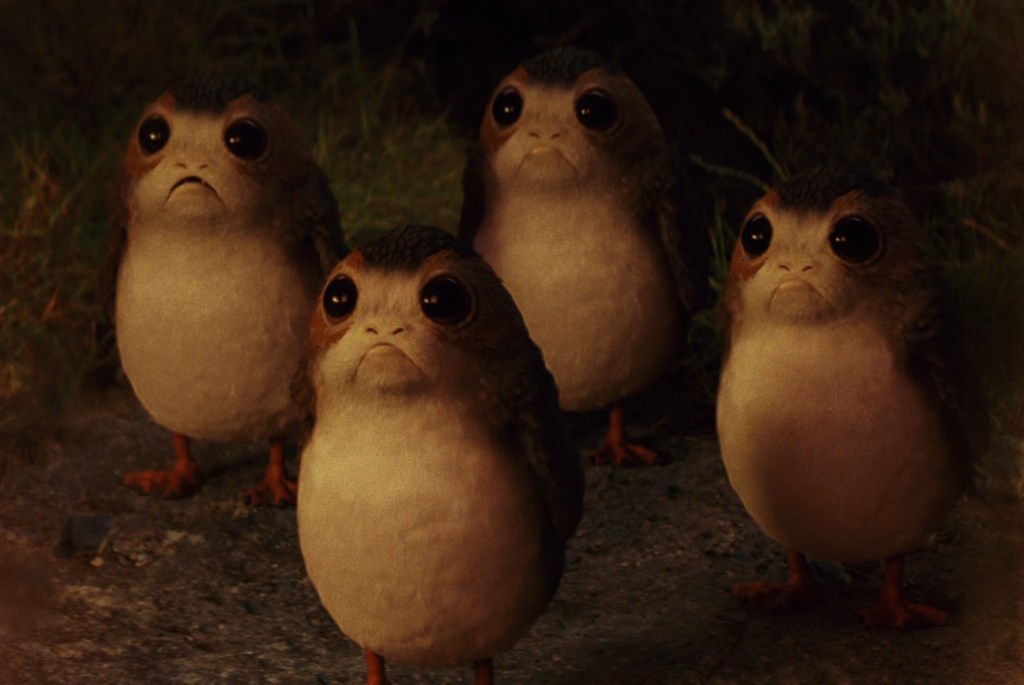
Probably the best addition to Star Wars since Chewbacca.
What I Have Come to Dislike About this Movie
Judged on its own, I still think The Last Jedi is mostly a good movie. Unfortunately, it’s one part of a trilogy. As a chapter in a longer saga, it undermines the rest of the tale, deconstructs the themes of the franchise, and does very little to set up the final piece of the trilogy. A lot of the fault here comes down to Disney for not providing enough of a framework to ensure that the three sequel films would tell a coherent story, but there’s also a degree to which Rian Johnson and the rest of the creative team behind The Last Jedi should have recognized that they were working as part of a larger picture.
It doesn’t pay off any of the planting done by its predecessor. A key example of this complaint is the first scene between Luke and Rey. The end of The Force Awakens sets up the return of Luke Skywalker as a very big, dramatic thing. The start of The Last Jedi undercuts that moment by having Luke wordlessly toss his lightsaber away and leave. Multiple times in the film, something that was established as important in The Force Awakens is discarded as meaningless. That not only hurts the larger narrative, but punishes anyone who was invested in the story begun by The Force Awakens.
It fails to plant seeds for the next film. One of the roles that The Last Jedi should have filled was to set the stage for a final chapter in the trilogy. Instead, it dismantled the work done by the first movie and told a mostly-closed narrative. I don’t really mind that the movie killed Snoke; in fact, I liked it because I didn’t really care for a cheap knockoff of the Emperor (too bad we’d get the real thing back in the next movie). However, because the previous film had set up Ben as someone in need of redemption, it was foolish to believe that Kylo Ren would become the main villain of the next movie. Without someone willing to run with that thread, The Last Jedi wound up telling an insular story when it needed to provide a clear path for the next film to follow.
It punishes the characters for following the established fiction. Star Wars is a fictional setting that encourages a gung-ho attitude where authority gets challenged and intuition is king. While it’s good to challenge that now and then, The Last Jedi is merciless about tearing characters down for following the lessons that the fiction has encouraged for years. Finn and Rose get punished for careless parking while they’re in the middle of a mission to save lives. Poe follows his intuition and jeopardizes everyone through a well-intentioned mutiny. Rey tries to reach the humanity within Ben and winds up making him worse. One of those twists could have worked as a good break from Star Wars traditions, but all of them together make for a film that feels mean-spirited at times. The first two feel especially bad because the characters are justified in their actions–Finn and Rose had more important things to worry about than parking, and Poe’s mutiny could have been avoided had Holdo communicated effectively.
It killed Luke. I like Luke’s death scene a lot, and it’s not the movie’s fault that Carrie Fisher died in real life. However, in retrospect I would have really liked one of the original three heroes to survive this trilogy. I do feel that Luke’s death felt like a passing of the torch moment between him and Rey, but I would like to think that the film would have gone in a different direction had they known that Carrie Fisher would be dead before its release. Lacking a moment of real closure between Luke and Leia sucks.
Poor Communication Kills
The Last Jedi isn’t the first movie that I’ve loved on first sight and then soured on, and it won’t be the last. There are still a lot of things about this film that I like, and I think it’s in the top half of quality when looking at the Star Wars franchise.
Despite that, my new conclusion is that it didn’t do a good job of supporting the greater narrative. Rian Johnson was handed the keys to part of a greater narrative and chose to instead create one chapter that was almost completely divorced from the rest of the story. The Last Jedi doesn’t pay attention to what came before and it doesn’t show any thought regarding what might come next.
The ultimate failing in this film and the sequel trilogy as a whole lies at Disney’s feet. It’s ridiculous to give the green light to a first chapter like The Force Awakens that panders to nostalgia to a fault, and then completely reverse course with something like The Last Jedi which takes a wrecking ball to the themes and tone of the franchise. If they wanted a second chapter like The Last Jedi, they needed a completely different first chapter.
I think the folks in charge of Star Wars know that the franchise is a cash cow and thus don’t pay much attention to tone or long-term plotting. They follow the money, which is why the success of something like The Mandalorian leads to the lead of that series getting shoehorned into The Book of Boba Fett (and why Grogu came back despite a good ending being put in place for the character). That’s not out of place for the Star Wars franchise; no matter what George Lucas says, he didn’t have the original trilogy fully plotted out when he first wrote Star Wars. But the lack of a long-term vision and desire for cohesion in the narrative means that more entries in Star Wars will be like The Last Jedi: very strong when looked at individually, but less attractive as part of a whole.
Images: Disney
 Babbling Brooks