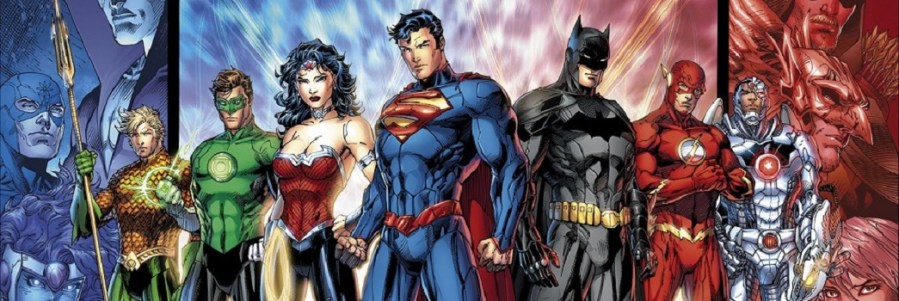
In 2011, DC Comics kicked off the “New 52,” canceling all of their previous titles and rebooting their superhero universe with 52 titles in a brand new continuity. Despite an initial uptick in sales, it’s safe to call the experiment a failure, as the whole continuity got rebooted again in 2016 with “Rebirth.”
There were a lot of reasons why the New 52 failed, but it primarily boils down to a lack of consistently good writing. DC editorial tried to pick and choose from the old continuity, deciding that some things happened and some things didn’t, but never developed a consistent timeline that its creative teams could follow. Editors also heavily meddled in the direction of the books, often hamstringing talented writers. (Prime example: the excellent Gail Simone getting what should have been her dream project on Batgirl, only for the story to turn joyless and perfunctory as the character got sucked into Batman’s “Death of the Family” crossover.)
Despite its failings, the New 52 did have a few gems. Here are a few titles I found really enjoyable.
All-Star Western
I liked the New 52 most when it emphasized that the DC Universe had its share of weirdness even before superheroes showed up. All-Star Western, for example, introduced a 19th-century version of Gotham City and an amnesiac Booster Gold, all while remaining mostly in the trappings of a traditional western.
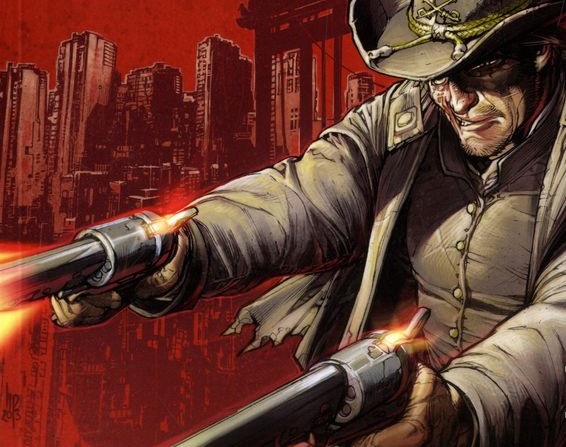
The book featured Jonah Hex, who existed for about 40 years or so in DC Comics but only interacted with other characters in zany time-traveling plots. Although the series did later dabble in time travel, it mostly showcased Jonah bringing his rough-and-tumble western ways into the urban environment of Gotham. This gave the city a better sense of history, making it feel like the location existed before it became the setting for Batman’s adventures.
For the first year and a half, the book was pretty much a mix of western and horror tropes, with Jonah joining up with Amadeus Arkham and the scarred Tallulah Black, whose badass tendencies and complete lack of shame about sex made her an instant favorite character of mine. Later, Jonah wound up in more superheroic adventures, teaming up with amnesiac time-traveler Booster Gold and then later finding himself in the modern era and meeting Superman. Despite the vast possibility that such plots would be terrible, they actually were quite awesome, thanks in large part to the creative combination of Jimmy Palmiotti and Justin Gray.
While the series only last for three years, the last issues provide a definitive ending for Jonah’s adventures, while not closing the door entirely. This makes the six-volume graphic novel set well worth buying, since it has a definitive beginning, middle, and end without feeling like a prelude to the next big crossover event.
Demon Knights
Another comic that took place in the DC Universe’s past, Demon Knights embraced the fantasy genre in the same way that All-Star Western embraced the western. One of the characters, Etrigan the demon, was familiar to long-time DC fans, but the majority of the others were new and interesting characters who readers met for the first time.
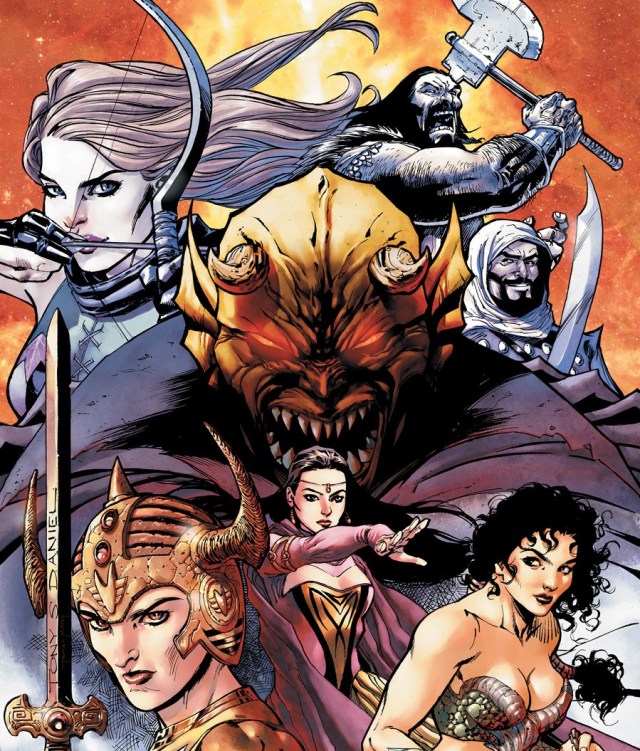
Although it took place in the Middle Ages, Demon Knights had little in common with historical reality. This was only fitting, since a world where gods exist and superpowers are a thing would be markedly different from our own. This brought the tale closer to the superheroic fantasy genre seen in role-playing games like Dungeons & Dragons, which would probably explain why I liked the concept so much.
Like All-Star Western, this book got canceled a few years into the New 52 experiment. Nonetheless, it represented another good look at the DC Universe’s past. I only wish DC had embraced the idea further, giving us some 19th-century steampunk tales or spy comics that took place in the Cold War. The opportunity to fill in the setting’s history was there, but the company’s focus never drifted very far from superheroes.
Animal Man
Until late in its cycle, the New 52 suffered from a certain same-ness among its superheroes. As part of this same-ness, there seemed to be an editorial mandate that superheroes couldn’t be married or have family lives. Superman served as the poster child for this, as not only did he lose his marriage to Lois Lane, but his background got rewritten so his parents were killed off when he was young. That’s a big reason why Animal Man was a breath of fresh air.
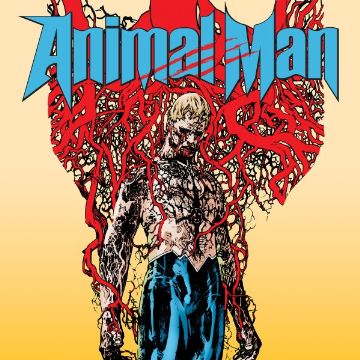
In both the DC and Marvel superhero universes, Animal Man was a rarity in that had a relatively happy marriage and a family who played a role in his heroics. Animal Man broke away from the typical DC mold, presenting a guy with powers who was more or less retired from the tights and flights business. I understand the belief that married characters become less interesting (I disagree with it, but I at least understand it), but if your company is publishing 52 stories a month, there needs to be some variety. Animal Man provided that variety.
Wonder Woman
Of course Wonder Woman is on my list. I mean, how can you screw up Wonder Woman?
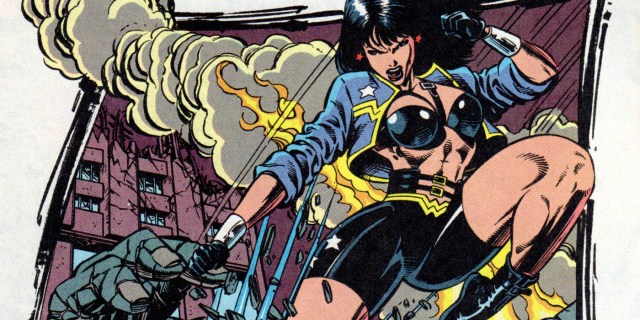
Okay…pretty easily. But this time they didn’t – at least not in my opinion. The creative team of Brian Azzarello and Cliff Chiang departed from the norm by presenting a less idyllic version of Themiscyra, but told a remarkably interesting story despite (or because of) the changes.
The story took risks by making some big changes to Wonder Woman’s history, but those risks paid off in the form of a compelling tale that showcased Diana’s strength, wit, and compassion. Early on we found out that Wonder Woman was actually a child of Zeus, that Ares (the big bad from the previous universe) was her mentor, and that taking off her bracelets basically made her go super saiyan. These changes each worked out well because they each played an integral role in the story at hand.
The first 36 issues of Wonder Woman remained largely disconnected from the DC Universe. On the one hand, this made for a bit of disparity when romantic tension between Wonder Woman and Orion began building in her own book, but she and Superman were locking lips over in Justice League and Superman/Wonder Woman.

On the other hand, it allowed the character to develop on her own in the rebooted universe. Especially early on when DC couldn’t give a straight explanation of what happened from the old universe and what didn’t, Wonder Woman’s book felt like a true reboot while also managing to dodge all the obnoxious origin stuff that often comes from such a situation.
As with All-Star Western, Azzarello and Chiang managed to tell a complete epic with a distinctive beginning, middle, and end over the course of 36 issues. While some changes, particularly the more bloodthirsty Amazons, weren’t appealing to everyone, this was a well-told story that stayed true to the vision of a Wonder Woman who used her femininity as a strength.
I think the title suffered a drop in quality when it became more integrated into the main DC Universe with issue #37, but I’ll always treasure the first three years of this book. Those who didn’t like the changes to the Amazons should be heartened by Wonder Woman’s next reboot in Rebirth, in which acclaimed writer Greg Rucka restored the more peaceful and wise women of yesteryear.
Overall, the New 52 was a failed experiment. But at least it did provide a few real gems that fans can treasure for years to come.
 Babbling Brooks