AD&D’s Planescape: The Good, the Bad, and the Mixed Bags

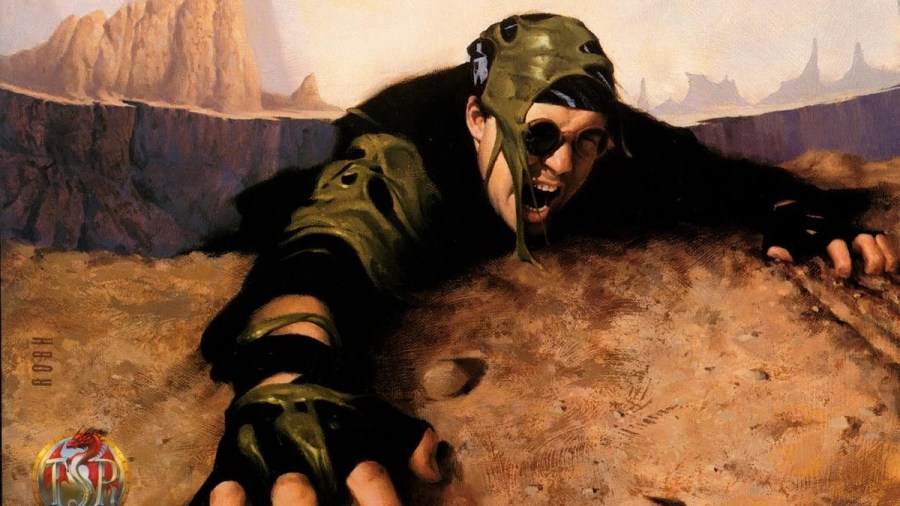
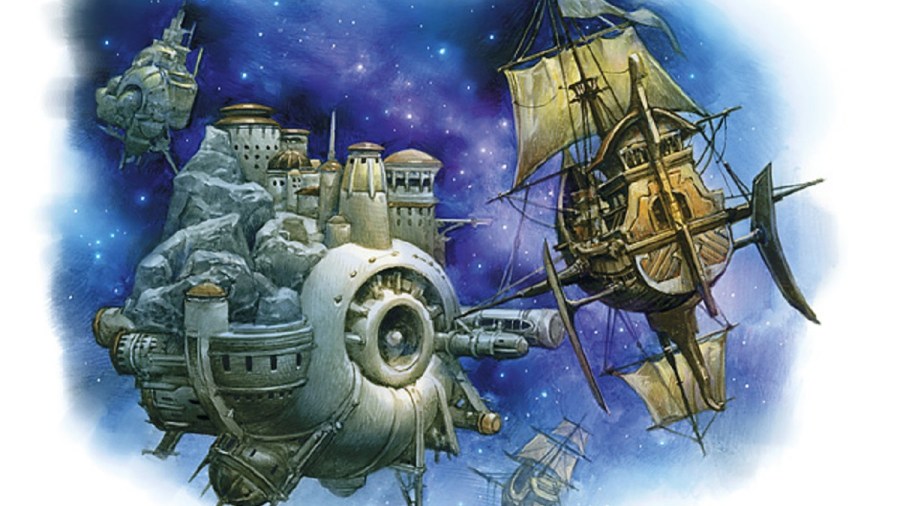
My interest in Dungeons & Dragons history recently led me to the Advanced D&D product Well of Worlds, released in 1994 as part of the Planescape line. That setting was beloved by fans for its weirdness and the way it turned abstract philosophy into adventuring material. Since D&D recently went back to the Planescape well with a boxed set, now seems like a good time to delve into the classic setting as it appeared in the 90s. As I tour the Well of Worlds, here’s my thoughts on what I like, dislike, and have mixed feelings about in this beloved setting.

Continue reading “AD&D’s Planescape: The Good, the Bad, and the Mixed Bags”

The Most Game-Tastic Moments in Dungeons & Dragons: Honor Among Thieves

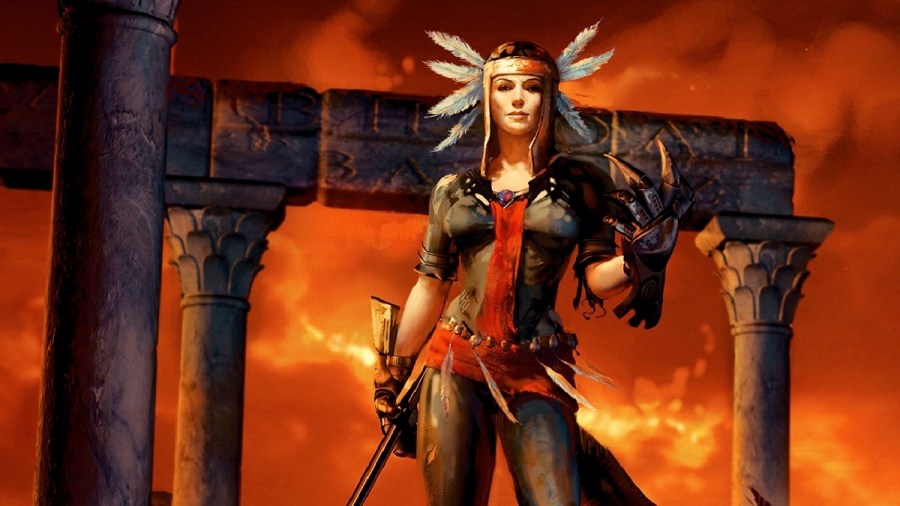
After so many years where mention of a Dungeons & Dragons movie meant some of the cringiest moments in film history, it is an absolute joy to have a good D&D movie with 2023’s Honor Among Thieves. That film managed to provide a solid, fun story spurred on by a likeable cast, and it caught a good among of accurate game lore in it as well.

Most remarkably, I found that Honor Among Thieves managed to feel like an authentic D&D session captured on the big screen. Just about everything that happened in the movie could occur in a D&D session, including stuff that isn’t in the rules but which every gamer has experienced. Here are the moments in Honor Among Thieves that really sold this film to me as a game come to life.

Continue reading “The Most Game-Tastic Moments in Dungeons & Dragons: Honor Among Thieves”

Three Editions Later: Baldur’s Gate and the Development of D&D

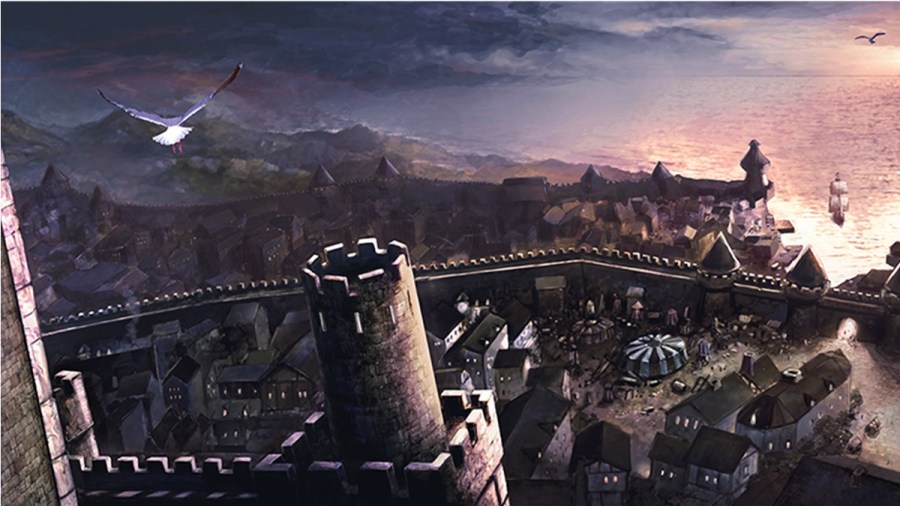
With its incredibly deep game play and commitment for Forgotten Realms lore (even when I wish they would ignore said lore), Baldur’s Gate 3 is a triumph for the Dungeons & Dragons franchise. More than any other computer game I’ve ever played, it feels like I’m playing a tabletop game with the production values of a Hollywood blockbuster.

But the game’s predecessors are no slouches, either. In fact, for the past 25 years, Baldur’s Gate 1 and Baldur’s Gate 2 have been unicorns that other RPGs chased. While other D&D games have strengths of their own, none quite replicated the deep and massive story of those old games while also maintaining a distinctly D&D feel.

Yet those older games, despite making Baldur’s Gate 3 possible, feel very different from the newest iteration of the franchise. Some of that is merely a matter of scope and funding; Baldur’s Gate 1 and 2 came out in older days with less technological power and far less money behind them. But a lot of it has to do with the fact that Dungeons & Dragons has changed dramatically over the years. The original used the 2nd edition rules, while Baldur’s Gate 3 uses 5th edition as its base. The rules have changed, but so have the types of stories fans want to see.

Continue reading “Three Editions Later: Baldur’s Gate and the Development of D&D”

Baldur’s Gate and the Happy Ending Override

Baldur’s Gate 3 is taking the video game world by storm. It takes the unenviable task of following up on a beloved franchise that has lain dormant for years and not only proves itself worthy but may be the best entry in the series. But while there is no curbing my excitement to return to old stomping grounds, there are some sharp pangs of regret as I see the fate of certain individuals who deserved better.

Any follow-up to the epic conclusion of Baldur’s Gate 2: Throne of Bhaal was going to have to make some decisions in how things ended canonically, since the game offers many different possible fates for Gorion’s ward and their companions. Unfortunately, that canon proves to be quite unkind to some returning faces. Some of that could have been avoided through different storytelling approaches, but much of it unfortunately comes down to how the Dungeons & Dragons has been mismanaged since the 2001 finale of Throne of Bhaal.

Naturally, spoilers for Baldur’s Gate 3 (and its much older predecessors) follow.

Continue reading “Baldur’s Gate and the Happy Ending Override”

On Character Death

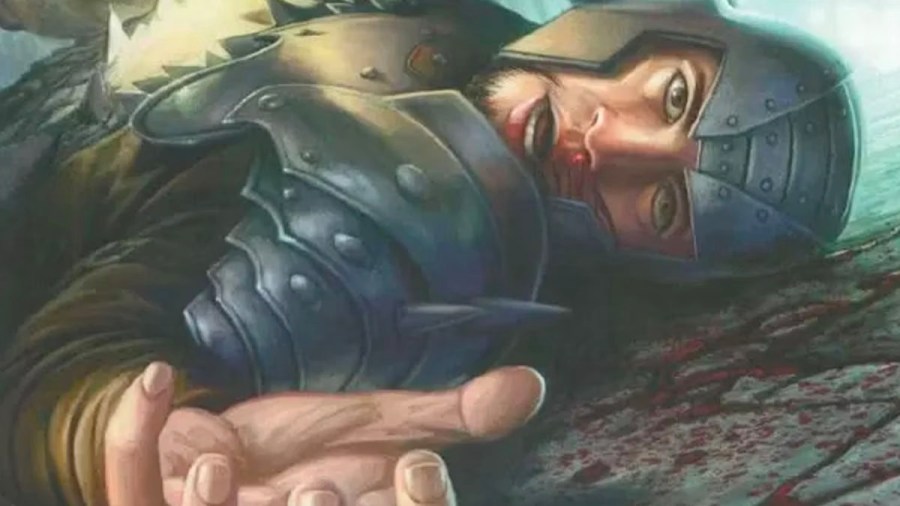
Character death is a touchy subject in RPGs. Some people think the PCs should always be at risk, and that an adventure is an outright failure if at least one character doesn’t get killed off during the action. Others never have PCs bite the dust, using house rules that cause a hero to go unconscious but not die when the rules as written would have them pushing up daisies. And, as with any divisive topic with extreme opposite stances, the majority of players fall somewhere in the middle of that scale.

Continue reading “On Character Death”

Where Memory Lane and Rejection Road Meet

My house has too much stuff in it, so I went through my possessions to decide what needs to go. Finally, I came across my Big Box o’ Rejections.

When I first started writing, I decided to save all my rejection letters as a way to keep myself motivated. But now that rejections come electronically and are almost exclusively form letters – and now that I have a lengthy publications list – I don’t feel that I need it anymore. So this box has got to go.

The box itself contains rejections, old drafts of stories from writing workshops, and a few magazines and newspapers where I got my first publishing credits. As I sorted through old letters, I got the most enjoyment out of reading some old rejection letters from my high school days, when I wrote articles for Dragon Magazine.

Continue reading “Where Memory Lane and Rejection Road Meet”

Gaming Stories: Curse Your Sudden but Inevitable Betrayal!

Night Below: An Underdark Campaign is a classic AD&D adventure that I purchased when it came out in the 1990s but which I never got to run all the way through until the 2010s. Beginning with D&D 3rd edition and eventually converting to Pathfinder, my final version of the campaign saw some changes, including revising the Rockseer elves and adding a secret villain behind the aboleth conspiracy: the Red Mage.

Continue reading “Gaming Stories: Curse Your Sudden but Inevitable Betrayal!”

Gaming Stories: Pirates of the Astral Sea

Well, that was certainly unexpected.

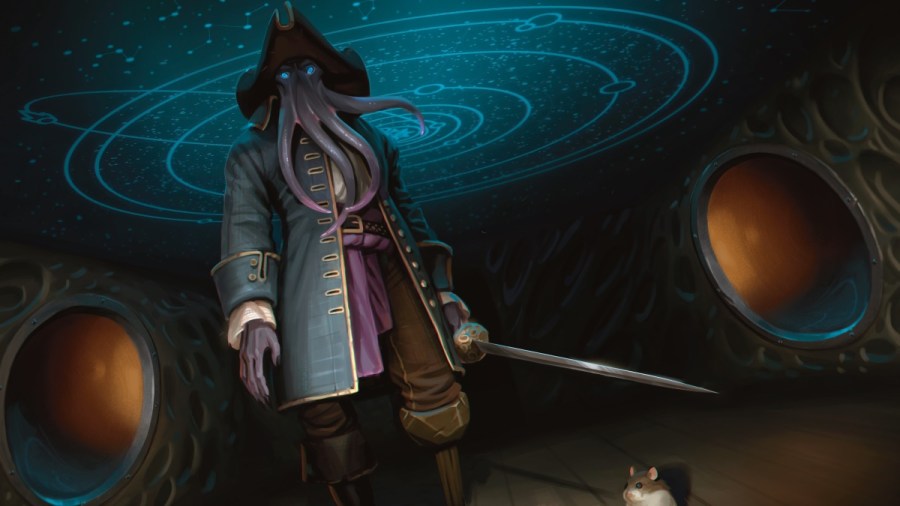
Last fall, my players greased up a rowboat and sent it hurtling down a waterslide of doom. They wound up in an entirely different world that used a version of the classic AD&D module Dungeonland, tweaked to fit with Pathfinder 2nd edition. And, well…they found a way out of Dungeonland. And now they have a bigger boat.

Continue reading “Gaming Stories: Pirates of the Astral Sea”

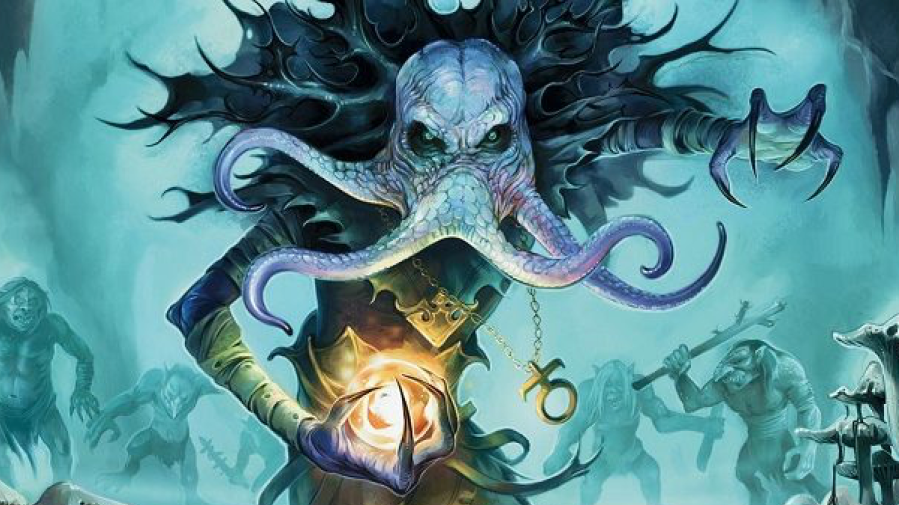
Gaming Stories: A Contract with Mind Flayers

Over the course of several years, I ran Night Below: An Underdark Campaign in a multi-year game that spanned the gap between Dungeons & Dragons 3rd edition and Pathfinder 1st edition. As we entered the endgame, the PCs learned that a group of aboleths had been kidnapping spellcasters in a bid to power a mighty structure that will extend their natural psychic domination abilities across the globe, effectively taking over the world.

Continue reading “Gaming Stories: A Contract with Mind Flayers”

Gaming Stories: Rise and Fall of the Red Mage

Recurring villains are one of those storytelling elements that just seems next to impossible to translate into a role-playing game. A villain needs to make the players want to hate him, but he also needs to survive contact with the group. It’s easy to do one, but not both; if the players really hate a villain, they’ll often go all out to defeat him, plot be damned. There are only a handful of ways to keep a villain in live in that case: keep him behind a glass wall, illusory projection, or similar device to bestow plot armor, make him powerful enough to take the whole group on and win (in which case you run the risk of the players not knowing when to retreat), or use cheap GM fiat tricks to guarantee his survival…in which case you’re taking the “game” out of “role-playing game.”

I’ve been on both sides of the table on the matter. As a GM, I’ve watched guys I expected to be major villains gunned down, stabbed, or tossed out of windows. As a player, I’ve gone on murderous rampages to take down bad guys, sometimes sacrificing my own characters and sometimes ignoring the positive aspects of a villain’s personality because of my seething hatred of them. (In particular, my friend Nick once ran a game with a very good samurai villain who was not actually a bad guy but rather honor-bound into serving the big villain. He eventually tried joining the group, but I was so sick of getting my ass kicked by him at that point that I was quite hostile in the role-playing interaction, much to the detriment of the game.)

I’ve played RPGs for about twenty years, but I’ve only had a handful of really good villains. One of them is a decade old now and still going strong, much to my delight and the anguish of the players. Hailing from various Dungeons & Dragons and Pathfinder games, his name is Derrezen, but he is best known in my games as the Red Mage. This is a look at how he got introduced, what worked for him and what didn’t on his rise to villainy, and why he became a character my players loved to hate.

Continue reading “Gaming Stories: Rise and Fall of the Red Mage”