They Call Him Doctor Who

When a “true fan” of Doctor Who wants to get really pedantic, they’ll correct a casual viewer who accidentally calls the title character Doctor Who rather than just the Doctor.

“Well, actually…his name is just the Doctor.”

And that’s kind of true. Usually in the show, the mysterious Time Lord is simply known as the Doctor. But sometimes they go by Doctor Who, as well. And no, I’m not talking about the Peter Cushing version…or the fact that the end credits of every episode for 26 years credited the main character as “Doctor Who.”

Here’s a few examples of when the Doctor added the “Who” surname.

Continue reading “They Call Him Doctor Who”

Doctor Who: Fifteen Thoughts on the Fifteenth Doctor’s Era

Spoilers for Doctor Who, up through June 2025, below.

The Disney+ era of Doctor Who will be the subject of much debate in the years to come, but one thing that feels certain to me is that Russell T. Davies nailed the casting of the Doctor by picking Ncuti Gatwa. With supreme charisma and talent, Ncuti presented a Doctor who was both familiar and much evolved from his previous incarnations. More emotionally open and at peace with himself, he nonetheless had the sort of flaws and inner conflict that we’ve come to expect from our favorite Time Lord.

Unfortunately, all things end, and Ncuti’s Fifteenth Doctor departed long before many were ready to see him go. So now that his era has come to a close, here’s some reflections on the Fifteenth Doctor’s era and what comes next.

Continue reading “Doctor Who: Fifteen Thoughts on the Fifteenth Doctor’s Era”

Doctor Who: An Unearthly Pilot

In November 1963, the world got its first taste of Doctor Who. The first serial, often known by the name of its first episode “An Unearthly Child,” brought a pair of schoolteachers to a junkyard to investigate a strange student of theirs and wound up sending them careening through space and time. It set the formula for many stories to come, served as a key moment in the character arc of the mysterious Doctor, and is generally a must-watch for those who want to get a feel for the classic series.

What makes “An Unearthly Child” so great? Here’s my take on a few of the key elements.

Continue reading “Doctor Who: An Unearthly Pilot”

Doctor Who’s Storybook Season

Doctor Who just finished Season One…which is really Series 14 or Season 40, depending on how you count. The season offered many new features, from a new Doctor played by Ncuti Gatwa to more money behind the scenes courtesy of a deal with Disney. It also offered new (or at least underexplored) themes to the show, including a heavy lean toward the supernatural.

If there’s one thing that defines this most recent season of Doctor Who, it’s the theme of stories. The season is structured like a fairy tale, and the stories the characters experience–and one they invent–drives the narrative of the Doctor’s latest adventure.

To illustrate what I mean, let’s go episode by episode through the tale of Ruby Sunday.

Continue reading “Doctor Who’s Storybook Season”

Doctor Who’s Emotional Growth (Revival Era)

Continued from last time, the Doctor ended his classic era as a fairly well-rounded individual…or as well-rounded as the Doctor ever gets, at least. Paul McGann’s Eighth Doctor was a culmination of the classic Doctors that had showcased the series from 1963 to 1989. He was brilliant, compassionate, quirky, and more open with his emotions than he had ever been before.

Then the Time War happened.

Between the 1996 TV movie and the 2005 series revival, the Time Lords of Gallifrey went to war with the Daleks of Skaro and nearly destroyed the universe in the process. Off-screen, the Doctor ultimately made the decision to destroy both sides, leaving him as the last of his people and carrying the weight of a double genocide on his conscience.

The revival era Doctor is basically a person going through the stages of grief. More dangerous and volatile than before, they were no longer a mere explorer but often verged on being a vengeful god–someone who wanted to save lives, but who could do terrible things when angered.

Continue reading “Doctor Who’s Emotional Growth (Revival Era)”

Doctor Who’s Emotional Growth (Classic Era)

The Fifteenth Doctor has landed, and he seems to be the most emotionally healthy version of the character that we’ve seen in the show’s 60-year history. Still carrying his flaws and trauma, he has nonetheless shown openness about his past and a willingness to express his emotions rather than hide behind a stoic facade.

While the Doctor will undoubtedly have new traumas and occasional reversions in personality in the years to come, a relatively healthy Time Lord is a refreshing change for the character. It’s also a culmination of 15 different regenerations, each of which shaped him into the man he is today.

While the concept of regeneration is mostly a conceit to keep the show going even after the departure of a lead actor, the long-running nature of Doctor Who allows a bigger scope for character development than you typically find in serial fiction. Each of the Doctor’s previous incarnations made him the person he is today, and this is how.

Continue reading “Doctor Who’s Emotional Growth (Classic Era)”

The Thirteenth Doctor: My Favorite Things About Series 11

Now that Jodie Whitaker’s three-series (plus some specials) run as the Doctor is in the books, there’s plenty of time to look back on her time in the TARDIS as a whole. A lot of attention gets paid to the Timeless Child revelation and the Flux storyline, since those have vast implications that will impact the lore of Doctor Who for years to come. But, for my money, my favorite stretch of Thirteenth Doctor episodes is her very first series, which featured ten standalone episodes and one holiday special.

The relatively unheralded first series of the Thirteenth Doctor’s adventures with brand new companions gave us a continuity-light approach that allowed new viewers to jump into the show. It also brought back a classic series feel, bringing us some tropes that we hadn’t seen since before the Time War. I like this time in the show a lot, and here are some of my favorite things about it.

Continue reading “The Thirteenth Doctor: My Favorite Things About Series 11”

Doctor Who and the Skye Boat Song

Spoilers for “The Power of the Doctor” follow.

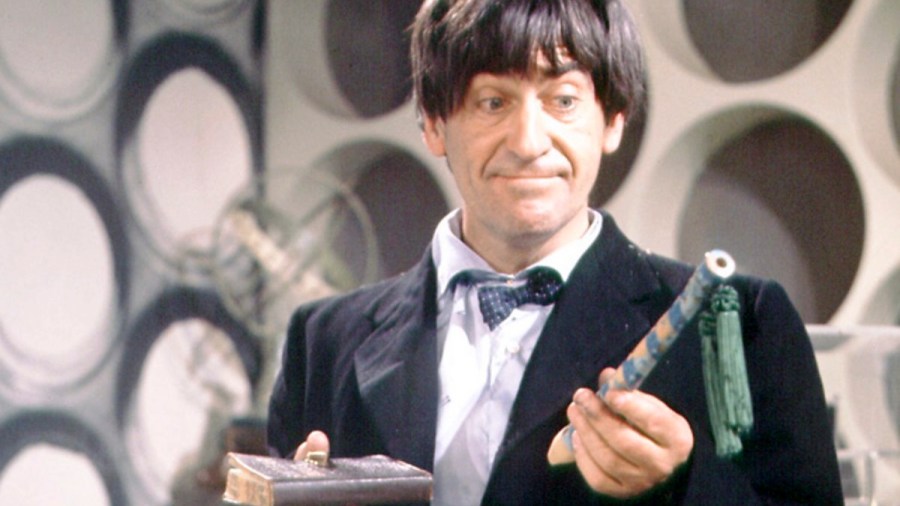
Patrick Troughton had one of the hardest jobs of any actor to play the Doctor; he had to follow the original. Had he failed, Season Four of Doctor Who would have gone down as a forgettable failed experiment. The science fiction series would have died in the 1960s after the lead actor, William Hartnell, was forced out due to his health issues. But Troughton, an amazing character actor, succeeded by all measures, proving that the show could regenerate and renew itself as needed.

Troughton created a Second Doctor who was most unlike his predecessor, delving into silliness and acting the fool where the First Doctor almost always remained dignified and serious. At the same time, Hartnell had imbued the character with a sense of humor and a streak of childlike curiosity that came to serve as the Doctor’s core across many iterations. Playing a younger and re-energized Doctor, Troughton ran with that sense of fun. To cement this, one of the first things he did was to pick up a recorder and start playing tunes. That instrument became the Second Doctor’s signature, even more so than his use of the sonic screwdriver and the tendency of offering people Jelly Babies (something that Troughton did first before Tom Baker’s Fourth Doctor adopted it as his own).

Troughton played many tunes on his recorder, but I’m going to focus on one specifically here: “The Skye Boat Song,” which he first played in “The Web of Fear.” That performance is recognizable enough that it got a reprise in 2022’s “The Power of the Doctor,” and it carries more significance than meets the eye.

Continue reading “Doctor Who and the Skye Boat Song”

The Thirteenth Doctor: Companion Evolution

Spoilers for “Revolution of the Daleks” (2021 New Year’s special) follow.

In its 58-year history, very few episodes of Doctor Who have featured the titular Doctor on her own. Human companions serve an important role in grounding the Doctor and serving as the lens through which the audience experiences the zany journeys. Without companions, the Doctor is just some inscrutable alien, and she has no reason to explain the many bizarre things she encounters in her travels through space and time.

In addition to serving as audience avatars, the Doctor’s companions act as teammates and, on the many occasions where the Doctor gets in over her head, rescuers. This formula has worked consistently for decades, yet there has been some evolution here and there. Under the Thirteenth Doctor, the companions have reached a new stage of development that is both similar to and yet different from the relationship they shared under previous incarnations of the Time Lord.

Continue reading “The Thirteenth Doctor: Companion Evolution”
The Timeless Children

The Thirteenth Doctor: A Question of Identity

Spoilers for the Series 12 (2020) finale of Doctor Who follow.

Following the huge continuity bombshell dropped by the Series 12 finale “The Timeless Children,” Johnny Spandrell of the Randomwhoness blog posted this thought on Twitter:

That’s quite a fair question to ask. As I mentioned last time, I’m not a fan of stories that exist just to tweak in-show continuity. The Doctor is already alien and somewhat difficult to relate to, being a millennia-old alien being who travels time and regenerates into new bodies upon death. Does making her the foundation of an entire alien society really do anything story-wise?

I argue that “The Timeless Children” does much more than continuity-tweaking. In redefining the Doctor, it opens up many potentially interesting stories in the future. More importantly, it goes back to one of the inherent themes in much of modern science fiction: a matter of identity.

Continue reading “The Thirteenth Doctor: A Question of Identity”