What Made the Baldur’s Gate Novels the Worst D&D Books of All Time?

After enjoying popularity in the late 80s and early 90s, Dungeons & Dragons video games had largely gone extinct as the 21st century approached…until a little game called Baldur’s Gate revitalized the genre. The Black Isle/Bioware collaboration became a runaway hit that led to an even bigger sequel a couple years later. With something so popular, and with D&D making a lot of its brand money on its novel lines, a novelization was inevitable.

Wizards of the Coast tapped Philip Athans, their senior managing editor, to write the novel. Athans had spent a long time editing other Forgotten Realms novels and was one of the employees who had stayed with the D&D brand through its transition from TSR to Wizards of the Coast. Sadly, what he wrote turned out…bad. Almost unspeakably bad. Years later, the Baldur’s Gate novel would become a punchline until it was finally written out of official continuity with the approach of D&D 5th edition.

But the failure of Baldur’s Gate as a novel wasn’t just a matter of Athans whiffing on a video game adaptation. There were many factors behind the scenes that doomed this novelization and left Athans holding the bag.

Continue reading “What Made the Baldur’s Gate Novels the Worst D&D Books of All Time?”
What is “Canon” in Baldur’s Gate 3?

Spoilers for the Baldur’s Gate franchise follow.

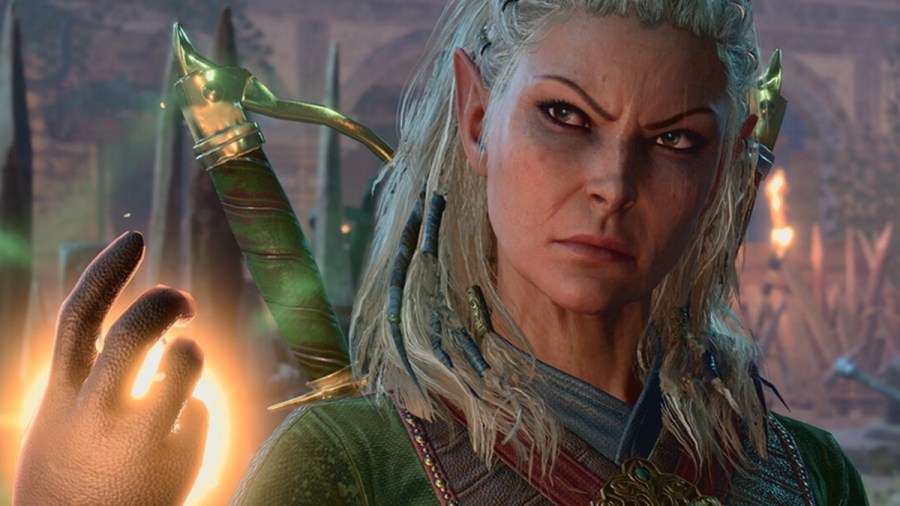
Like any video game sequel, Baldur’s Gate 3 makes certain assumptions about what happened in the games that preceded it. This goes a bit beyond just the events of Baldur’s Gate 1 and 2, since Baldur’s Gate 3 also follows several novels, adventure modules, and comic books. And while continuity is what you make of it, there are many who want to know what the game considers “canon.”

Now note that “canon” is not the same as “official,” and it’s especially not the same as “right.” What follows is my take on the fictional events which set the stage for Baldur’s Gate 3. It bears no seal of approval from Wizards of the Coast or Larian Games, nor is it a suggestion that someone who plays through the older games is doing something wrong if they veer from the events described here. For example, in 100% of the Throne of Bhaal games I finished, I settled down with Viconia and made her a better person before she got assassinated by worshipers of Lolth. Her appearance in Baldur’s Gate 3 doesn’t ruin those old play-throughs; it just means that the events in that version of the Forgotten Realms happened slightly differently.

Continue reading “What is “Canon” in Baldur’s Gate 3?”

The Infinity Engine and Beyond: A Look Back at Classic D&D cRPGs

The success of Baldur’s Gate 3 has Hasbro seeing potential gold mines in the video game industry. Unfortunately for them (and us), Larian Studios won’t be working on more Baldur’s Gate games. Not to be deterred, Hasbro is investing $1 billion in new D&D computer RPGs, hoping to catch lightning in a bottle several times over. It’s amusing in its own way, because the company had a pipeline of consistent high-quality video games for a solid decade and let that dry up.

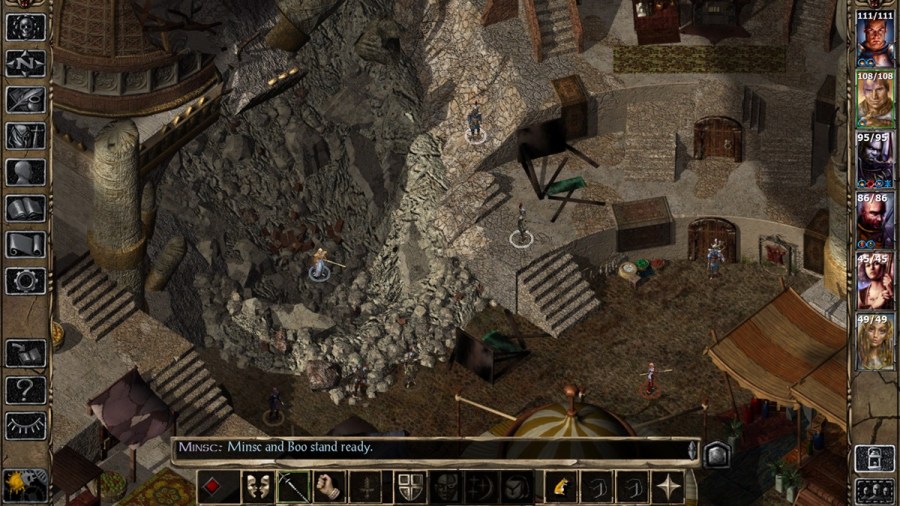
While D&D has seen several periods of success in the video game industry, the one that I experienced directly was the string of releases between Baldur’s Gate, which came out in 1998, and Neverwinter Nights 2, which saw its last official expansion in 2009. Developed mostly by Bioware (and the now-defunct Black Isle Studios), these games expanded the genre in sometimes innovative ways and delivered a consistently fun D&D experience on personal computers.

I’m going to touch on each of the games I’ve played, which covers all the D&D cRPG games released from 1998 through 2009 with the exception of Pool of Radiance: The Ruins of Myth Drannor, The Temple of Elemental Evil, and Icewind Dale 2. The latter two games sit in my GOG account waiting to be played in the future. As to Pool of Radiance…well, based on the reviews I’ve read I might just go back in time and play the SSI “Gold Box” games instead.

Continue reading “The Infinity Engine and Beyond: A Look Back at Classic D&D cRPGs”

Three Editions Later: Baldur’s Gate and the Development of D&D

With its incredibly deep game play and commitment for Forgotten Realms lore (even when I wish they would ignore said lore), Baldur’s Gate 3 is a triumph for the Dungeons & Dragons franchise. More than any other computer game I’ve ever played, it feels like I’m playing a tabletop game with the production values of a Hollywood blockbuster.

But the game’s predecessors are no slouches, either. In fact, for the past 25 years, Baldur’s Gate 1 and Baldur’s Gate 2 have been unicorns that other RPGs chased. While other D&D games have strengths of their own, none quite replicated the deep and massive story of those old games while also maintaining a distinctly D&D feel.

Yet those older games, despite making Baldur’s Gate 3 possible, feel very different from the newest iteration of the franchise. Some of that is merely a matter of scope and funding; Baldur’s Gate 1 and 2 came out in older days with less technological power and far less money behind them. But a lot of it has to do with the fact that Dungeons & Dragons has changed dramatically over the years. The original used the 2nd edition rules, while Baldur’s Gate 3 uses 5th edition as its base. The rules have changed, but so have the types of stories fans want to see.

Continue reading “Three Editions Later: Baldur’s Gate and the Development of D&D”

Baldur’s Gate and the Happy Ending Override

Baldur’s Gate 3 is taking the video game world by storm. It takes the unenviable task of following up on a beloved franchise that has lain dormant for years and not only proves itself worthy but may be the best entry in the series. But while there is no curbing my excitement to return to old stomping grounds, there are some sharp pangs of regret as I see the fate of certain individuals who deserved better.

Any follow-up to the epic conclusion of Baldur’s Gate 2: Throne of Bhaal was going to have to make some decisions in how things ended canonically, since the game offers many different possible fates for Gorion’s ward and their companions. Unfortunately, that canon proves to be quite unkind to some returning faces. Some of that could have been avoided through different storytelling approaches, but much of it unfortunately comes down to how the Dungeons & Dragons has been mismanaged since the 2001 finale of Throne of Bhaal.

Naturally, spoilers for Baldur’s Gate 3 (and its much older predecessors) follow.

Continue reading “Baldur’s Gate and the Happy Ending Override”

Why Don’t We Have More Good D&D Video Games?

The approaching full release of Baldur’s Gate III has a lot of gamers very hyped, and for good reason. It’s a high-end video game utilizing the ever-popular Dungeons & Dragons system…and it feels like it’s been forever. While fans got an expansion to an old classic with Baldur’s Gate: Siege of Dragonspear in 2016, there hasn’t been an actual proper stand-alone D&D cRPG since Sword Coast Legends in 2015…and you have to go all the way back to Neverwinter Nights 2 to find one that was well-received.

Why the long layoff in titles and the difficulty in creating a solid game bearing the D&D trademark? With excellent cRPGS like Dragon Age and Pillars of Eternity out there, why can’t the grandparent of all role-playing games follow suit? The answer, in my opinion, boils down to resources, creative restrictions forced by the property, and good old-fashioned corporate politics.

Continue reading “Why Don’t We Have More Good D&D Video Games?”