Opportunities Abound for the Fantasy 1%

Originally published on Sidekickcast.com January 26, 2016

While most fantasy fiction limits magic use to the main characters, fantasy RPGs have a whole economy built up around them. A default RPG setting assumes that the PCs are one of many heroes, which means towns are likely to hold retired spellcasters who might provide services or even sell magic items to younger heroes.

None of this magic economy really benefits the commonfolk, unfortunately. If a typical peasant makes only two silver pieces a day, he has to save up for a couple of months to even afford a simple cure light wounds spell, let alone something that could cure diseases or raise the dead.

The fantasy one-percenters, however, have a lot of fun options out there. Here are a few things somebody with lots of cash can accomplish in a typical fantasy RPG. I’m using Pathfinder 1st edition as the rules default here, but most of these options exist in similar games as well.

Continue reading “Opportunities Abound for the Fantasy 1%”

The Future is Weird: Cyberpunk 2020’s Chromebook

Originally published on Sidekickcast.com December 1, 2015

I’ve spent a lot of time detailing fantasy RPG weirdness because that’s the genre I’m most familiar with. However, strange stuff in gaming isn’t relegated solely to D&D and Pathfinder. For example, there’s the Cyberpunk 2020 Chromebooks.

The Chromebooks were a group of four sourcebooks that detailed all sorts of new gear for use in a Cyberpunk 2020 game. In many ways, they were brilliant – they were written like real product catalogs, so every entry gave you not only something useful for the game but also a feel for the corporate-dominated setting. At the same time, these things did introduce plenty of stuff that is either hilariously weird or amusing in hindsight (remember that these things were written in the early 1990s without the benefit of a crystal ball to show what they year 2020 would really be like).

This time around, I’m going to focus on the original Chromebook. With new weapons, cybernetics, vehicles, and more, there’s a lot of interesting stuff in this 96-page accessory…and a lot of other stuff that reminds me that the future is pretty funny.

Continue reading “The Future is Weird: Cyberpunk 2020’s Chromebook”

Gaming Stories: Dancing Half-Fiends and the Glory of Infinite Choices

Originally published on Sicdekickcast.com November 17, 2015

Easily my favorite part of tabletop RPGs is the fact that they have so much latitude and room for player agency. No matter how robust a computer game is, there are always a finite number of choices. Because tabletop RPGs rely on human adjudication, the possibilities are limitless…like that time the PCs in one of my games inspired a pair of half-fiends to become vaudeville stars.

Continue reading “Gaming Stories: Dancing Half-Fiends and the Glory of Infinite Choices”

5 Ways the Tomb of Horrors will Kill Your PC

Originally published on Sidekickcast.com September 23, 2015

Ah, Tomb of Horrors – one of the few classic D&D adventures that none of my players ever want me to run. Published in 1978 for the first edition Advanced Dungeons & Dragons game, this was a tournament module designed to be played at conventions where they could chew up multiple groups and spit them out.

Somewhere along the way, folks decided to play the Tomb at their home games, where there are only a handful of players…and unless they have a perfect combination of callousness, paranoia, and sheer craziness, they’re all going to die.

So let’s hit the spoiler alerts now: here are just a few of the grisly ways that the Tomb of Horrors will totally kill your PCs.

Continue reading “5 Ways the Tomb of Horrors will Kill Your PC”

What Made the Baldur’s Gate Novels the Worst D&D Books of All Time?

After enjoying popularity in the late 80s and early 90s, Dungeons & Dragons video games had largely gone extinct as the 21st century approached…until a little game called Baldur’s Gate revitalized the genre. The Black Isle/Bioware collaboration became a runaway hit that led to an even bigger sequel a couple years later. With something so popular, and with D&D making a lot of its brand money on its novel lines, a novelization was inevitable.

Wizards of the Coast tapped Philip Athans, their senior managing editor, to write the novel. Athans had spent a long time editing other Forgotten Realms novels and was one of the employees who had stayed with the D&D brand through its transition from TSR to Wizards of the Coast. Sadly, what he wrote turned out…bad. Almost unspeakably bad. Years later, the Baldur’s Gate novel would become a punchline until it was finally written out of official continuity with the approach of D&D 5th edition.

But the failure of Baldur’s Gate as a novel wasn’t just a matter of Athans whiffing on a video game adaptation. There were many factors behind the scenes that doomed this novelization and left Athans holding the bag.

Continue reading “What Made the Baldur’s Gate Novels the Worst D&D Books of All Time?”

Comics & Quests: Shadowplague

As D&D moved into the 21st century, it started focusing less on trying to tell a broad swath of fantasy stories and more on trying to create a unique identity for itself as a brand. You could see that starting with 3rd edition ending the halfling-as-hobbit motif, and you can see it in the way the 4th edition Dungeons & Dragons presents its opening storyline compared to how 2nd edition’s Advanced Dungeons & Dragons did it.

This is the cover of issue #2 of Dungeons & Dragons, which kicks off the “Shadowplague” story. It could basically be a movie poster about a superhero-esque fantasy story, complete with the “edgy” half-smile of the main character. (In fact, this could basically be concept art for Dungeons & Dragons: Honor Among Thieves.)

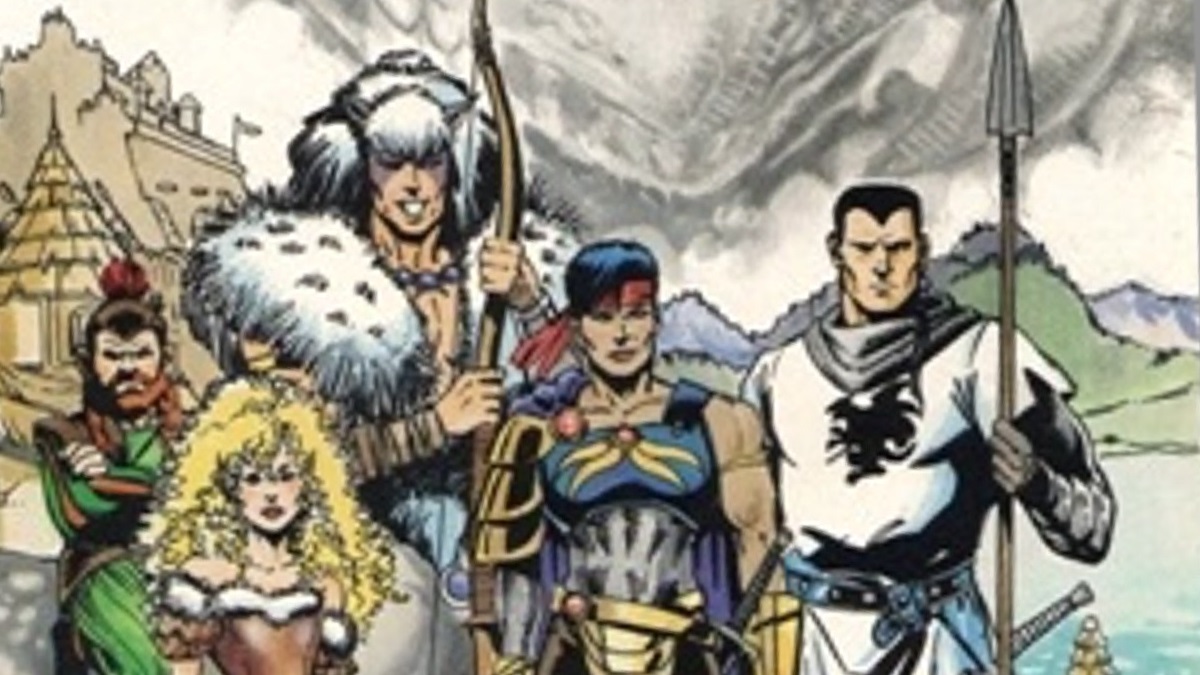
This is the image from “The Gathering,” which shows the part in a more straight-on fashion. There’s some personality there, with the dour dwarf, the serious paladin, and the smiling archer, but you could basically put it on the cover of any fantasy novel.

For better or worse, the “Fell’s Five” comics followed Wizards of the Coast’s vision of D&D as a brand, rather than as a vehicle for the fantasy genre at large. The 4th edition comics are faster-paced, full of sarcastic dialogue, and generally designed like an action movie. These work together well and make it one of my favorite RPG comics, but I sometimes wonder if the reason the comic didn’t last very long is because the good times it offers can be found in virtually any other action-oriented media of the era.

Continue reading “Comics & Quests: Shadowplague”

Comics & Quests: Fell’s Five

The end of the license for DC Comics didn’t mean the death of D&D comics, but it did create a long dry spell for D&D comics that I found interesting. The sporadic releases over the next couple decades were largely adaptations of RA Salvatore novels (which never quite hit home with me) or tales that lacked the humorous and chaotic bent found among the heroes of Waterdeep or the Realms Master crew. But then 4th edition D&D came out and it brought something new with it…

Except for the original brown box released in 1974, 4th edition is the one iteration of D&D I’ve never really played. I’ve run some test encounters here and there, but the system never grabbed me enough to want to play an adventure, let alone a campaign, of it. For me, it was too miniatures-focused, too obsessed with defined powers, and spent too much energy chasing the World of Warcraft feel that had come to dominate fantasy of the early 2000s. Wizards of the Coast did little to sell me on the edition; much of the early marketing badmouthed earlier editions as unfair and unfun and the complete overhaul of the Forgotten Realms setting reinforced the idea that this was an edition for people who didn’t like the way D&D used to be.

But the comics…man, the comics turned out great.

Titled Dungeons & Dragons: Fell’s Five in its collected format, this comic was written by John Rogers with art by Andrea Di Vito. The best I can define it as is the energy of Honor Among Thieves, but a decade earlier. It’s funny, it’s action-packed, and it’s probably the best D&D comic I’ve ever read.

Unfortunately, it’s also short. The comic only lasted 16 issues, and I’ll be covering it in four entries here. But better to have something short and sweet than nothing at all. While I’ll never look back at 4th edition fondly, at least it gave us this little gem.

Continue reading “Comics & Quests: Fell’s Five”

Out Now: En5ider Magazine #8

En5ider continues to deliver terrific monthly D&D content. The most recent issue is focused around the theme of skullduggery. My article, “Knaves’ Alliance,” leads off the issue and introduces an organization designed to help the most memorable villains escape to fight another day.

You can pick up this issue and get the full En5ider archives for as little as $3. Subscribe to En5ider Magazine here!

Comics & Quests: Wake of the Realms Master

Since I don’t own copies of the Dragonlance or Spelljammer comics, this entry marks the end of my 1990s D&D comics. While there were other D&D comics over the years, it would take two full editions of the game before a licensed comic struck my fancy as much as the gang at Selûne’s Smile and the crew of the Realms Master did.

So let’s dive into one final adventure with our intrepid crew and see how the story ends for Dwalimor Omen and his faithful companions.

Continue reading “Comics & Quests: Wake of the Realms Master”

Out Now: Alien Core

Starfinder 2nd edition is here, and now there are 200 new aliens to use in your game!

Alien Core marks a dream come true for me because it’s the first time my writing has appeared in a major RPG core book. I designed the ksarik and the warp troll.

You can find the Alien Core in your local game store, or you can order it directly from Paizo.com!

Check it out, and if you use the ksarik or warp troll in your game, let me know!