Spoilers for the Baldur’s Gate franchise follow.
Like any video game sequel, Baldur’s Gate 3 makes certain assumptions about what happened in the games that preceded it. This goes a bit beyond just the events of Baldur’s Gate 1 and 2, since Baldur’s Gate 3 also follows several novels, adventure modules, and comic books. And while continuity is what you make of it, there are many who want to know what the game considers “canon.”
Now note that “canon” is not the same as “official,” and it’s especially not the same as “right.” What follows is my take on the fictional events which set the stage for Baldur’s Gate 3. It bears no seal of approval from Wizards of the Coast or Larian Games, nor is it a suggestion that someone who plays through the older games is doing something wrong if they veer from the events described here. For example, in 100% of the Throne of Bhaal games I finished, I settled down with Viconia and made her a better person before she got assassinated by worshipers of Lolth. Her appearance in Baldur’s Gate 3 doesn’t ruin those old play-throughs; it just means that the events in that version of the Forgotten Realms happened slightly differently.
The Time of Troubles Happened as per the Novels
None of the Baldur’s Gate franchise happens without the Time of Troubles. I covered these modules previously and explained why I think they comprise the worst adventure ever. The good news, thought, is that the pen-and-paper adventures are not canon to this story.

Rather, the Baldur’s Gate games use the novels upon which those adventure modules are based. The games assume Bhaal died at the hands of Cyric, Midnight became the reincarnation of Mystra, goddess of magic, and all that jazz. If you let a PC somehow get the killing blow on Bhaal or tweaked the adventures to make your PCs the main characters, you’ll just have to handwave a few things when certain cutscenes start to play. Specifically, Siege of Dragonspear shows a flashback of Cyric killing Bhaal, and Cyric confronts you directly in Throne of Bhaal when he starts to worry that Gorion’s ward might seize Bhaal’s divinity for himself.
Wait, why did I say “himself” rather than “themself,” since the games let you choose the gender for Gorion’s ward? Well…
Gorion’s Ward was a Human Male who Fell in Love with Jaheira
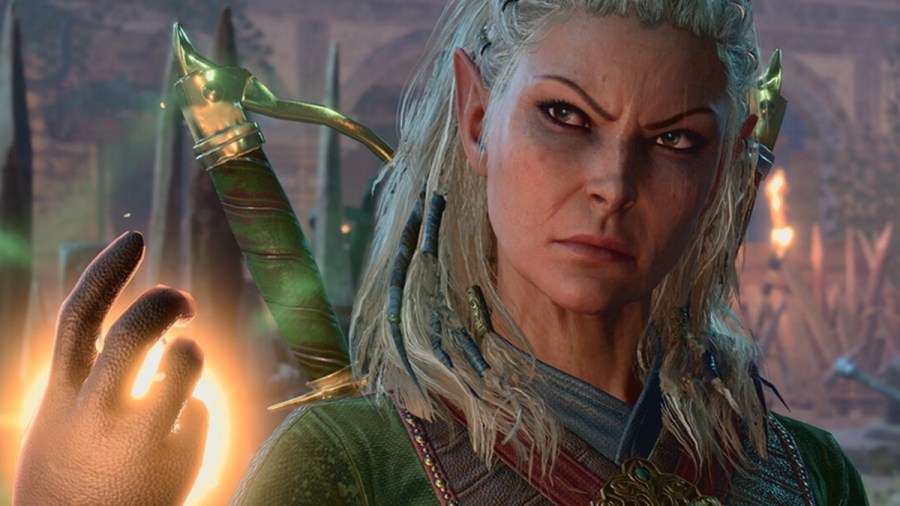
That seems oddly specific, no? And yet Jaheira’s inclusion in Baldur’s Gate 3 basically forces this conclusion.
In Baldur’s Gate 3, Jaheira is a leader in the Harpers and has a home and adopted family in Baldur’s Gate. This narrows down her fate in Throne of Bhaal quite drastically. In that game, Jaheira has one of two endings, depending on whether she and Gorion’s ward were romantically linked. In the ending where she is just friends with the Bhaalspawn, she leaves the Sword Coast and never returns:
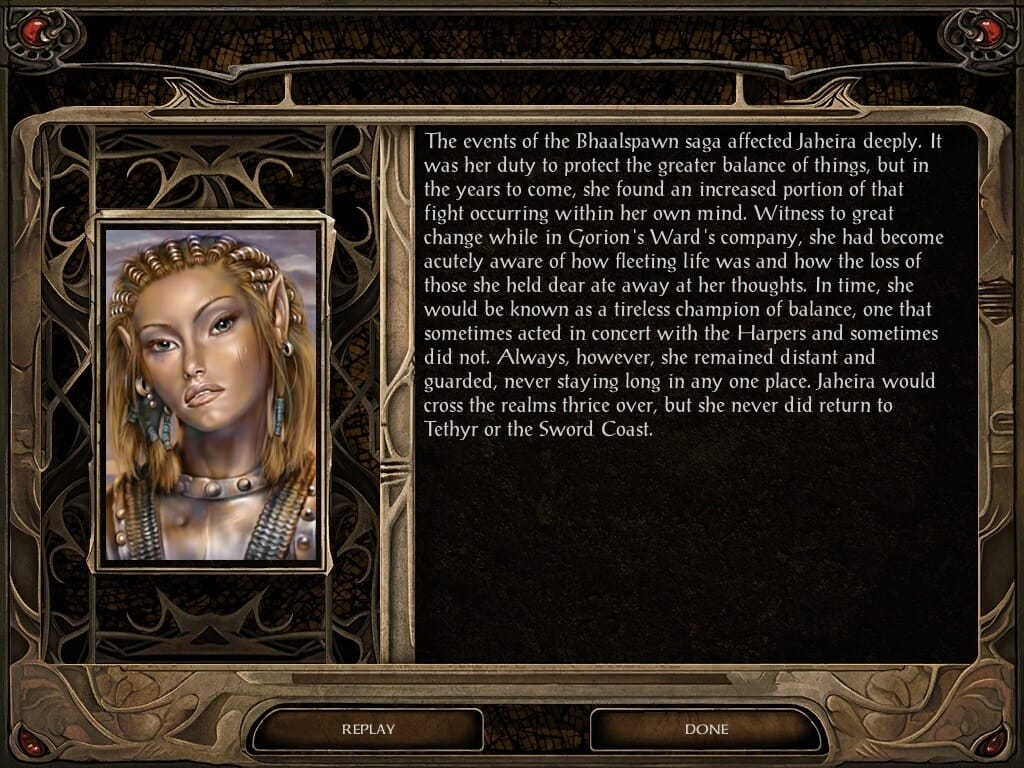
So where do I get the “human male” part of the equation? That comes from the way Jaheira’s romantic path in Baldur’s Gate 2 is structure. Unlike Baldur’s Gate 3, the romances in the older game are gender-locked. Jaheira will only fall in love with a male character, and the character must be a human, elf, half-elf, or halfling.
What we see of Jaheira’s family life shows her as a single parent, so unless she and Gorion’s ward had a falling out (which would contradict her romanced epilogue from Throne of Bhaal), her lover is likely dead. Elves, half-elves, and halflings all live long enough that they could survive the 123-year time gap between Baldur’s Gate 2 and Baldur’s Gate 3, but a human would have died between the games.
So if we’re going human male for the protagonist of the old games, then why not just roll with Abdel Adrian, the main character of the Baldur’s Gate novels? Mostly: I hate him. But also…
The Baldur’s Gate Novels are NOT Canon
The Baldur’s Gate novels tied into the then-new video games and were universally reviled. Author Philip Athans wrote a first draft of the first book under a very tight deadline and turned it in, knowing it wasn’t very good but expecting a chance to revise it after an editorial pass. But that never happened, and his first draft, based on mere notes from the game without a beta even to play, became the final draft.
The second and third novels were slightly better, but still pretty bad. Most of all, they were way off from the games themselves. Khalid became Jaheira’s abusive husband. Minsc had a mane of bright red hair. There was an extended scene where Jaheira, the might druid, got terrified of a spider in her shirt and wound up topless in front of the protagonist.
For years, the rule in the Forgotten Realms line was that novels were canon and video games were not. So despite the terrible quality of the Baldur’s Gate novels and the great quality of the games, the former was the canon version. But–and it’s worth remembering this as I ramble on and on about continuity–canon can change. When 5th edition came out, Wizards of the Coast went back to the well of their popular titles, including Baldur’s Gate. And when Murder in Baldur’s Gate came out, it established the video games as canon and the novels as just a figment of the imagination.

Now, Murder in Baldur’s Gate does bring one component of the books back: it names Gorion’s ward as Abdel Adrian, a male human fighter who ultimately dies as part of Bhaal’s plot to return to life.
Here’s where continuity gets murky: Baldur’s Gate 3 does mention Abdel Adrian as a Duke of Baldur’s Gate in the book Confidant of a Duke, but never at any point mentions that Abdel was a Bhaalspawn. Similarly, it doesn’t specifically mention the events of Murder in Baldur’s Gate, only that Bhaal returned during the Second Sundering. Furthermore, Baldur’s Gate 3 introduces two other Bhaalspawn, the Dark Urge and Helena Anchev, who were apparently born before Murder in Baldur’s Gate. And finally, Murder in Baldur’s Gate doesn’t make sense when tied to Baldur’s Gate 2 for reasons I’ll get into in a moment.
The adventure Murder in Baldur’s Gate is kind of a weird puzzle piece: it sets the scene for Baldur’s Gate 3 but doesn’t actually fit well into the story. It’s probably best to take it in a broad strokes sort of way: Bhaal definitely returned during the Second Sundering, but the details beyond that are less concrete. Regardless, what we know about Jaheira’s presence in Baldur’s Gate 3 says that Gorion’s ward was a human male. Whether he was Abdel Adrian is up for debate.
Gorion’s Ward did not become a God
Baldur’s Gate 2: Throne of Bhaal ends with the protagonist having gone from a troubled child in Candlekeep to the cusp of godhood. At the game’s climax, having defeated the other Bhaalspawn vying for the Lord of Murder’s power, Gorion’s ward gets to choose whether to claim godhood or surrender Bhaal’s essence.
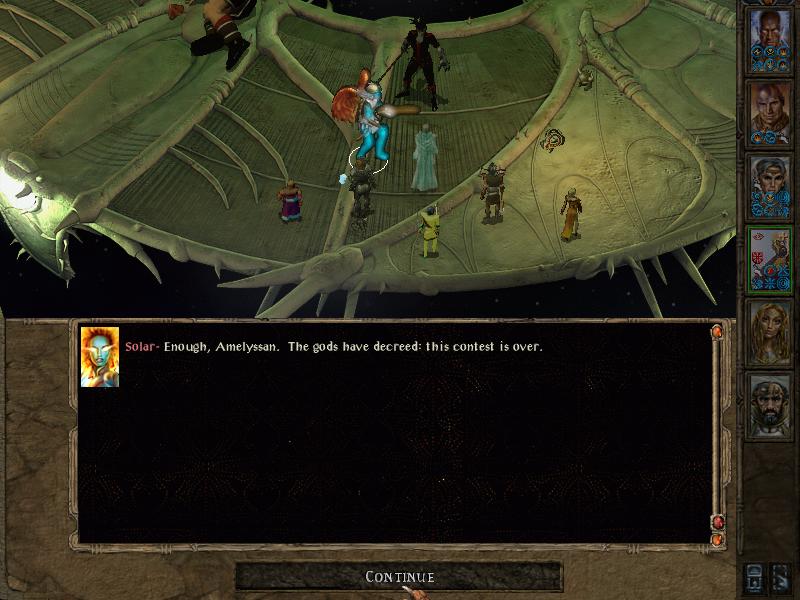
Since the next edition of D&D didn’t bring in a new god shaped by the events of this game, it’s pretty clear that the canon ending was always surrendering Bhaal’s essence and becoming mortal. This is further supported by Jaheira’s presence in Baldur’s Gate 3, as if you become a god she gets her non-romanced ending in which she never returns to the Sword Coast.
The ending of Throne of Bhaal is one of those spots that makes Murder in Baldur’s Gate fit poorly. If you choose mortality, the essence of Bhaal is removed from you and sealed away in the upper planes. Yet Abdel in Murder in Baldur’s Gate is unnaturally long-lived for a human and maintains enough of Bhaal’s essence to fuel the god’s rebirth when he dies.
Canon-wise, you basically have to do some hand-waving with either Throne of Bhaal or Murder in Baldur’s Gate. One of those stories didn’t happen exactly as the text presented; it’s basically up to you to choose which one.
No Redemption for Sarevok or Viconia
Two evil companions in Throne of Bhaal, Sarevok and Viconia, had the chance to be redeemed by the end of the game. But in Baldur’s Gate 3, both appear as the same villainous people they were back in the very first game. So what happened?
Viconia’s case is actually pretty easy: her redemption never happened in this continuity. Viconia only shifted alignment if she was involved in a romance with Gorion’s ward (and even then only shifted to neutral), and only if the protagonist took certain dialogue choices. Since we already established that Gorion’s ward was involved with Jaheira instead, that means Viconia never got changed by the power of love. Baldur’s Gate 3 backs this up, with Viconia’s chambers in the House of Grief holding a memento from a time when she aided the elves of Suldanesselar–something that only happens in her non-romance epilogue.
It’s perhaps just as well for Viconia, since if she is a love interest in Throne of Bhaal she winds up killed by Lolth’s assassins. Presumably, staying in Shar’s good graces keeps the Spider Queen away from her.
Sarevok is a trickier matter for the same reason that Abdel doesn’t quite fit as the Throne of Bhaal protagonist. The villain of the original Baldur’s Gate, he comes back to life in Throne of Bhaal but has lost the Bhaal essence inside him. However, in Baldur’s Gate 3 he’s back to being a Bhaalspawn, in his old armor to boot.
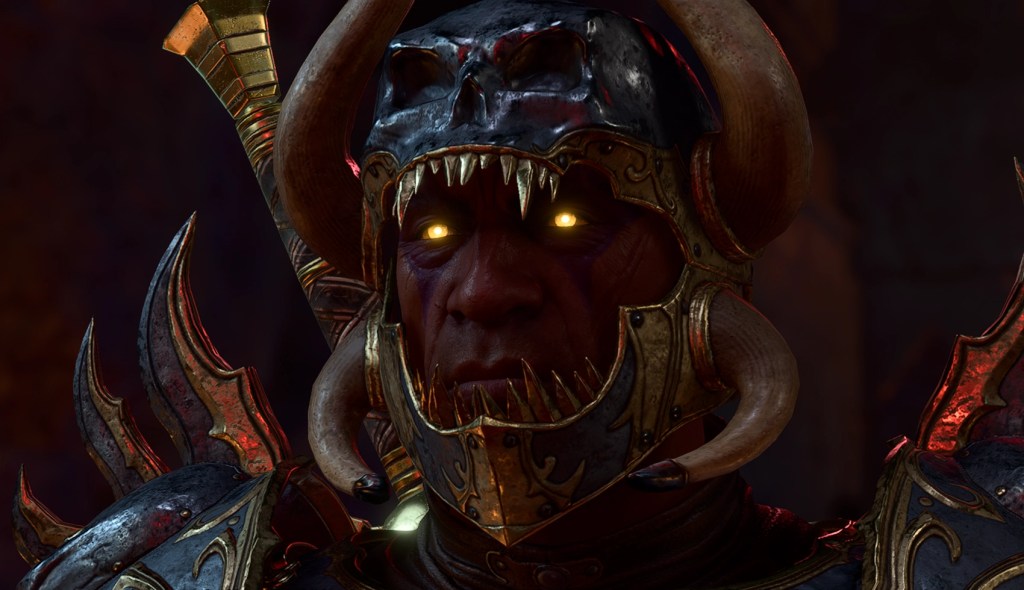
More than his Bhaal essence, Sarevok’s very nature is left open to debate. He’s much longer-lived than a human should be, presumably because he’s a Bhaalspawn again, and he was able to father two Bhaalspawn in a time when the Lord of Murder was supposed to be dead. It’s questionable whether he’s even really human. The game lists him as one, but it seems that he’s been presiding over the murder tribunal in the sewers of Baldur’s Gate for decades. Notes discussing him mention something unnatural about him, and he sits on a tribunal with shades of other Bhaalspawn.
Is this the original Sarevok who somehow regained his Bhaal essence? Is it a shade of what once was? Or was there still a trace of Bhaal’s essence left in him when he returned in Throne of Bhaal, somehow undetected by the gods and Sarevok himself? Nobody knows for sure, but one thing is certain: if he did find redemption in Throne of Bhaal, he backslid big time.
No Redemption for Zariel, Either
Baldur’s Gate 3 takes place over a century after Baldur’s Gate 2, but it happens just a few days after the pen-and-paper adventure Baldur’s Gate: Descent into Avernus. The events of that product play more heavily in the plot than the older video games, with large portions of the story revolving around the city of Elturel falling into Hell and eventually returning to the Realms.
If you played Descent into Avernus at the tabletop, there’s a decent chance that your group redeemed the archdevil Zariel, causing her to relinquish her hold on the first Hell of Avernus and become an angel again. Or maybe redemption wasn’t for you and your group killed her instead. Regardless, Baldur’s Gate 3 takes a third path.
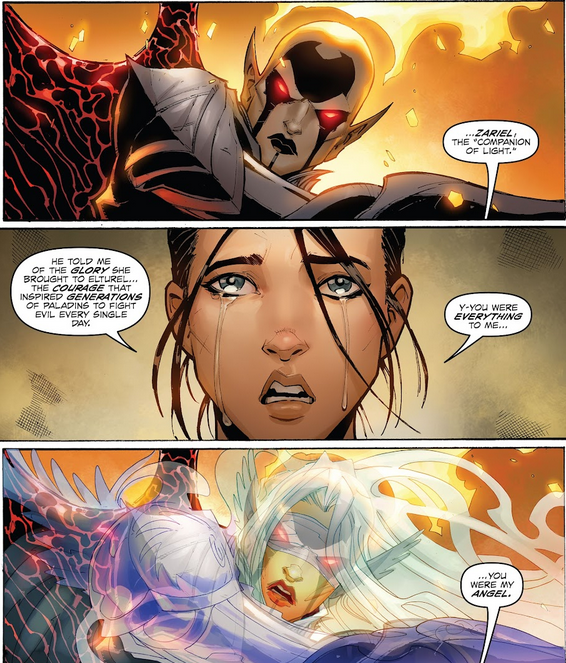
In Baldur’s Gate 3, Zariel still rules Avernus and is still just as evil as before. In fact, some of the cruelty she performs may seem shocking to those who viewed her as a reluctant fiend. She imprisons the tiefling Karlach and implants her with an infernal heart that will explode if she leaves Hell for too long, has her minion Mizora torment the folk hero Wyll Ravenguard, and more. For someone who never appears in the game, she casts a long shadow.
The canon embraced by Baldur’s Gate 3 seems to come from the IDW comic Infernal Tides, which features the lovable hero Minsc who finds himself in Hell with his companions. Minsc even makes reference to the adventure, explaining that he doesn’t remember falling into the River Styx (because the Styx causes total amnesia).
Infernal Tides ended with a slight moment of redemption for Zariel, but it wasn’t the full-on return to holiness that Descent into Avernus allowed. Instead, she returned Elturel to the Realms after being confronted by a paladin Aubree Lucent and suffering a brief crisis of conscience. Maybe that’s why she’s so cruel to Karlach and Wyll in Baldur’s Gate 3; she’s overcompensating.
Speaking of god-like beings, there is one more bit of continuity worth mentioning…
Certain Dungeon Magazine Adventures Haven’t Happened…Yet
The githyanki lich-queen Vlaakith plays a major role in the story of Baldur’s Gate 3. She held the Astral prism before Shadowheart stole it, she has a loyal follower among the main companions in Lae’zel (at least at first), and she seeks the death of one of the few people who can help you defeat the final villain. Which means, clearly, that she didn’t die in 3rd edition like previous adventures suggested.
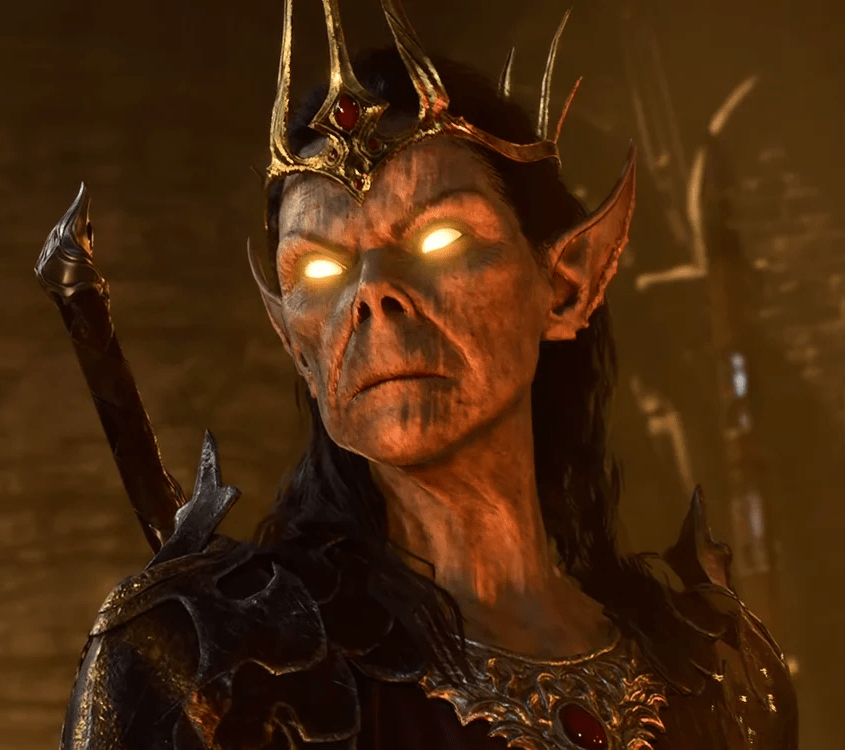
In the pages of Dungeon Magazine, adventure “The Lich Queen’s Beloved” put high-level PCs up to the task of killing Vlaakith and destroying her phylactery. In 4th edition, when Dungeon had moved to an online-only publication, the adventure path Scales of War confirmed that Vlaakith had been slain. That adventure path saw a new group of heroes stop a githyanki invasion and install a new leader on the throne. Although she also took the name Vlaakith, this leader was in fact the reincarnation of Gith, founder of the githyanki.
You could argue that maybe Baldur’s Gate 3 uses a different Vlaakith, but dialogue with Lae’zel confirms that the current githyanki ruler is Vlaakith CLVII, the same lich-queen that serves as the enemy in “The Lich-Queen’s Beloved.” So if that adventure in Dungeon happens, it will occur at some point well after the credits roll on Baldur’s Gate 3.
While I know Larian isn’t doing any future work on Baldur’s Gate 3, I’ll continue holding out hope that someone does a high-level follow-up to that game which follows along the lines of “The Lich-Queen’s Beloved” and features a final reckoning for Vlaakith (and if there was a Vlaakith/Zariel team-up so you could fight both big bads, that would be even more awesome). Icing on the cake would be a video game adaptation of Scales of War to allow githyanki society to finally break free of its cycle of militaristic xenophobia.
Big hopes, but will keep them alive until the next installment of the franchise crushes my hopes.
But Does it Really Matter?
Well…no, note really. For all the spitballing here, canon is really what you make of it. The story of Baldur’s Gate 3 never comes from an omniscient narrator. Even the narrator that serves as your internal monologue has a bias. That means that if you really don’t want to live with the presumed fact that Jaheira and Gorion’s ward got together during Baldur’s Gate 2, you can just ignore that part. Maybe the epilogue screens at the end of Throne of Bhaal were things the bards said rather than what actually happened.
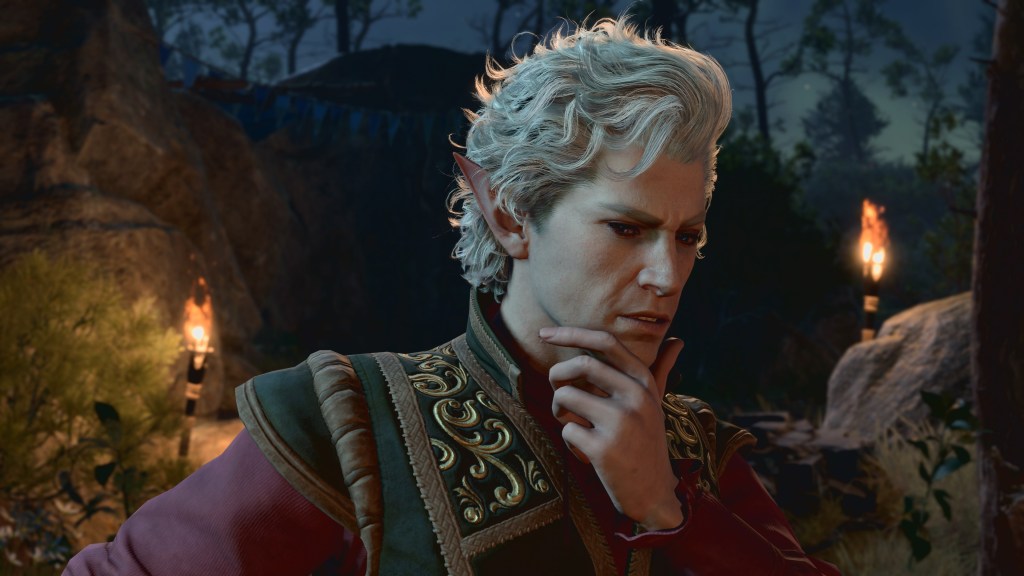
You’ll notice, for example, that although everything points to Abdel Adrian being the canonical hero of Baldur’s Gate 1 and 2, I can’t bring myself to admit that fact. And so I’ve found enough evidence to the contrary to make my position work.
Baldur’s Gate 3 is hugely complex, with a lot of history behind it. While the tidbits presented here are my best take at canon, it’s really meant as food for thought rather than something set in stone. If you want to play your custom character as the child of Gorion’s ward and Aerie who grew up worshiping the gnomish pantheon and wonders why “Uncle” Minsc doesn’t seem to recognize him, go right ahead.
In fact, I might have just figured out the main character for my next run through the game…
 Babbling Brooks