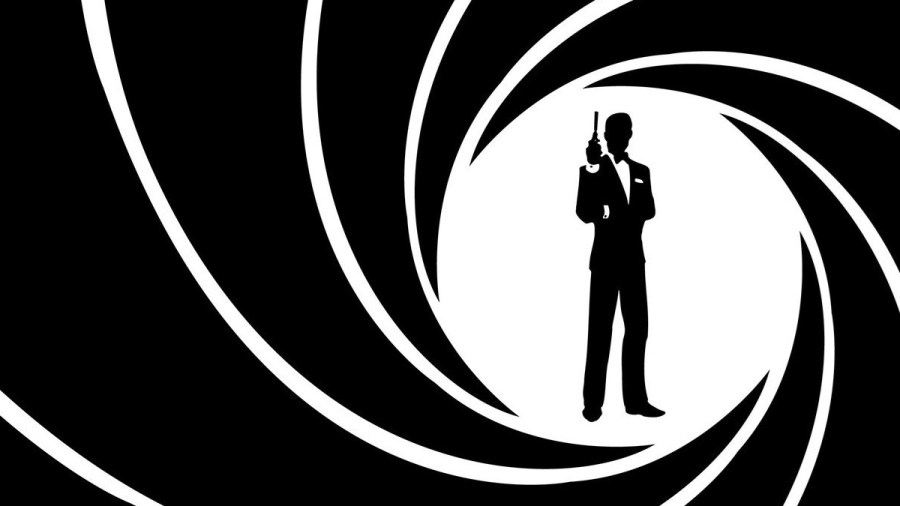
In books and film, the James Bond series is one of the most popular and enduring franchises ever. Bond has appeared in dozens of novels and short stories, over twenty feature films, several television series, and countless spoofs. The franchise is a testament to two things: that escapism will always sell, and that moviegoers love things they’ve seen a million times before.
Casino Royale
Bond was created by Ian Fleming, who first published the character in his 1953 novel Casino Royale. James Bond was essentially an idealized version of Fleming himself. He had similar interests, including a great love of Jamaica. He liked the same drinks, smoked constantly, and even held the same military rank, Commander, that Fleming had held in the military. Fleming borrowed the name James Bond from an American ornithologist of the same name; the real James Bond had written a definitive book that Fleming read at his Jamaican estate of Goldeneye: Birds of the West Indies. James Bond was a plain, almost boring name that perfectly suited the secret agent who often worked in anonymity for Her Majesty’s Secret Service. Thus, the ultimate spy was born.
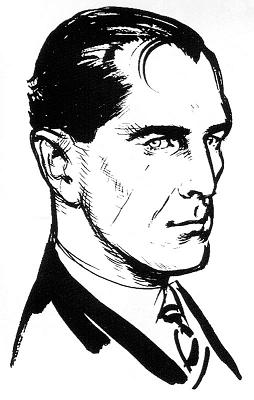
Fleming’s publisher didn’t like Casino Royale, but the novel got published thanks to a good word put in by Peter Fleming, Ian’s older brother and an established travel writer. The novel received mixed reviews, largely because of its somewhat disjointed plot and overly long ending. But something about the character of Bond struck a chord with the readers, and it sold well. The book sold well enough to warrant a sequel, and soon became a franchise of thirteen novels and a short story collection, Octopussy and the Living Daylights. The royalties gave Fleming enough money to retire to Jamaica. And, in time, Hollywood came knocking.
Enter Sean Connery
By the early 1960s, millions of readers had fallen in love with Bond, but the novel version of James Bond still didn’t have all the features that most people identify with Agent 007 today. He was intensely work-driven, quite serious, and generally careful on the job. While he was something of a playboy, he rarely mixed women and work. The wry sense of humor and reckless behavior would only come about as a result of the films. In 1962, Bond made the jump to the big screen in Dr. No.
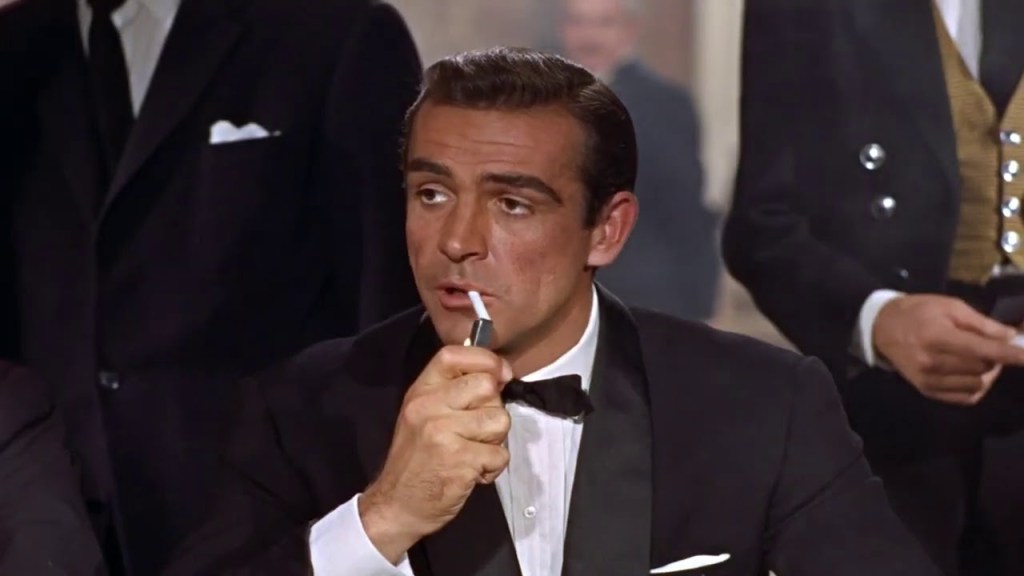
The search for the perfect actor to play James Bond was an exhaustive one. Few actors had all of the features that Fleming’s spy needed. The perfect James Bond needed to be handsome but not so handsome to stand out. He needed t be athletic and macho but still suave and debonaire. Actors ranging from Roger Moore to Clark Gable were considered for the role. Ultimately, the studio went with a relative unknown: Sean Connery.
At the beginning, Fleming was against the casting of Connery. The 6’2” Scotsman looked too common to be a super spy. He had light feet for a large man, but was also rough and unrefined. Luckily, producer Harry Salzman took Connery under his wing and showed him how to become the smooth talking and clever James Bond. Salzman showed Connery how to dress, how to walk, and how to talk. He refined his tastes in food, drink, and women. The result was a resounding success; Connery came to define Bond to many viewers. He managed to be suave and charming, but also ruthless at times. His physical presence gave Bond an extra edge of danger; behind the tuxedo and cigarettes was a man who seemed capable of anything, both physically and mentally. Even Fleming got won over by Connery’s portrayal, and incorporated some of the movie Bond into his books. Bond’s mother was written to be of Scottish descent to make his lineage resemble Connery’s, and the character grew closer to his cinematic counterpart.
Connery went on to play Bond for the first five movies of the series: Dr. No, From Russia With Love, Goldfinger, Thunderball, and You Only Live Twice. During these movies, the character continued to change thanks to Hollywood’s marketing and the dabbling of numerous writers and directors. One noteworthy change is that Bond became much less ruthless than he was in the novels and in Dr. No. As Bond became more of an icon, the men behind his film persona tried to make him more likable, and thus eliminated the more callous side of the character.
The Bond Formula
The early Connery films set the stage for the Bond formula, which speaks to my second main point. Over the course of many movies, people have come to expect and even rely on this formula happening. Certain things must happen a certain way for a film with James Bond in it to be considered a “Bond movie:”
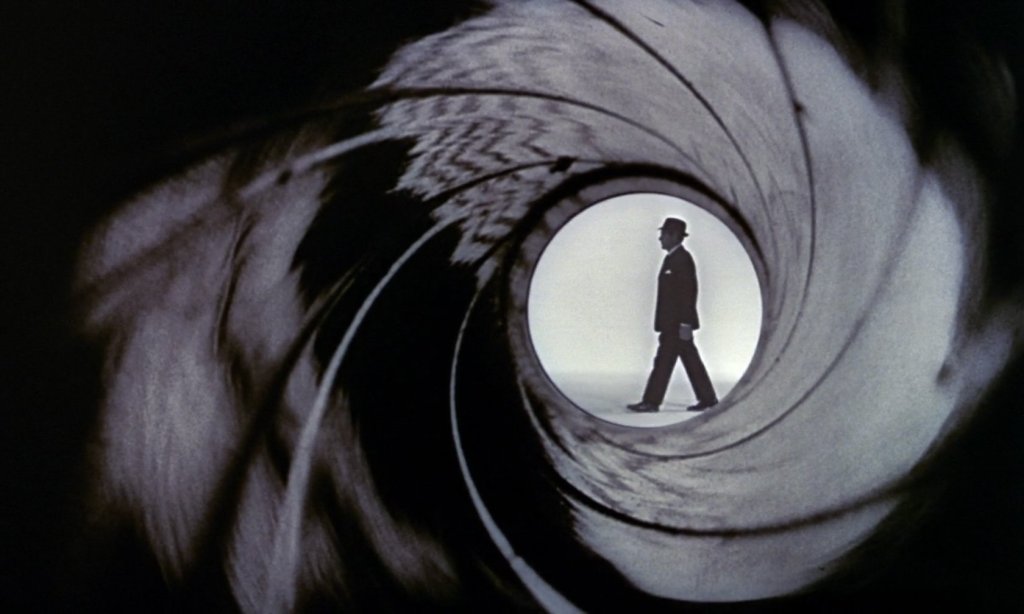
The Gun Barrel Sequence: The start of most James Bond movies features Bond walking into view from the right side of the screen. He’s being watched through a small white hole, which is revealed to be a gun barrel. At the last moment, Bond turns and fires at the would-be assassin, and the screen goes red as blood oozes over the vision of 007’s latest victim. This sequence has been in place since Dr. No. It was changed up a bit for the 21st film, Casino Royale, where the gun barrel sequence was delayed until after the first scene.
The Opening Gambit: Bond films feature a pre-credits scene that is often unrelated to the plot of the actual movie. This scene usually depicts Bond’s last mission and often involves some wry humor.
The Opening Credits: Bond credits are a feature in and of themselves. The Bond films are among the only films that still feature full credits before and after the movie. The opening credits features a song performed by a popular band of the time, and usually features either naked or near-naked women dancing to some very stylized scenes. It just doesn’t seem like a Bond film without the requisite pornography, does it?
The Characters: Certain characters have become standards in Bond films. There’s M, Bond’s employer, who, like Bond himself, has undergone many changes in actors. The only time this change was really mentioned was when Judy Dench came into the role during Goldeneye, where her role as a female M who disliked the chauvinistic Bond showed that times were changing. Even that bit of continuity has become fuzzy, though, as the franchise’s prequel/reboot, Casino Royale, featured Judy Dench as the first M. Other characters include Miss Moneypenny, M’s secretary, who Bond constantly flirts with. Although it is sometimes hinted otherwise, Moneypenny seems to have the distinction of being one of the only women in the world that Bond hasn’t slept with. There’s also Felix Leitner, a CIA agent who is essentially Bond’s American counterpart. Felix doesn’t appear in every Bond film, but has appeared enough to become an important character in the franchise. Perhaps the most beloved character in Bond’s supporting cast is Q. Usually played by the late Desmond Llewellyn, Q is MI-6’s gadget man who gives Bond all of his wonderful toys. A common misconception is that Q doesn’t appear in Dr. No. He does, but is not played by Llewellyn. He is also not referred to as Q, but is instead called by his actual rank and name, Major Boothroy. Since Dr. No, Llewellyn played Q in virtually every Bond movie. Even as other actors changed, he continued to play the character. His last film was The World is Not Enough, where he mentioned his desire to retire and introduced his protégé, played by John Cleese. While Llewellyn was set to continue playing Q, he died in a car crash shortly after The World is Not Enough. As a result, Q’s last scene in that film becomes doubly poignant because it is essentially the actor’s swan song. Llewellyn stands as the only actor to receive a real send-off from the franchise, rather than simply being replaced by someone else playing the same character.
Bond’s Wonderful Toys: In Dr. No, Bond’s only real gadget was his Walther PPK handgun, given to him by Major Boothroy. By From Russia With Love, Bond has such gadgets as a bulletproof briefcase, given to him by Q. From that point on, Bond’s gadgets have become more and more outlandish. Most films have a sequence early on where Q introduces the gadgets to Bond, including dental floss that doubles as piano wire, cufflinks that shoot poison darts, and a car that becomes invisible to the naked eye. Early on, these scenes were rather straightforward. In Goldeneye, though, the director suggested that Q was angry at Bond for constantly wrecking gadgets that he worked hard to create. Since then, Q has generally acted as the angry father to Bond, scolding him but also occasionally showing a side that does care about 007’s safety.
The Bond Girls: Bond likes sex. A lot. In Dr. No, he delays the capture of a criminal so he can have sex with her first. There is at least one major “Bond girl” per movie to go with the many floozies Bond sleeps with. These Bond girls are generally strong and sexual women who initially hate 007 but eventually fall for him. Sometimes, they are also henchwomen for the evil mastermind. On several occasions, Bond’s sexual prowess has been enough to save him from some villain’s death trap. In The Spy Who Loved Me, Bond even gets the girl in the end after he’s confessed to killing her lover. Some notable Bond girls include Tracy Bond, who appeared in On Her Majesty’s Secret Service. She has the significance of actually marrying James Bond – just before being killed by his arch-nemesis, Ernest Stavros Blofield (the cat-stroking, bald-headed psycho that Dr. Evil from the Austin Powers franchise spoofs). In Casino Royale, Bond falls in love with Vesper Lynd, and leaves MI-6 for her – shortly before she gets killed by the mysterious organization that she works for. Also, in The World is not Enough, Bond falls in love with Elektra King, who turns out to be the true villain of the film. Elektra gets the honor of being the only woman that Bond has ever killed directly. If you haven’t noticed, Bond films generally adhere to this rule: it’s okay to sleep with Bond, but if he falls in love with you, you’re going to die.
The Bond Villain: Often taking a backseat to Bond’s sexy women, cool cars, and sci-fi gadgets is the big bad evil guy who threatens to destroy the world. Bond’s villains generally come in two varieties: the crazy communist or secret organization who wants to destroy the world, or the enterprising businessman who wants to make a tidy profit by killing millions of people. They almost always have some sort of disfigurement, be it a scar on their eye like Blofield, a corrupted tear duct that causes them to weep blood like Le Chiffre in Casino Royale, or a third nipple like Scaramunga from The Man With the Golden Gun. Bond villains often tend to borrow liberally from the Campy Villain’s Handbook, chaining Bond to a nuclear bomb instead of shooting him, giving long-winded speeches, and allowing last requests.
Bells and Whistles: In addition to the bizarre cast of characters, Bond movies generally have very specific clichés and plot points to adhere to. Most of the films have at least one car chase, and many of them feature Bond in a casino. There are numerous puns and subtle, and sometimes not so subtle, sex jokes. Bond usually uses a Walther PPK pistol, and often drives an Astor Martin, which made its first appearance in Goldeneye. He drinks “a vodka-martini – shaken, not stirred,” and introduces himself as, “Bond…James Bond.”
Bond Will Be Back: Most Bond films end with the words, “Bond will be back.” It used to be, “Bond will be back in…” followed by the name of the next movie. Naming the next film eventually stopped because the studio was prone to change their minds. One preview promised that the next film would be From A View to A Kill, the title of one of Fleming’s stories. The studio eventually changed that title to A View to a Kill. Another example was when the next film was scheduled to be For Your Eyes Only, but that movie was quickly placed on the backburner to film the more science fiction oriented movie Moonraker.
While not all of the films have every element, the most successful ones tend to stick to the formula. Fans have come to expect certain elements from a Bond film, and one thing that film audiences don’t generally like is a surprise.
Enter George Lazenby
As mentioned before, Connery’s films essentially formed the frame for what a Bond film was. However, Connery is only the first of six actors to play 007. Other actors have given the role their shot, and they too have built upon the character. For many, the true James Bond is not the character from the novels or the first movies, but rather an amalgamation of the many people who have lent their skills to creating the superspy.
When Connery departed the franchise after You Only Live Twice, several new actors were auditioned to play the character, including some people, such as Batman star Adam West, who weren’t British. Ultimately, the job went to George Lazenby, a model. Lazenby was offered a multi-movie deal, but his agent advised him to do only one Bond film, On Her Majesty’s Secret Service, under the idea that a spy role would be too archaic for the 1970s. Lazenby did his film and then moved on, sparking animosity with the director and studio that may be a reason why he struggled to find other film work.
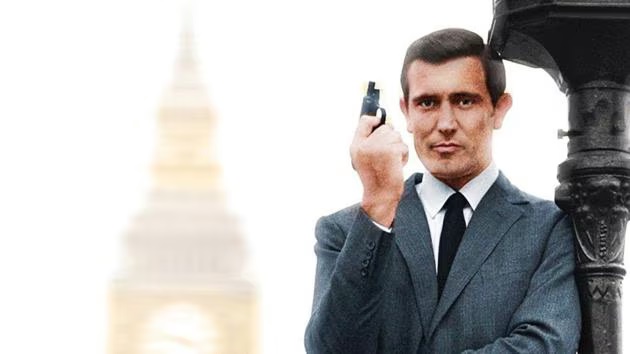
The original script called for Bond to have plastic surgery, thus explaining the character’s new look. Instead, only one reference was made to the change in actors: a quick breaking of the fourth wall during the opening gambit where Lazenby says, “This never happened to the other fellow.”
Lazenby faced two problems with the role. First, he had to follow in Connery’s footsteps, and that was a hard act to follow. Second, he was primarily a model, not an actor. His character was more serious and his performance was regarded as very wooden. His supporters, on the other hand, point out that Lazenby’s Bond is actually more similar to Fleming’s original creation than Connery – a sign that staying true to the source material isn’t always the best idea for a film franchise. On Her Majesty’s Secret Service was a critical and financial disappointment, which is a shame because it offers one of the more moving stories in the franchise. The Bond girl was a woman capable of standing up to 007, and Bond actually fell in love and got married, only to see his nemesis kill what could have been his one true love.
After Lazenby’s failure, Connery returned for one last film, Diamonds are Forever. Lazenby himself only portrayed Bond one more time: in the hilarious spoof “Diamonds Aren’t Forever,” which appeared on an episode of Alfred Hitchcock Presents years later. Connery soon left the franchise as well, saying that he would never do another Bond film after Diamonds are Forever. That claim turned out not to be true; years later, Connery played an aging Bond in Never Say Never Again, a film distributed by Warner Brothers during a rights dispute regarding the franchise. Many years later, he voiced Bond in the video game adaptation of From Russia With Love.
Despite Connery’s on-again, off-again involvement, the studio once again needed a new Bond. So they went with someone who had fictional spy experience.
Roger Moore Defines Bond for a Generation
Roger Moore had already played a spy as Simon Templar in the TV show The Saint and seemed a natural choice for James Bond. he had been rumored to be up for the job as Connery’s replacement in You Only Live Twice, but only made himself a serious contender the for the role when it was clear Connery wouldn’t come back. Even so, Moore found Connery’s shadow hard to shake, and even found himself doing a Scottish accent when rehearsing lines for Live and Let Die.
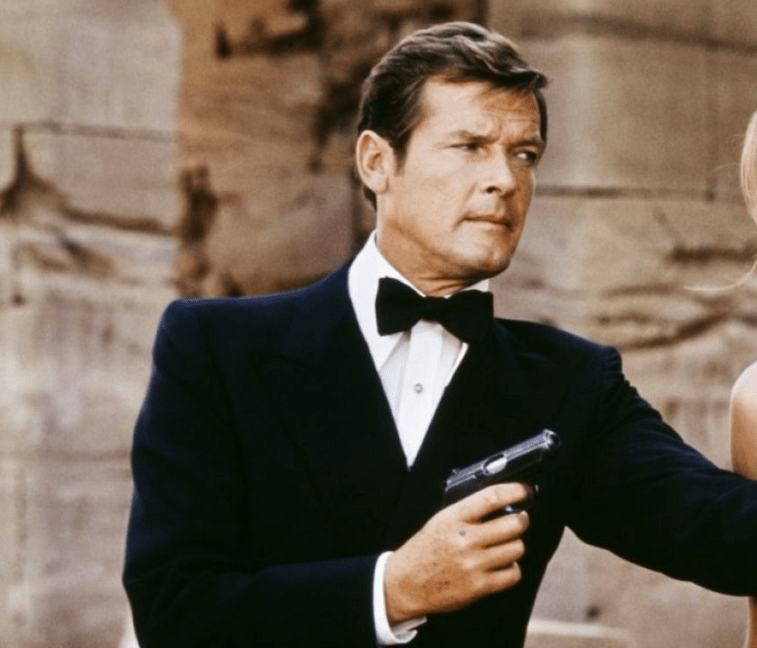
Ultimately, Moore found his footing by playing a more debonair spy with a comedic bent. He didn’t go so far as to wink at the camera as Lazenby had done, but he definitely leaned into the funnier aspects of being a superspy. Critics of Moore’s Bond suggest that he became a parody of the character, highlighting examples such as Octopussy, which featured 007 disarming a bomb while dressed as a clown, and the space adventure Moonraker, which was a blatant attempt to cash in on the popularity of Star Wars.
Moore’s light-hearted Bond hasn’t aged well with some fans, but it defined who the character was for more than a decade. From 1973’s Live and Let Die to 1985’s A View to a Kill, Moore played Bond for 12 years across seven films. As of 2024, he remains tied with Connery for the most times playing Bond on film. As nervous as Moore had been when he took over for Connery, he left equally big shoes to fill…which would prove troublesome for the next version of 007.
Back to the Source
Timothy Dalton had been considered as Connery’s replacement years ago, but turned down the part because he felt that he was too young at the time. In the 1980s, that problem was no longer an issue, and he came aboard as the next 007 in two films: The Living Daylights and Licence to Kill.
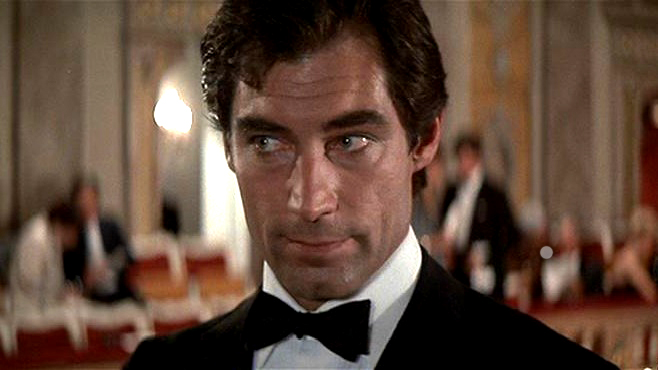
Dalton’s Bond took a step away from Moore’s campier version, becoming more mission-focused and ruthless. He was billed in trailers and posters as “The Most Dangerous Bond Ever.” However, as had been the case with Lazenby, the loyal adaptation of Fleming’s original Bond to the big screen didn’t take. Despite critical success, the films didn’t do as well as expected at the box office–though it certainly didn’t help that Licence to Kill was poorly marketed and went up against Tim Burton’s Batman in 1989.
Ultimately, Dalton’s run as Bond didn’t end because of box office struggles, but because of real-world rights issues. MGM and Eon productions entered into a four-year legal battle for control of the franchise, and Dalton’s contract expired during that time.
Another real-world issue shook up the franchise as it moved into the 1990s: the Cold War ended. The lack of a Soviet superpower shifted the geopolitical landscape, and James Bond suddenly became a relic of a war that ended. When the franchise did return, it decided not to run from those issues of relevancy but rather to meet them head on.
The Post-Cold War Bond
Goldeneye, a film named in reference to Ian Fleming’s Jamaican estate, presented Bond in a post-Cold War era. It did so not by pretending that the war was still on or by ignoring the past entirely, but by referencing the problem the character faced. Bond was referred to as a relic from the Cold War, and had to find a new place in a new world. He had a new boss, and this M was a woman who wanted no part of Bond’s chauvinistic antics. Goldeneye managed to revitalize the franchise by tackling the issues of Bond’s relevancy head on.
As Dalton had opted out of his contract by the time Goldeneye was filmed, the producers needed yet another James Bond. As had become the practice, they looked at one of the ones who had gotten away. Pierce Brosnan had originally been tapped to follow Roger Moore, but the news that he would be James Bond created a ratings surge for his TV series Remington Steele. That boost in ratings led to the series being renewed when it was on the verge of cancellation, and Brosnan couldn’t get out of his contract. Years later, Dalton’s departure from the Bond role and the end of Remington Steele meant that there was nothing to stop Brosnan from finally donning the tux.
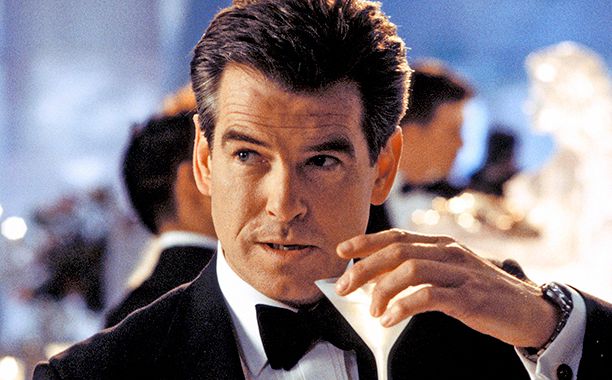
Brosnan’s Bond proved to be box office gold, with each film outgrossing the last. In many ways, he played an amalgamation of the other takes on the character. He had the wit and demeanor of Moore’s suave 007, but could show some of the ruthlessness of 007. The latter happened rarely but enough to make an impact, particularly when he killed his unarmed former lover in The World is Not Enough.
Brosnan’s Bond eventually ran into the same problem facing many action movies in Hollywood. His films fell into the “bigger is always better” trap. Every movie had to have bigger explosions, faster chases, and cooler gadgets than the last one. Additionally, by the 2000s, Brosnan began considering retiring from the character lest he repeat Moore’s mistake of being Bond for too long. Ultimately, Brosnan decided to come back for one more film following the series’ 20th installment, Die Another Day. But he never got a chance, because the studio effectively fired him from the role.
Behind-the-Scenes Action
Between Die Another Day and the 21st film, Casino Royale, two things happened in other franchises to change the way producers approached a Bond movie. First, The Bourne Identity presented a secret agent named Jason Bourne. Matt Damon’s Bourne did well at the box office and proved that superspies don’t need fancy gadgets and a huge special effects budget. While the Bourne movies were definitely in the traditional Hollywood action movie mold, their budgets were much smaller than any of the recent Bond movies. Secondly, Batman Begins came out, effectively rebooting and reviving a movie franchise that many believe had been killed by Joel Schumacher’s nightmarishly bad films Batman Forever and Dear God, Please Gouge My Eyes and Ears Out Now…er, I mean, Batman and Robin. With the desire to do a more down-to-earth film and the hopes of rebooting the Bond franchise, EON Films chose to adapt Ian Fleming’s first novel, Casino Royale to the screen.
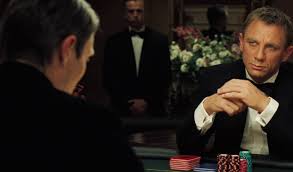
Despite the success of the Bond franchise, Casino Royale was a very risky move at first. While Batman Begins was a resounding success as a reboot of a franchise, James Bond didn’t need that reboot. Brosnan’s films had been some of the most successful 007 movies to date, and Brosnan himself was generally hailed as a terrific Bond. Casino Royale was essentially gutting a successful franchise, replacing its star, and building anew. The actor chosen to replace Brosnan was the largely unknown Daniel Craig. Moreover, he was blonde, which in and of itself turned many people off. But somehow, Casino Royale worked, and became the largest-grossing Bond movie in history.
While I’m sure that many people know more about why Casino Royale succeeded than I possibly can, I’ll throw out my best guesses here. It follows Fleming’s novel somewhat closely, adapting and expanding it for modern audiences. It presents a story about Bond’s beginnings, and showed more about his character than virtually any previous movie. And while it is a rebuilding point for the franchise, it did not completely tear down what was already there.
Casino Royale features many deviations from the Bond formula. There was no Moneypenny or Q, although we did get a look at what might be the Q branch of the novels. Bond was just beginning his career as a secret agent–the opening gambit featured the mission that gave him the code name 007. Craig’s Bond was much more of an unfinished product, beginning as something of a brute and slowly easing into someone more comfortable in a tux. In this regard, he ran closes to Connery’s Bond than the interpretations of Moore or Brosnan.
Craig’s Bond grew into the role people were more familiar with over the course of several films. Casino Royale presented his first mission as 007. In a rare direct sequel, Quantum of Solace followed immediately after the events of Casino Royale and showed him refining his methods so he was more than just a hired killer. Skyfall introduced Miss Moneypenny, Q, and a new M that more closely resembled the pre-Bosnan bosses.
Over the course of five films, Craig’s Bond developed from a rookie spy into the suave secret agent everyone knows. But the development reached a surprising conclusion: Bond died at the end of Craig’s last film, No Time to Die. Craig thus has the distinction of being the first Bond to have both an origin story and a death scene.
The Future
Although No Time to Die ended with Bond sacrificing himself to save his loved ones, the film also had the traditional “Bond will return” footnote at its end. So what happens now?
One thing is certain: after five films and over 15 years as the character, Daniel Craig is done. Casting for the next James Bond is currently underway. It’s up in the air as to whether the next film will be another reboot a la Casino Royale, tales of Bond’s adventures prior to his end in No Time to Die, or a trip back to that magical world where Bond’s face changes but his age never does and nobody mentions continuity all that much.
One thing I feel certain of is that the next Bond film will feature 007 butting heads against society’s latest bogeyman. He began fighting the Societs during the Cold War and moved on to fanatics, arms dealers, and even media moguls. James Bond battles what the western world fears, be it hostile superpowers, terrorists, political extremists, or corrupt businessmen. Whatever happens next with Bond, he’ll be primed to take on the fears and anxieties of a new generation. And regardless of what happens, Bond will be back.
 Babbling Brooks
I read your article with interest. James Bond, to me, represents English masculinity at its best. Although the settings of the movies (and novels!) remains cheesy, and the villains ridiculous in the extreme, there is something ineffably appealing about the whole spy mission that draws people in.
I would argue that the biggest draw of Bond is that he’s a ladies’ man. This humanizes his violence and makes him someone to look up to. The ability to seduce makes a man instantly charismatic, giving him Teflon like resistance to slurs and disparaging comments. Haters can hate, but they’re gonna hate in vain.
Come visit my blog, and leave some comments, if you like
http://www.dark.sport.blog
LikeLike
Talking of James Bond, if you have never compared Ian Fleming’s fictional James Bond to a real spy check out a news article dated 13 September 2024 in TheBurlingtonFiles website. Sadly for Fleming’s Bond, reality like exploding pagers and walkie-talkies is leaving espionage fiction in the ashtray of history. Why not forget about fictional agents like Bond and Bourne dashing to save the world from disaster and forget about CIA and MI6 officers reclining on their couches dreaming up espionage scenarios to try and thrill you. Check out what a real MI6 and CIA secret agent does nowadays. Why not browse through TheBurlingtonFiles website and read about Bill Fairclough’s escapades when he was an active MI6 and CIA agent? The website is rather like an espionage museum without an admission fee … and no adverts. You will soon be immersed in a whole new world which you won’t want to exit.
LikeLike