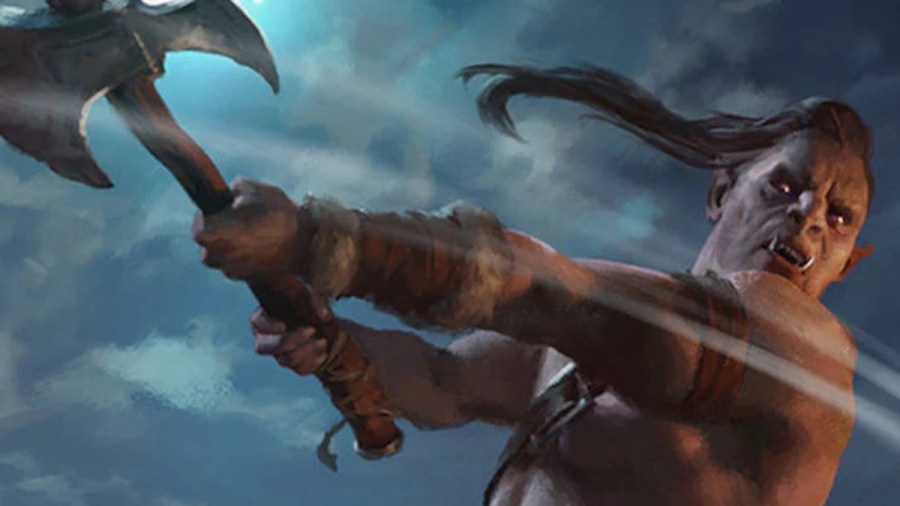
Dungeons & Dragons uses an abstract combat system, and many role-playing games afterward used said abstraction as a model. While the game has at times become a more tactical system over the years, certain elements of the combat engine have remained constant. Most notably, hit points and armor class have remained largely the same since the game’s inception.
True, the number of hit points a character has have gone up and AC has gone from a high-to-low to low-to-high number, but the core concept remains: roll a d20, beat a target number, and subtract damage from a target’s hit points. It’s simple, it’s fast, and it has worked for decades.
It’s also one element of the game that drives those wishing for a more realistic system nuts.
The Myth About Hit Points and Armor Class
One reason a lot of people detest hit points and Armor Class is because they buy into certain myths about those rules. The myth about Armor Class is that a higher AC makes a character harder to hit. The myth about hit points is that it is an absolute measurement of the physical damage a character can take before dying.
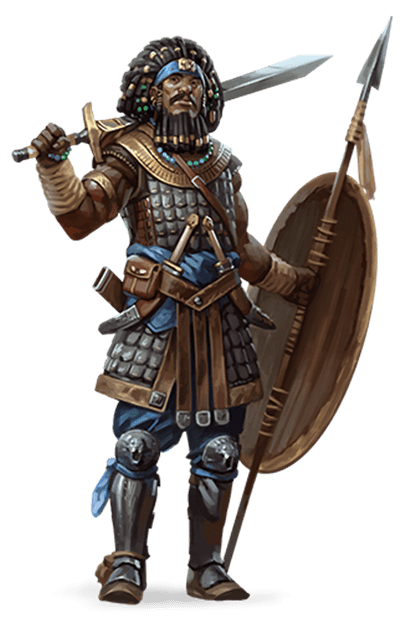
Armor Class does not make a character harder to hit. It makes them harder to injure. That’s why there are so many things that modify it, from Dexterity bonuses to feats and magical items to simple armor. Wearing a suit of plate mail doesn’t make a person more difficult to hit; if anything, it makes them easier to hit. However, you can bash away at plate mail and never make a dent, because it’s designed to keep a person’s vitals protected. Armor Class is an amalgamation of everything that makes a character harder to hurt. When someone misses on a hit roll, the in-story explanation for the miss can take many forms. The target could flat out dodge the blow. Their armor could soak up the brunt of the attack. Maybe they’re a big burly half-orc and they just let someone punch them in the gut, knowing they’re so strong that the blow won’t have an effect. A skilled martial artist might roll with the blow. If the character has regeneration, maybe they take a nick or a scratch, but the wound is so small that it heals instantly.
In some games, the difference between AC and damage resistance becomes blurred. If AC represents how hard it is for someone to get hurt, what’s the point of damage resistance, which seems to cover the same purpose? Ultimately, damage resistance represents something above and beyond a normal ability to avoid damage. While a person with a high AC can be harmed normally if the blow gets past their armor or reflexes, someone with damage resistance could stand still and not take the normal effects of an attack. Depending on the details, this could mean that certain materials have less of an effect, such as a werewolf’s resistance to non-silver weapons, or it could be an outright immunity, such as most incorporeal creatures’ immunity to mundane weapons. Regardless of the degree, damage resistance means that a creature could deliberately let itself get hit by an attack and still not feel it as much, while AC reflects someone’s skill at actively avoiding harm altogether.
Like Armor Class, hit points represent many things and require some adjudication to determine their exact nature. Hit points are more than a measure of physical health. They also represent fatigue, luck, and endurance. Hit points can be lost through taking cuts and bruises., but the can also represent a character’s body wearing down during a battle. Hit points can also reflect a blow where armor soaks most of the damage, because just because armor blocks a serious wound doesn’t mean the wearer doesn’t feel any impact.
Combat Examples: Armor Class
To illustrate the points I’m trying to make, I’ll give a few examples of how armor class can work without being reduced to a simple matter of hitting or missing.
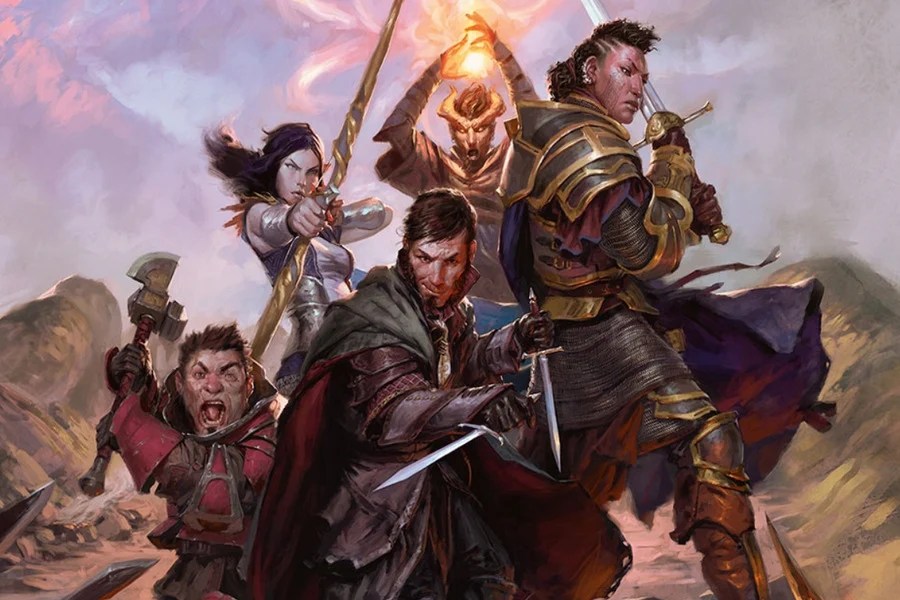
Example #1: Gothren is a clumsy low-level wizard who has been separated from his companions in a dungeon. Knowing he’s in danger, he casts mage armor on himself for protection, and tries to creep through the dungeon as quietly as he can. Unfortunately, he’s not nearly quiet enough, and an orc overhears him. Combat begins. Gothren has a Dexterity of 8, which makes his AC with mage armor a 12. The orc rolls a 14 with his attack roll, hitting Gothren. The air around the wizard trembles as the orc’s falchion pushes past his magical defenses. Gothren tries to dodge the blade, but trips over his own feet and actually stumbles into the deadly weapon.
Example #2: Kera is a nimble swashbuckling rogue in the midst of a battle on a pirate ship. One of the buccaneers dueling with her attacks from her flank with a rapier and rolls a critical hit. While dealing with a melee, Kera finds herself blindsided by one of her attackers. In an attempt to dodge, she hops onto the railing, only to find that she has no maneuvering room without diving into shark-infested waters. With nowhere to dodge, not even Kera can avoid the blow, so she tries to roll with the blow and hope that she can survive the wound (i.e., hopes that her opponent rolls poorly on the damage dice).
Example #3: Fal, a mace-wielding cleric, finds himself in a fight against an ogre. He swings his weapon, and his player rolls a 10 on the attack. The ogre’s AC is 11, so the attack misses. Since the ogre is a large, slow creature, it doesn’t seem likely that he’d just dodge the blow. So instead the creature just leans into it, turning his body so the attack hits its hard calloused hide rather than a vital spot. The ogre gives a grunt, but isn’t fazed by the attack at all. His hide armor and tough skin have absorbed all the damage.
Combat Examples: Hit Points
Actually determining how the hit happens is only one part of the matter. Here’s a continuation of the above examples, dealing with how each of the characters in question handles hit point loss.
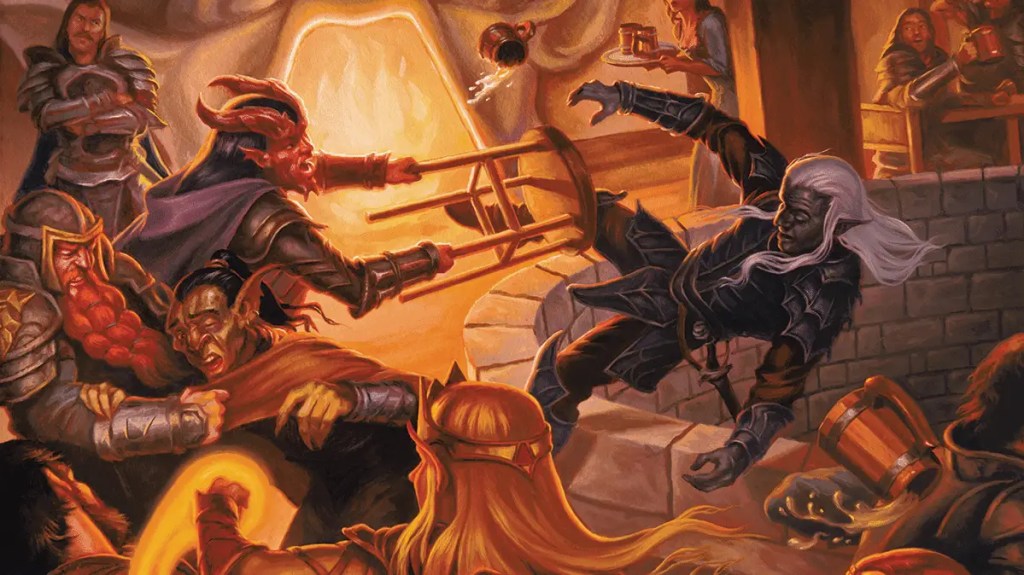
Example #1: Gothren is not too lucky against the orc. The DM rolls maximum damage for the falchion’s hit, and Gothren loses 15 hit points. As a 2nd-level wizard, he has 9 hit points, so now he’s hovering on death’s door. Gothren stumbled into the blade and got run right through by the orc. He’s now lying on the floor of the dungeon, unconscious, and it will take a miracle to save him.
Example #2: The DM rolls damage for the critical hit that the pirate scored on Kera. He rolls a 1, which doubles to only 2 points of damage. Kera has 30 hit points, so this critical hit turns out to be nothing more than a scratch. Even backed into a corner, she’s so nimble that she twists around and rolls with the blow, turning what could have been fatal damage into a minor scratch. The blade cuts past one of the straps of her leather armor, and leaves only a tear in her clothing. She’s practically unharmed, but a little more fatigued from her frantic dodge to avoid a life-threatening wound. Her slightly reduced hit points show that she won’t be as lucky next time, and might not have enough energy left to make such a magnificent dodge again.
Example #3: Fal’s attack did nothing against the ogre, and now the monster fights back. The ogre hits Fal, dealing15 points of damage. Fal has 36 hit points, so the damage done is pretty major. He isn’t particularly dexterous, and is slowed down even more by his plate mail and large shield. When he sees the ogre attack, he braces himself and readies his shield to defend. But he underestimated the ogre’s strength. While the shield does block the blow, the ogre’s massive club pushes Fal’s shield arm back, pinning it against his armor. Fal hears a crack in his arm as one of his bones breaks under the force, and the impact of the blow sends him staggering back a few steps. Armor doesn’t block everything…
Hit points and Armor Class are abstract ways to adjudicate combat while speeding play along. By nature, they leave a lot of space for imagination to fill in the blanks. The key is to realize that the nature of the system requires extra description. By fleshing out the descriptions in combat and giving a few moments of thought into an attack, combat rolls can go from, “You hit and do 12 points of damage,” to, “You knock the orc off balance with the flat of your blade. In the split second when he’s trying to regain his balance, you double back and catch him with the edge right at the base of his skull.”
Images: Wizards of the Coast
 Babbling Brooks