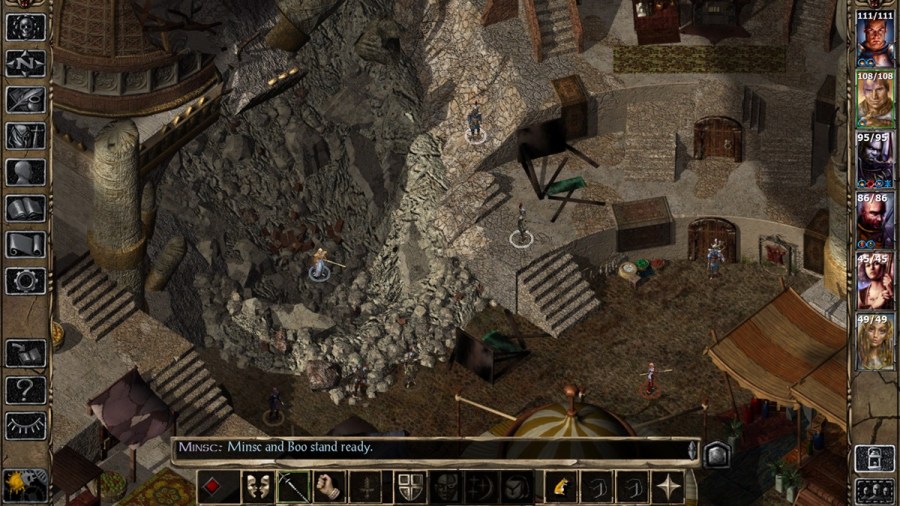
The success of Baldur’s Gate 3 has Hasbro seeing potential gold mines in the video game industry. Unfortunately for them (and us), Larian Studios won’t be working on more Baldur’s Gate games. Not to be deterred, Hasbro is investing $1 billion in new D&D computer RPGs, hoping to catch lightning in a bottle several times over. It’s amusing in its own way, because the company had a pipeline of consistent high-quality video games for a solid decade and let that dry up.
While D&D has seen several periods of success in the video game industry, the one that I experienced directly was the string of releases between Baldur’s Gate, which came out in 1998, and Neverwinter Nights 2, which saw its last official expansion in 2009. Developed mostly by Bioware (and the now-defunct Black Isle Studios), these games expanded the genre in sometimes innovative ways and delivered a consistently fun D&D experience on personal computers.
I’m going to touch on each of the games I’ve played, which covers all the D&D cRPG games released from 1998 through 2009 with the exception of Pool of Radiance: The Ruins of Myth Drannor, The Temple of Elemental Evil, and Icewind Dale 2. The latter two games sit in my GOG account waiting to be played in the future. As to Pool of Radiance…well, based on the reviews I’ve read I might just go back in time and play the SSI “Gold Box” games instead.
Baldur’s Gate
I had seen the ads in Dragon Magazine, and I had bought my first computer in 1999, a year after this game came out. I was very eager to play Baldur’s Gate.
I must have fled Candlekeep, met Jaheira and Khalid at the Friendly Arm Inn, and battled through the Nashkel Mines over a hundred times. Unfortunately, I hated the rest of the game.
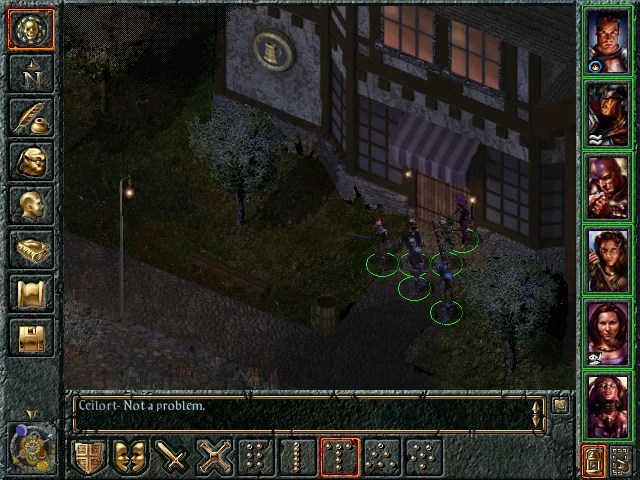
Don’t get me wrong; Baldur’s Gate is a really good game, especially when adjusted for the time period it was released in. It does a good job with Forgotten Realms lore and captures a lot of stuff I had read about in AD&D but never experienced at the table, such as the magical tomes that boosted ability scores. But I bounced hard out of the plot after Nashkel.
For those unfamiliar with the game, you find yourself on the run from your home after an armored figure kills your foster father. Teaming with other adventurers, you start investigating an iron crisis that has struck the Sword Coast. It seems that the mining town of Nashkel is the crux of the problem, and you defeat the kobolds sabotaging the mine there only to discover that their leader is the pawn of somebody else. And then that person is a pawn of somebody else…who is a pawn of somebody else. And so on and so forth for several dozen hours.
Baldur’s Gate was my first big computer RPG, and it was the first outing of the new Black Isle/Bioware team, so it was a little rough. The plot had hints, mainly in the form of dreams that suggested your character’s true origin, but the fact that the villain on the box showed up in the prologue and was then gone until late in Chapter Six was very frustrating.
Luckily, I came back to this game after its sequel came out and had a much bigger stock of patience then. I even bought the expansion, Tales of the Sword Coast, which added some interesting new side quests. Like the original, it took me time to get used to Tales of the Sword Coast, as the difficulty in those quests is high and the story is rather light. It wasn’t until I had gotten more used to the cRPG genre that I came to appreciate the mission pack, particularly Durlag’s Tower, more.
Planescape: Torment
Planescape: Torment uses the same Infinity Engine that Baldur’s Gate used, but a few things set it apart from the rest of the games in this list. The game came from Black Isle, but Bioware is notably absent from the credits. It isn’t set in the Forgotten Realms, and is instead wholly contained in the Planescape setting. You don’t create your own character, instead role-playing as the Nameless One, an amnesiac immortal. And while the game has plenty of opportunities for combat, it instead focuses on dialogue and storytelling, leaning into the Planescape idea that belief is power.
For these reasons and more, I completely skipped this entry when it came out in 1999. I dabbled with it once or twice, but never left the opening stage in the Mortuary.
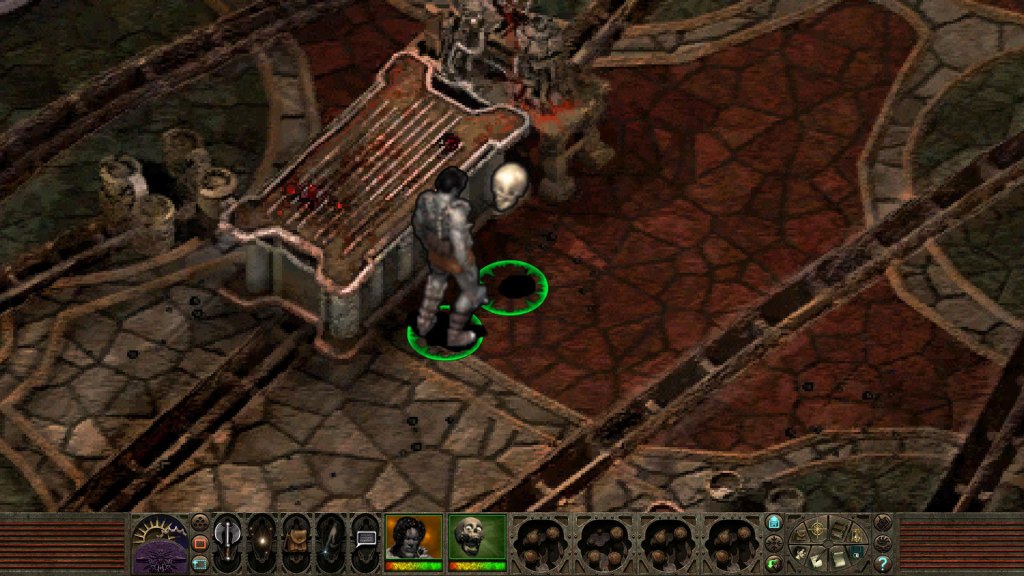
When I did settle down to finish this game in 2023, I was skeptical. I had heard all about its rich storytelling and how the philosophical bent of the story truly fit the ambitious scope of the Planescape setting that the actual D&D books too often missed. It seemed to me that the game was probably overhyped, especially since it was multiple decades old at that point.
At some point after I picked up a sphere containing lost memories that made my character break down and cry while being consoled by a chaste succubus, I grudgingly admitted that this game is as good as advertised.
I don’t think Planescape: Torment has the replayability that Baldur’s Gate possesses, although you can certainly get multiple endings to the story (my favorite is when you talk the bad guy to death). It is a very, very good story that will really make you think. I feel that the last part is notable–while the original Baldur’s Gate series definitely had moments that made me stop and consider something, its theme mostly boils down to the nurture versus nature question that many classic fantasy stories follow (Baldur’s Gate 3 is a different beast, but has the benefit of learning from all the games listed here). Torment‘s driving question of, “What can change the nature of a man?” is much deeper and never gets fully answered by the narrative. It’s up to you to find that answer for yourself, and the conclusion you draw will shape the story.
In short, Planescape: Torment is a game that I play less than the other games on this list, but the questions and themes posed by this game keep me thinking about them long after the credits roll.
Icewind Dale
Released in 2000, Icewind Dale is another Infinity Engine game that I skipped at first, albeit for different reasons than Planescape: Torment. I had passed on Torment because it was so different in setting and theme than Baldur’s Gate. I skipped Icewind Dale because I heard that it was pretty much entirely hack and slash, which was my least favorite part of Baldur’s Gate. As was the case with Torment, I came to regret missing out on Icewind Dale.
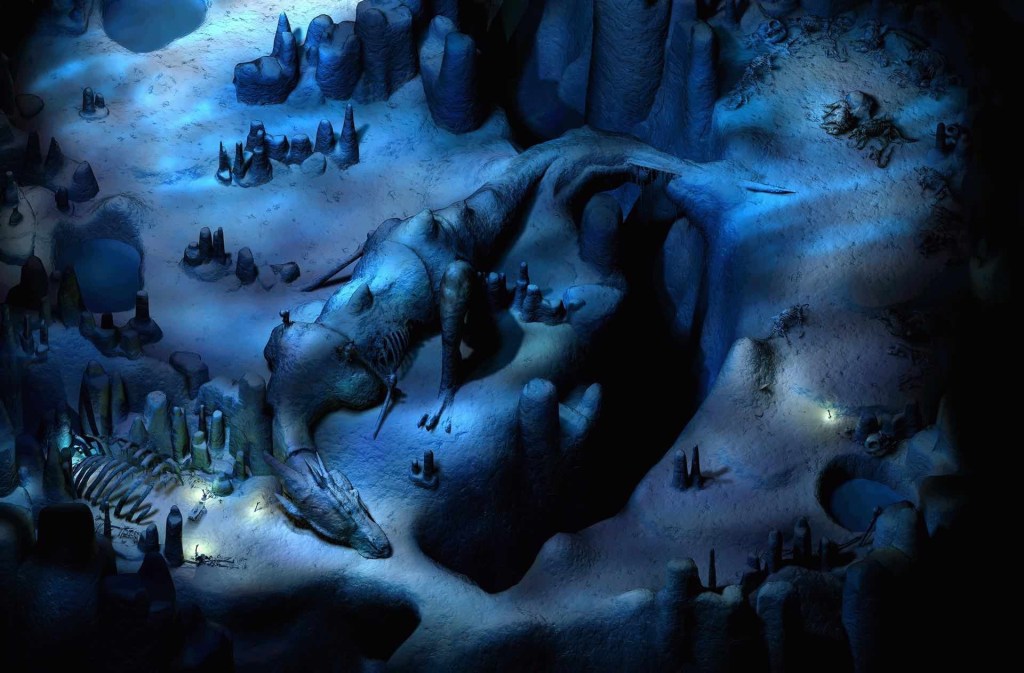
Icewind Dale does lack the companions who made Baldur’s Gate so memorable. Instead of encountering NPCs who can join your party, you create all six members of your adventuring group. You can swap them out for other player-created characters, but you don’t run into colorful personalities within the game who join your group. That said, there’s much more to a story than the friends you make along the way.
In terms of plot, I like Icewind Dale better than the first Baldur’s Gate game. While Sarevok hid out at the end game and left a something frustratingly-thin trail of breadcrumbs to find him, the villain in Icewind Dale remains present throughout. He starts as a manipulator off-screen, but makes his presence known when he kills and replaces a key ally. In many ways, he’s similar to Sarevok in that you don’t see his true face or learn his real name until the end of the game, but he feels more present throughout the game. This is partly due to Icewind Dale‘s shorter playtime, which doesn’t leave the main story feeling as stretched out.
Combat in Icewind Dale remains my least favorite part of the game, as it’s too often just a horde of themed monsters marching at you from across a room. But the locations you delve into burst with flavor. The game uses its setting well. Every dungeon feels different, whether you are searching through a volcano filled with yuan-ti or trekking about a glacier owned by frost giants. The game’s expansion, Heart of Winter, ups the flavor and the storytelling even more. About the only part of the game I find disappointing is the second expansion, Trials of the Luremaster, which is basically one huge dungeon and lacks as much flavor as the other stories.
Baldur’s Gate and Planescape: Torment really highlighted a 2nd edition AD&D feel, with grand stories and deep themes. By comparison, Icewind Dale feels more like 1st edition (and is appropriately set in the past of the Forgotten Realms), where exploration and dungeon delving were at the forefront of the game. Icewind Dale will never be my favorite of the D&D cRPGs, but it is definitely a fun time.
Baldur’s Gate 2: Shadows of Amn
Released just a month or two after Icewind Dale, this was the game that got me obsessed with D&D cRPGs. Baldur’s Gate 2: Shadows of Amn took the best parts of its predecessor and added more gameplay, higher levels, and most importantly much more character interaction. While NPCs in the previous game had some banter and maybe a short quest, the companions of this game have in-depth stories, character arcs, and romances.
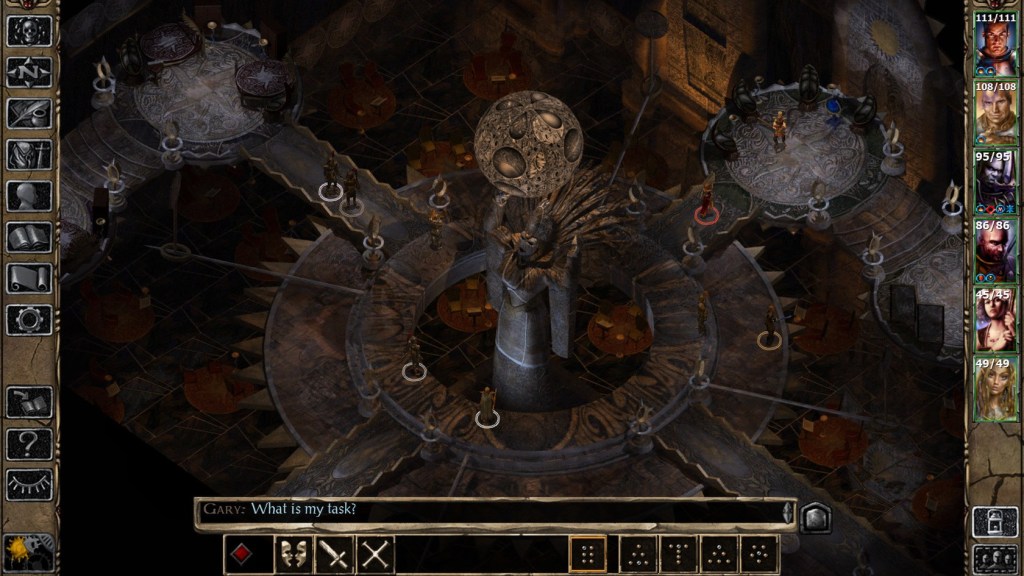
My biggest problem with the first Baldur’s Gate was that Sarevok remained largely distant from the plot. Enter Jon Irenicus, the main baddie of Shadows of Amn, who shows up early and often. Chillingly voiced by the late David Warner, Irenicus starts off by tormenting you in a cell, kidnaps your surrogate sister, and remains a present danger throughout the game. He makes the story personal, and you love to hate him even when the endgame paints him in a slightly more sympathetic light.
The game’s expansion, Throne of Bhaal, finishes off an epic saga that sees your character develop from a humble 1st-level orphan in Candlekeep to an epic hero that even Elminster doesn’t want to mess with. Throne of Bhaal is rougher story-wise due to being a slightly rushed expansion rather than a full-fledged game, but it nonetheless delivers an amazing and epic conclusion.
So is Baldur’s Gate 2 better than its predecessor in every way? Not quite. The original still gives you an entirely open map that you can explore at your leisure, stumbling into side plots and even ignoring the main plot for quite a while if you choose. Baldur’s Gate 2 uses the city of Athkatla as a hub from which many side quests spring, but you don’t get the unbound freedom to wander wherever you want at any time. That’s a minor thing, but a significant one if you really enjoyed exploring the Sword Coast in the original game.
Any nitpicks aside, Baldur’s Gate 2 was so good that it got me to play the whole saga obsessively for over 20 years. It took all the way until 2023 for me to find a cRPG I liked better, and that happened to be Baldur’s Gate 3.
Neverwinter Nights
Neverwinter Nights was certainly not the best cRPG I’ve played, but it’s probably the one I’ve played the most. Released by Bioware in 2002, this game’s main selling point was a toolset to allow people to create their own adventures, and the community really ran with it.
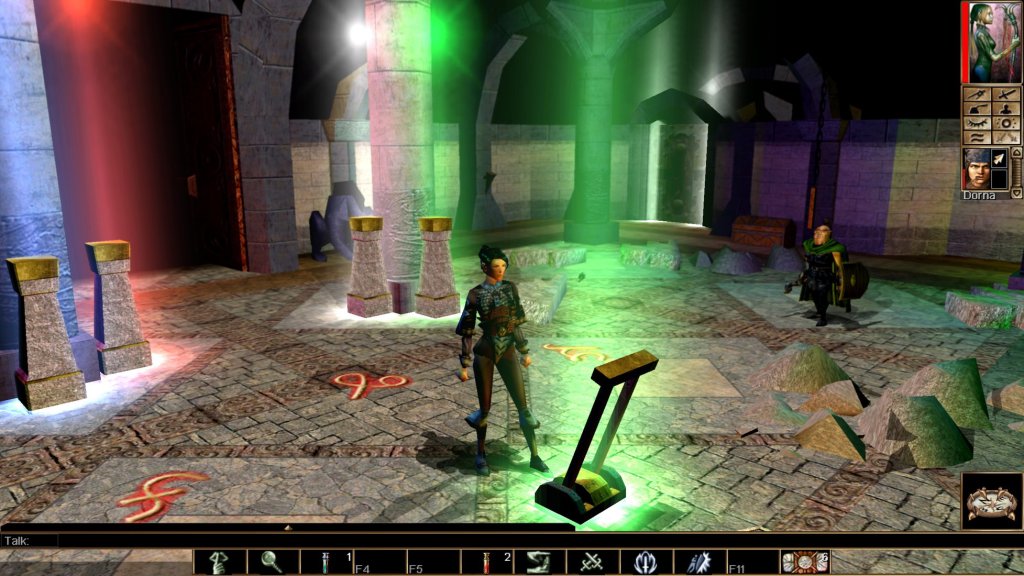
The official campaign that launched with Neverwinter Nights was pretty middling, especially for folks who expected a worthy follow-up to the Baldur’s Gate saga. An early outline document suggests that the story originally had more depth, but legal troubles with Interplay and the D&D video game license meant that the final product was a fairly bare-bones adventure that lacked the colorful NPCs and compelling stories of its predecessor series.
The toolset, on the other hand, was flexible and simple enough to allow amateur coders and storytellers the world over to share their D&D creations. As a result, Neverwinter Nights powered hundreds of video game stories, with the best being on par with professional releases. A site called Neverwinter Vault served as an archive and ranking system for these community creations. The game really did have limitless possibilities.
After a lukewarm reception to the official campaign, Bioware contributed progressively better storytelling with expansions. Shadows of Undrentide was simple but had more NPC interaction and a better story. Hordes of the Underdark was a truly epic and interesting campaign that culminated in a battle with an archdevil.
Unfortunately, the best adventure (in my opinion) from this game never got completed. Bioware originally released “The Witch’s Wake” as a free module to push the storytelling capabilities of the engine. The first chapter got remastered when the company launched their Premium module program, which was basically early DLC. The second chapter, though teased, never came out. At some point, someone in the Bioware/Atari/Wizards of the Coast decision tree decided that only official D&D settings should get supported in the Premium Module program, so “The Witch’s Wake” became the best story that Bioware never told.
Neverwinter Nights 2
In theory, Neverwinter Nights 2 takes the excellent building tools of its predecessor, refines them, and presents them alongside an official campaign that has a much better story. That’s true in practice as well, although the game didn’t quite turn into the hit that Obsidian Studios had hoped.
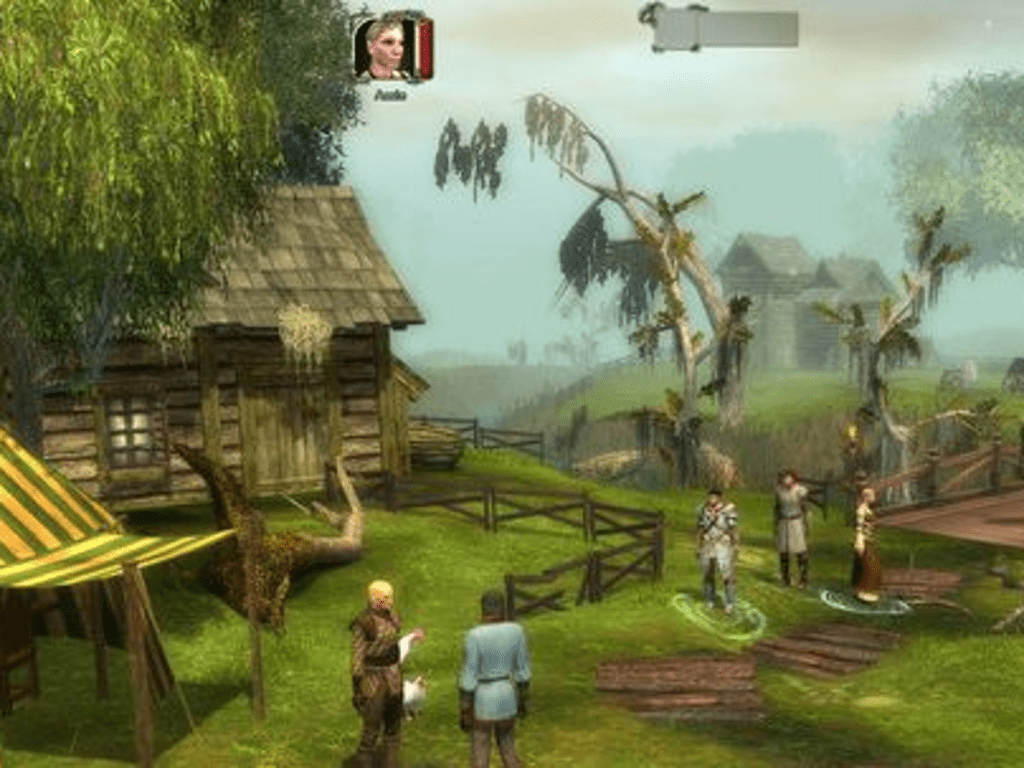
The game looks much, much better than the blocky graphics of the original Neverwinter Nights. Unfortunately, it wasn’t optimized super well, so even computers that met its system requirements on release in 2006 experienced bugs and lag. The toolset was hypothetically just as good as the original, but it was more complex and never had quite as many community builders latching onto it.
Story-wise, Neverwinter Nights 2 definitely has a better tale to tell, although it is a fairly straightforward “hero’s journey” story that sees your main character start in a small town and become a world-saving hero. The companions who join who are archetypal but well-written and acted, keeping things pretty engaging. The main story suffered from two things: a deadline-driven development cycle that saw the removal of some significant content and an ending that became infamous for being a slideshow that just killed off most of the main party.
As with the first Neverwinter Nights, expansions very much enhanced the game. Mask of the Betrayer continued the story of the original campaign and told a unique, intriguing story about life, death, love, and destiny that stands close to the level of Planescape: Torment when it comes to philosophical storytelling in a D&D game. Storm of Zehir told a simpler story but presented an open world map that presented gameplay similar to the original Baldur’s Gate.
The final, online only expansion Mysteries of Westgate, unfortunately, got a big-time shaft from Atari, who delayed it repeatedly and then instituted an idiot’s version of copy protection that meant someone who bought the game could only install it three times, ever, across all devices. This was so punitive that many people didn’t even pick it up when Atari relented and loosened the restrictions on downloading the game. It must have been a real kick in the teeth for small developer Ossian Studios, whose Darkness Over Daggerford module was supposed to be released for Neverwinter Nights only for the Premium Module program to get scrapped. They finally got an official release for the franchise only for Atari to make sure that nobody would buy it.
Mysteries of Westgate came out in 2009, after which there were no further D&D cRPGs for a while. Still, it was a very good run–for about a decade, fans of D&D could pick up either a new game or an expansion to a popular game every year. Given the long development times of modern games, it seems unlikely that the feat will ever be accomplished again.
 Babbling Brooks