
The Fifteenth Doctor has landed, and he seems to be the most emotionally healthy version of the character that we’ve seen in the show’s 60-year history. Still carrying his flaws and trauma, he has nonetheless shown openness about his past and a willingness to express his emotions rather than hide behind a stoic facade.
While the Doctor will undoubtedly have new traumas and occasional reversions in personality in the years to come, a relatively healthy Time Lord is a refreshing change for the character. It’s also a culmination of 15 different regenerations, each of which shaped him into the man he is today.
While the concept of regeneration is mostly a conceit to keep the show going even after the departure of a lead actor, the long-running nature of Doctor Who allows a bigger scope for character development than you typically find in serial fiction. Each of the Doctor’s previous incarnations made him the person he is today, and this is how.
The First Doctor
We know now that the First Doctor wasn’t really the first; the Doctor lived a potentially infinite number of lives before the Time Lords de-aged them and erased many of their memories. Nonetheless, for most purposes, the Doctor’s personality began with the irascible First Doctor, played by William Hartnell.

This Doctor begins the character’s current arc. Extremely knowledgeable, exiled from his people for reasons that would never fully be explained, and joined by his granddaughter Susan, he started with a rather weak moral compass. His first companions were unwilling travelers, and he threatened to abandon them or even leave them to die. This flies directly in contrast to the respect for the sanctity of life that this Doctor would later espouse. But then, it took time for him to consider humans a truly worthy lifeform.
So far advanced from humans, the Doctor originally looked down on them. After a few rides with companions Barbara and Ian, however, he saw that, despite lacking the sort of scientific knowhow that he valued, they had other qualities that made them worthy of respect. Thus, in the final few years of his earliest (remembered) incarnation, the Doctor went from a man who could be downright hostile to humans to a more kindly grandfather figure who respected humans and even took them in…particularly if, like Vicky and Dodo, they reminded him of his granddaughter Susan.
The Second Doctor
In the span of three years, the First Doctor learned to love humanity and show a kinder side of himself. He also discovered that people often underestimated his intelligence. When he regenerated into a younger body, those two traits became defining features of his new form.
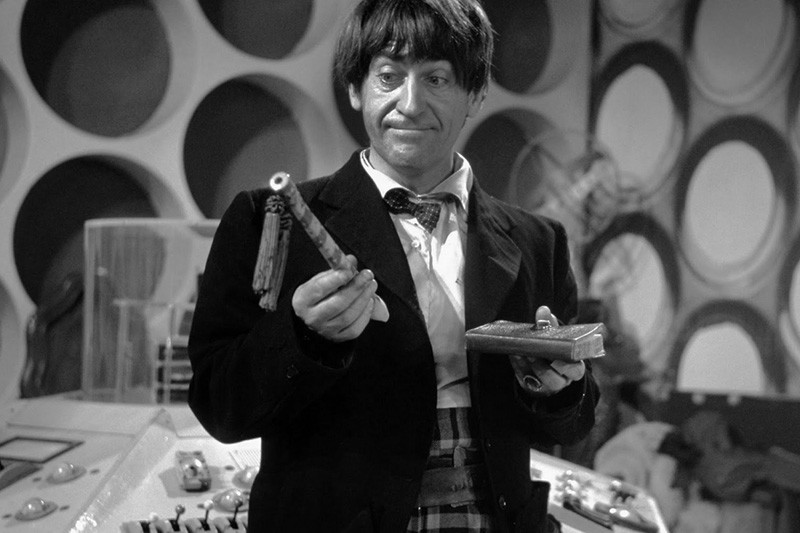
A funny little man in a rumpled suit and a bow tie, the Second Doctor seemed very different from his previous incarnation. He often showed a bumbling, easily distracted nature that caused his enemies to underestimate him. This was often a front for a more cunning intelligence that actively fought evil wherever he found it. In fact, his own companions sometimes underestimated him, such as when they tried to “save” him from the Great Intelligence and wound up ruining a plan he had kept close to the chest that would have destroyed that evil forever.
While most of his foolery was a disguise, the Second Doctor became the mask a little bit as he pretended to be a bumbling space hobo. This version sometimes got distracted by his recorder, tended to fill his pockets with an odd assortment of things, and developed a sweet tooth (the first, “Would you like a Jelly Baby?” came from Patrick Troughton’s Second Doctor, not Tom Baker’s Fourth). He showed a hatred of computers, possibly because the robotic Cybermen were his most frequent enemy, but loved little gadgets such as the sonic screwdriver which made its first appearance during his time.
The Third Doctor
Jon Pertwee’s Third Doctor was, in many ways, a regression. Having been captured by the Time Lords and forced to regenerate, he found himself exiled to Earth and unable to travel time for a few years. In an older body again, his frustration led to a return to the smugness that the First Doctor had slowly shed.
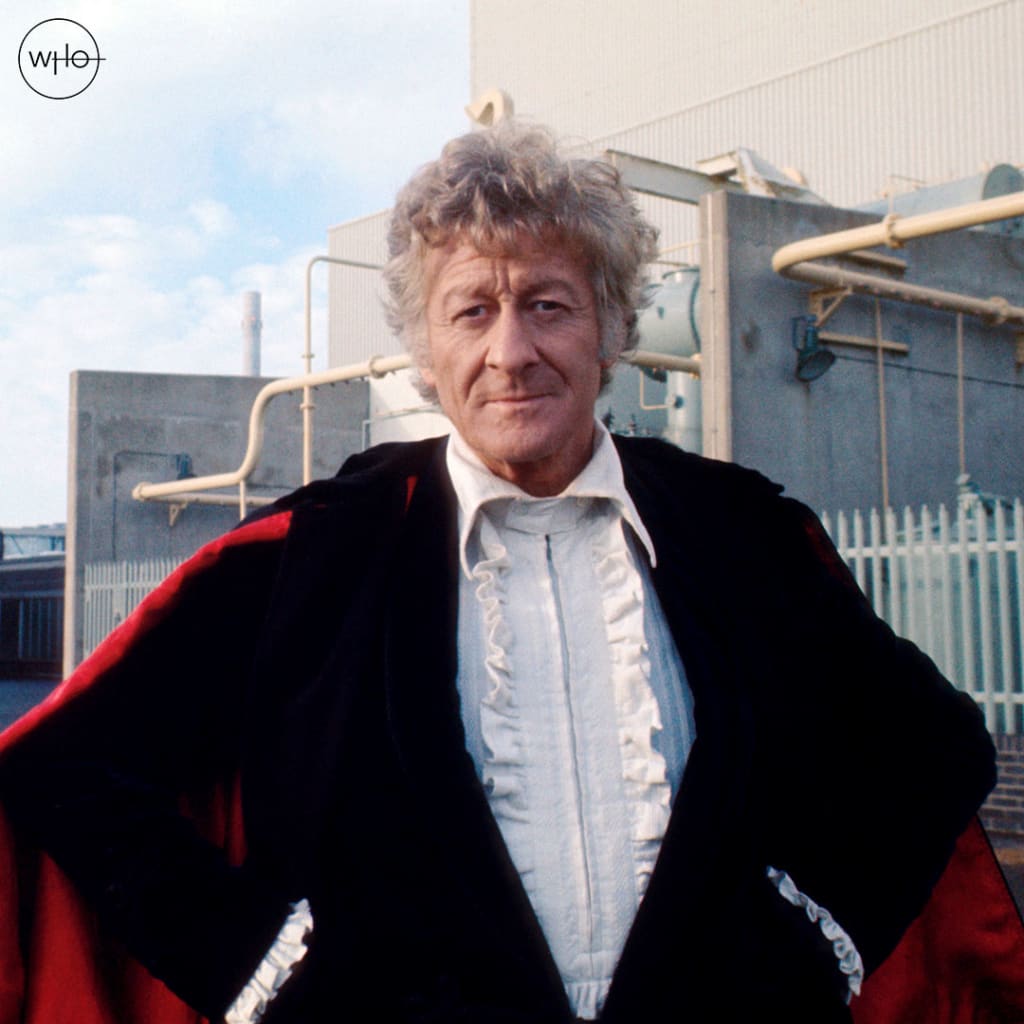
Despite looking down upon the people of Earth, the Third Doctor still respected some of them. At first, his respect was only limited to those who had scientific inclination, like his assistant Liz Shaw. When he found himself paired up with the troubleshooter Jo Grant, however, he learned that an inquisitive mind doesn’t need to stay among test tubes and textbooks. Early on, the Doctor treated Jo like a buffoon, but she eventually became one of his closest friends.
The Third Doctor is the first incarnation that went through some severe long-term trauma. He witnessed the destruction of a parallel Earth, which put him into a stress-induced coma for a time and continued to haunt him for many adventures afterward. His desire to show his superiority also came back to bite him. A blue crystal given to Jo as a way to prove the wonders he could offer her with his newly-repaired TARDIS was in fact dangerous and wound up leading to his death–a death which would have been permanent had one of his fellow Time Lords not given him a psychic “push” to start the process of regeneration.
The Fourth Doctor
Tom Baker’s Fourth Doctor is the iconic version for many due to the long length of time he led the show. At first blush, this version of the Doctor seems to follow in the Second Doctor’s footsteps, tending toward jokes and tomfoolery but keeping a keen wit that let him thwart evil plots. But there was more to him than that.
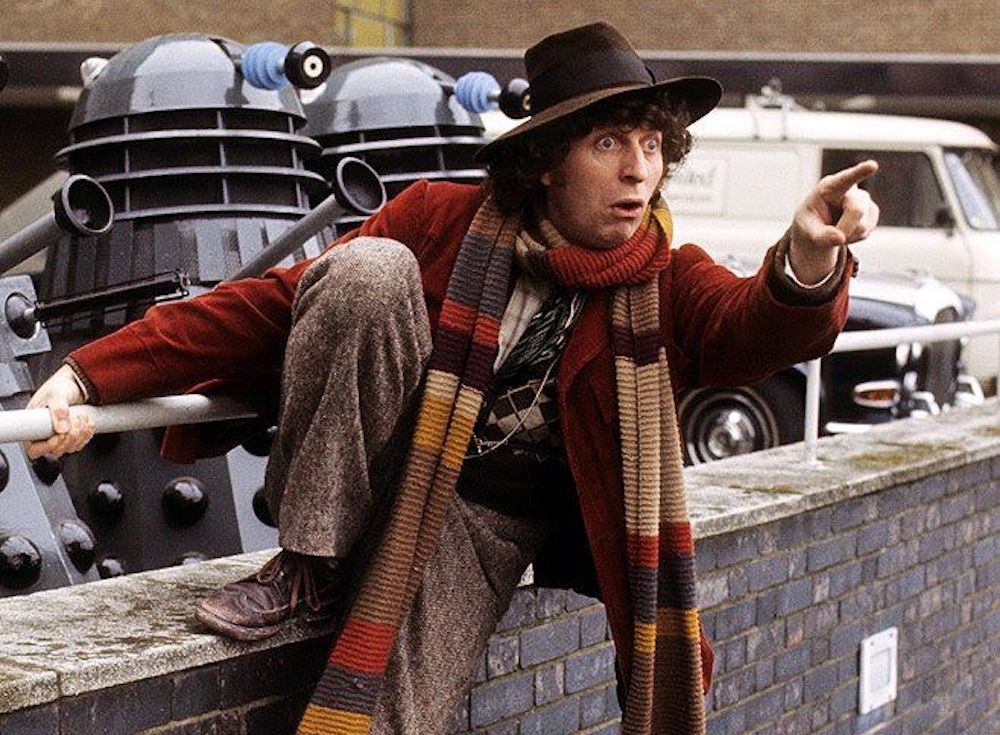
The Third Doctor had spent a lot of time forced to work for UNIT or serve as an agent of the Time Lords, and the Fourth Doctor wanted none of that. He spent most of this incarnation rejecting authority, although he also certainly knew how to use it to his advantage (such as when he ran to become Lord President of Gallifrey to avoid a false murder charge).
The Fourth Doctor played the fool well, but he could get very serious when he needed to. Moreover, he had a certain sense of age to him. Not the type of age that the First Doctor had, but more of a world-weariness. He had spent a long, long time by now fighting Daleks, Cybermen, and the like, and it started wearing him down. He would have little lapses of memory, such as mistaking Sarah Jane for his old companion Victoria. Fittingly, his final story would revolve around the theme of entropy, as both he and the TARDIS were starting to break down.
The Fifth Doctor
After a long time of being playful and coy, hiding his vulnerabilities while also feeling his age, the Doctor tried to show his kinder, more benevolent side. Peter Davison’s Fifth Doctor was defined by his kindness, showing the most empathy toward his companions and sometimes making people forget that he was a very old, very cunning Time Lord.
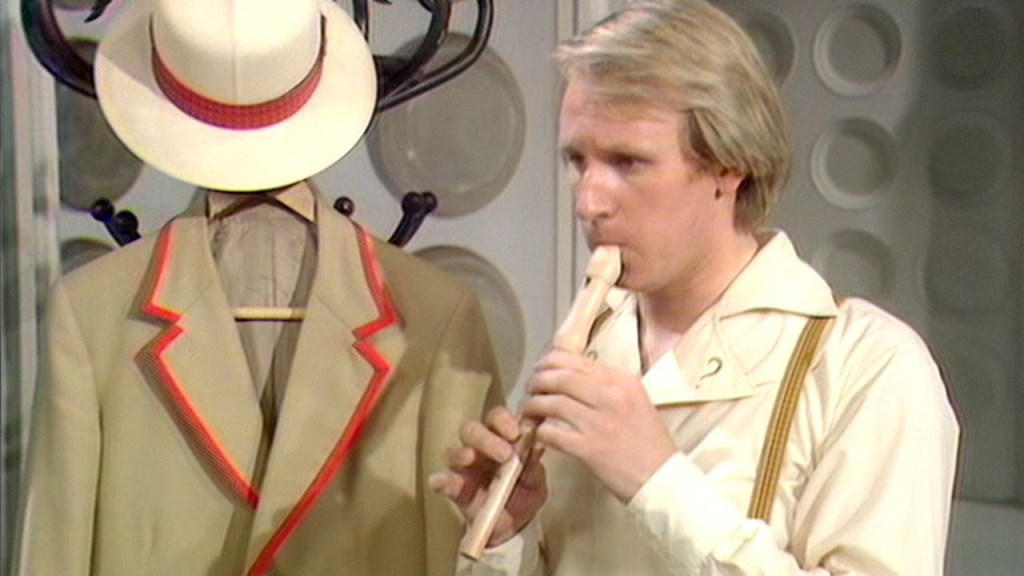
Unfortunately, the Fifth Doctor’s adventures didn’t play nicely with his mission of kindness. He found himself in some of his darkest adventures yet, to the point where his companion Tegan ran away because “It stopped being fun.” And his regeneration story, “The Caves of Androzani,” sent him through the ringer as he fought desperately to save his new companion Peri. This lifetime’s experience was enough to skew the Doctor’s personality toward his most self-centered incarnation yet.
The Sixth Doctor
The Sixth Doctor wholly rejected his previous incarnation at the beginning, stating, “It had a sort of feckless charm, which simply wasn’t me.” If this version of the Doctor wanted to be less charming, he succeeded admirably. Having been burned by wearing his heart on his sleeve, Colin Baker’s Sixth Doctor was arrogant, demeaning toward others, and a general blowhard…at least at first.
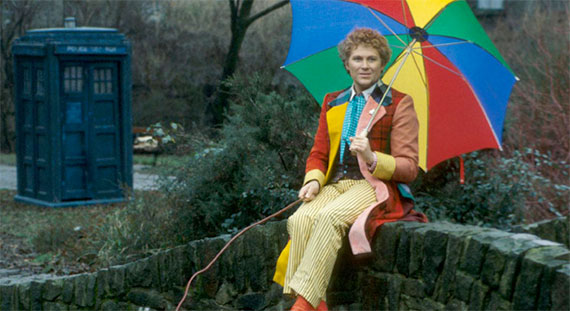
Despite his general disrespect for anyone not him, this version of the Doctor did soften over time (and likely would have softened further had behind-the-scenes troubles not forced Baker from the show). His nobility ultimately came out when he was put on trial by the Time Lords. During that time, he called his own people to task for their arrogance and casual cruelty. The Sixth Doctor started his life wanting to harden his hearts, but he ultimately couldn’t stop fighting for the little people.
The Seventh Doctor
Perhaps more than anything, the Sixth Doctor’s life was defined by a lack of control that he hadn’t felt since he was shackled to Earth during his UNIT days. At first, he was determined to embrace his alien nature and emotionally distance himself from humans, but seeing the atrocities committed by his fellow Time Lords changed his tune. Before he could really soften, though, an attack by his enemy the Rani forced him to regenerate into a new form.
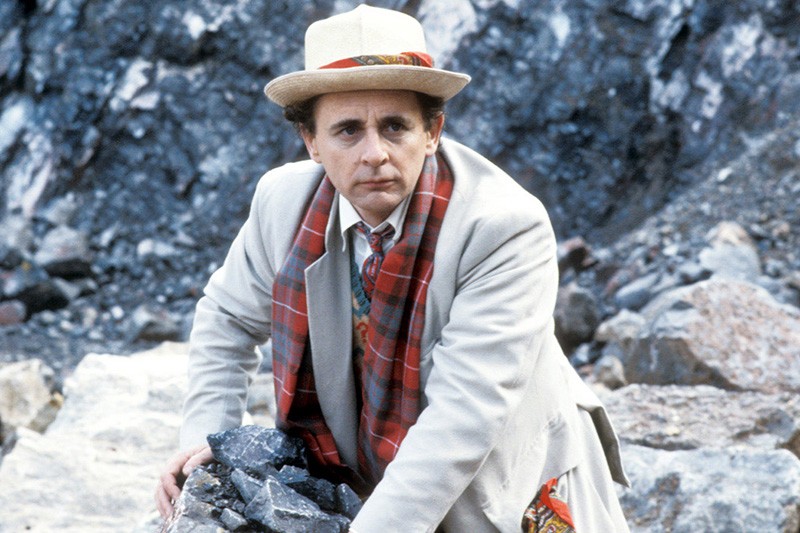
Sylvester McCoy’s Seventh Doctor started as a buffoon, and it was never easy to tell how much was real and how much was a charade. Starting with “Remembrance of the Daleks,” he proved to be a chessmaster, manipulating his foe Davros into destroying the entire Dalek homeworld when he thought he had the upper hand. The Doctor went back to the trickster ways of the Second and Fourth Doctors, luring others into thinking he was a fool while he dismantled them through his cunning.
He played that role too well, though, and ultimately wound up using his boon companion Ace as a pawn in one of his schemes. Ace would eventually part ways with the Doctor, leaving him to travel alone for a while. His tendency to manipulate others for the greater good had gone too far, and he was now isolated.
The Eighth Doctor
Paul McGann’s Eighth Doctor isn’t really part of the classic era, since the show got canceled seven years before he took over the TARDIS, but his Doctor makes a nice ending point for this section before we leap into the revival era.
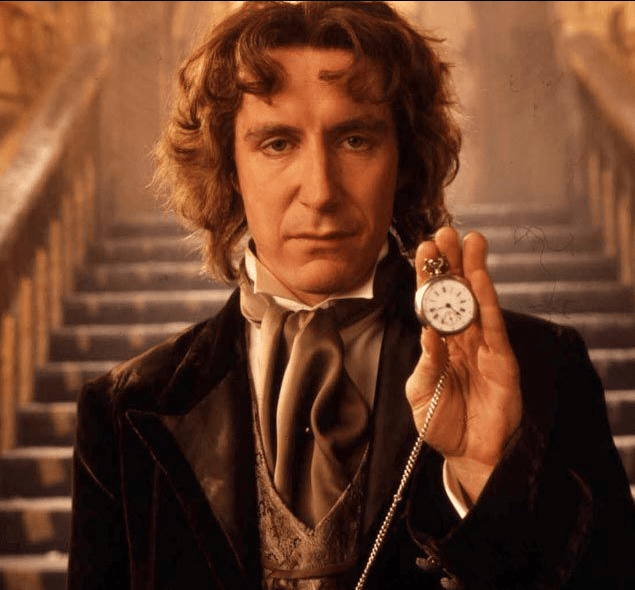
The Seventh Doctor, for all his calculating efficiency, died alone as a victim of random gun violence in San Francisco. Moreover, a botched surgery caused by his alien physiology almost killed him for good, delaying regeneration and causing temporary amnesia. Nonetheless, the growth between Seven and Eight was still noticeable.
The Eighth Doctor was the most emotionally available of the classic incarnations, willing to put his feelings out there and accepting when he got hurt. He showed romantic attraction toward humans, something that rarely (but not never) happened with his previous incarnations. Having gone too far as a manipulator, he became more reactionary and was far more open with those he got close to.
Unfortunately, like the kinder, gentler Fifth Doctor, great tragedy would derail the Eighth Doctor’s climb toward emotional well-being. That tragedy was the Time War, and it led to the revival era which we will cover next time.
Images: BBC
 Babbling Brooks