
Highlander: The Source is the suckiest thing that ever sucked.
Believe it or not, it is worse than Highlander II. It has worse characterization than Highlander: Endgame. It was intended to be the first part of a trilogy of films, but instead stands as one final middle finger to fans. It systematically goes through everything that is iconic about the Highlander franchise and destroys it.
I have a really hard time not calling Highlander: The Source the single worst movie I have ever seen. Triumph of the Will has always stood out as the iconic terrible film to me, with monstrous content supporting the Nazi party and a pace that makes it feel like a week of torture, but it at least had some artful directing to it. The Russian version of Solaris is boring as all hell, but has something thought-provoking and eerie in its conclusion. Even Tommy Wiseau’s The Room, one of the single poorest examples of acting, writing, and directing in modern cinema, is at least so bad it’s funny. The Source isn’t even something I can laugh at. It’s like somebody systematically set out to make the worst movie of all time and proceeded to accomplish that goal with all the precision efficiency of an unstoppable bad movie-making machine.
Between Highlander II and Highlander: The Source, this single franchise has not one, but two of the worst movies ever made. How is that even possible?
What Were You Expecting, Dummy?
To be fair, though, I did this to myself. This wasn’t like Endgame where I got drawn in by lies in the trailer. I sought this movie out of my own accord and watched it. I am really that stupid.
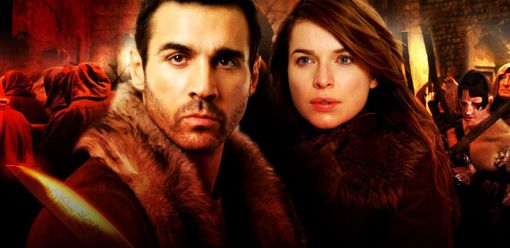
Why would I do that to myself? Curiosity, mostly. The Source was supposed to be the start of a new Highlander trilogy. After Endgame pretty much tanked the franchise, the series needed a reboot, and I hoped this was going to be it. But then previews and trailers began to come out, and it became clear the film was going to be garbage. Taking one look at the post-apocalyptic setting and the notion that Duncan and company were going to seek the origins of immortality, I immediately thought it was going to be another Highlander II. But I was wrong – this film was much, much worse than Highlander II. Even with my lowered expectations, it still felt like a kick to the groin. And the sad part is, it didn’t have to be that way.
A Rocky Pre-Production
Highlander: Endgame tanked the franchise. It bombed just like Highlander II and Highlander III did, but there was no television show going on to keep the brand fresh and popular. Even diehard fans started to give up on the franchise, and after four box office failures, folks finally caught on that the franchise was never going to succeed in theatres. (Of the movies, only the original can be considered a success, and even it lost money at the box office – it was home video and international sales that kept the franchise going.) Despite that, Davis-Panzer Productions would not let the thing die. At this point, I’m pretty sure that they didn’t actually care about the film versions of Highlander but rather wanted to keep the brand going so they could sell merchandise. Highlander has a lot of fan paraphernalia, ranging from novel tie-ins to replica swords. The fact that there was ever a fifth Highlander movie suggests that the money was coming from somewhere, and it sure wasn’t from the films themselves.
Originally, Joel Soisson, the writer of Endgame, wrote the script. His draft got scrapped and Peter Briggs, the screenwriter for Hellboy, came in. In preparation for the project, Briggs actually did research and listened to fans, re-watching all of the movies and the TV series and signing up on the official Highlander message boards under an alias so he could figure out what fans wanted. With someone so dedicated to making a quality film, it’s not surprising that he got kicked off the project. Can’t have quality and a respect for the source material in this franchise, no sirree. His replacement was Stephen Kelvin Watkins, a guy who had never written a professional screenplay before and who I assume was hired because he came on the cheap.
Work began on the film shortly after Endgame released, but things came grinding to a halt when Miramax, the studio that had been putting out the franchise, dropped Highlander, realizing that they were never going to see another dime out of the toxic franchise. After shopping the franchise rights around, Davis-Panzer Productions finally sold it off to Lionsgate, the same studio that put out the Saw series. Because Saw was such a big success, Lionsgate wanted to make Highlander grittier and darker. We’ll get into the effects of that demand later.
Among the film’s many problems was the fact that Adrian Paul wanted nothing to do with it. He hated the way Endgame had turned out and refused to go back to the dead horse that was Highlander. So the producers went back to Christopher Lambert, hoping to bring him back into the series somehow despite the fact that they had killed off his character in the last film in order to make it easier to go forward using Adrian Paul instead. Lambert refused or, based on how his negotiations with the TV series went, probably just asked for way too much money, knowing his demands wouldn’t get met. So the producers had to go crawling back to Adrian Paul, because they desperately wanted one of the iconic MacLeods in the film. In order to bring Paul onboard, they gave him an executive producer credit which was supposed to come with some creative control. They also went out and got two big names in the franchise to help smooth the film over: David Abramowitz, who had worked with Paul on the series, and Russell Mulcahy, who had directed the first two films.
So how did the studio screw that up? Well, Abramowitz got totally screwed from the get-go, as he was brought on to rework the shaky script. What he turned in was more in-line with the previous entries in the series, but that messed with Lionsgate’s “make it dark and gritty” mandate, so his changes were thrown out almost wholesale. Mulcahy, meanwhile, wanted to make the film a flashback about the first immortals, using Duncan as a framing device and nothing more. Peter Davis and Bill Panzer insisted on a followup to Endgame and that Duncan be the main character through the whole thing. Mulcahy wound up leaving because he saw shades of Highlander II, a film where he had been stripped of creative control and that suffered because of it. However, by the time that Mulcahy left and Abramowitz’s script got thrown out, Adrian Paul had already signed on and was now under contract.
Adrian Paul would later go on record prior to the film’s release and say that The Source missed the mark. That’s insanely rare for a lead actor to do in promoting his own movie. It is really that bad. All of the problems in pre-production became compounded as the film ran over budget and past its shooting schedule, resulting in the ending getting chopped off. Supposedly, the ending would have tied back into the highlands of Scotland, since this movie is, you know, called Highlander.
Not for Lack of Trying
Why is the history relevant here? Because it demonstrates that there were people who really wanted to make this movie something good. Peter Briggs, David Abramowitz, and Russell Mulcahy all wanted to try and resurrect the suffering Highlander franchise. Even Joel Soisson, who had helped kill it with Endgame, later sued to get his name taken out of the credits of this abomination. Adrian Paul likewise wanted to go back to the roots of the series with Duncan rather than the post-apocalyptic mess of pseudoscience and magical babble that we got. People tried to make this movie something good. At every turn, they were thwarted by meddling producers who thought they knew what was best despite the fact that their interference had just about killed the franchise already and a studio that wanted to turn Highlander into a slasher flick.
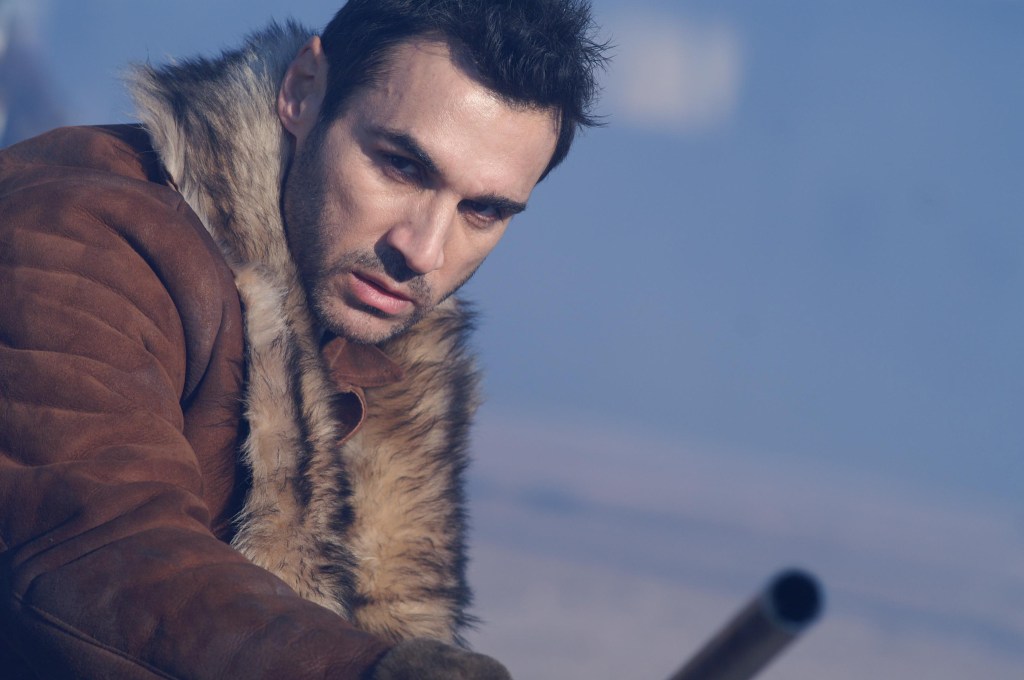
This movie was so bad that Lionsgate didn’t even think about giving it a theatrical release, knowing that it was going to bomb. They didn’t even release it direct to DVD. Instead, they released it on the Syfy Channel, a channel that has so little regard for the genre of science fiction and fantasy that they changed their name to something that people associate with syphilis. The Internet probably saved Lionsgate some money in this case. The original Russian cut of the film got leaked onto torrent sites, and fan backlash was so immense that Davis-Panzer had to release a statement online saying that the film was not final. The final edit, unfortunately, is just as bad. The Syfy release of The Source did cut out some of the more ridiculous parts of the film, but it also cut out any parts of the film that actually explained what was going on. The final cut also stands as the single Highlander movie that got stuff taken out of it instead of put back in when it finally hit the DVD shelves.
A Bad Beginning
So what sucks about Highlander: The Source? Do you really want to know? Or do you just want me to scream and flail about in agony for the next few paragraphs? Well, you’re going to get both wishes.
The film opens, as is traditional in Highlander films, with a black screen, some text, and a voice over. In the Russian version, this voice over was done by Methos, one of the most beloved characters of the series, as he talks about the legend of something called the Source and questions whether its discovery will bring salvation or pain. That monologue makes sense, since Methos is the oldest immortal (or so we think) and has shown himself previously to know about weird magical stuff that other immortals dismiss as legend. In the Syfy version of the movie, this monologue is replaced by what seems to be a PowerPoint slide listing what the film considers pertinent facts about immortals and narrated by a woman who the audience does not know.
Immortals:
- They can only be killed with the loss of their head.
- They gain more power by killing other immortals.
- They cannot have children.
This list is the most sterile approach to the Highlander mythology I’ve ever seen. The first two are points that everyone entering the franchise needs to know, but simply listing them takes a lot of the mystery, fantasy and gravitas out of the story. There’s a reason why Ramirez spent an extensive scene with Connor exploring the facets of immortality rather than just handing him a piece of parchment with these items listed on them.
The third point is significant but not really a cornerstone in terms of big things you need to know about immortals. It is, however, the top reason why women leave Duncan (or so it seems), so it’s no surprise that our narrator, Anna, mentioned it as a key fact.
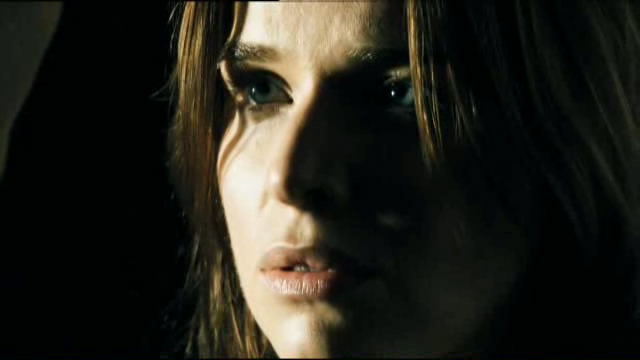
Anna is the latest in a long line of Duncan’s one true loves. It’s a shame the franchise keeps going back to this well so often, because they nailed it with the chemistry between Alexandra Vandernoot and Adrian Paul back at the start of the series when they introduced Tessa. Nobody else has come close, and Anna is basically indistinguishable from Kate except for the fact that the former is mortal. Not only is Anna Duncan’s newest one true love, but she’s also his wife. So the guy who canonically never married and never could marry without horrible consequences has now been married twice in the last two films. But Anna left Duncan. Why? Bullet point number 3: immortals can’t have children, and Anna wants a baby.
Three minutes into the movie, I already detest the backstory. This film wants us to believe that Anna and Duncan love each other more than anything else, and yet I can’t get over the fact that she left him because he couldn’t have children. I get that, for some people, having a child is an essential part of life. However, I always hit stumbling blocks when fiction pretends that things like adoption or in vitro fertilization don’t exist. And I can’t get on board with believing that Anna and Duncan really, truly love each other if they break up over Duncan’s infertility. Maybe if we saw more of Anna’s desire to be a mother early on, but she’s just dumped into this film as the latest in a long line of disposable women in Duncan’s life. The emotional investment the movie wants us to make, like so many other things, is unearned.
An Incoherent Apocalypse
Okay, to be fair, all the sperm banks and adoption agencies might have been destroyed when all the governments of the world collapsed. When and why did this happen? We don’t fucking know. It just did. We get a single line saying that humanity has fallen into darkness and no explanation. Even Highlander 2 gave us an introductory scene to explain how the world fell apart.
So in this dark future, Duncan has become a stalker version of Batman, perching on rooftops and following Anna around from afar. That’s not romantic, pal – that’s something you should probably get tossed in jail for, if there were any jails left. Duncan’s ruminations and reflections are interrupted when he hears a cry for help by a woman who is about to be raped. He leaps into action and beats up the criminals in a poor rehash of much better movies like Batman and Spider-Man. The actual sequence is just an excuse to have a fight scene and actually adds nothing to the plot.
We cut away from Duncan’s mopefest to see Methos. Don’t cheer – Methos, one of the most likable and charismatic characters in the series, is a complete asshole throughout this movie. In fact, there’s another guy who wanted this film to be something good – Peter Wingfield actually cried when given the chance to reprise his role as Methos. Or maybe he cried when he read the script – I know I would have. Either way, Methos has a group of other immortals that he communicates via some funky effect that is supposed to look futuristic but instead just looks like a bunch of guys talking wirelessly with 3D glasses on. Apparently, the worldwide communications grid survived the apocalypse perfectly well.
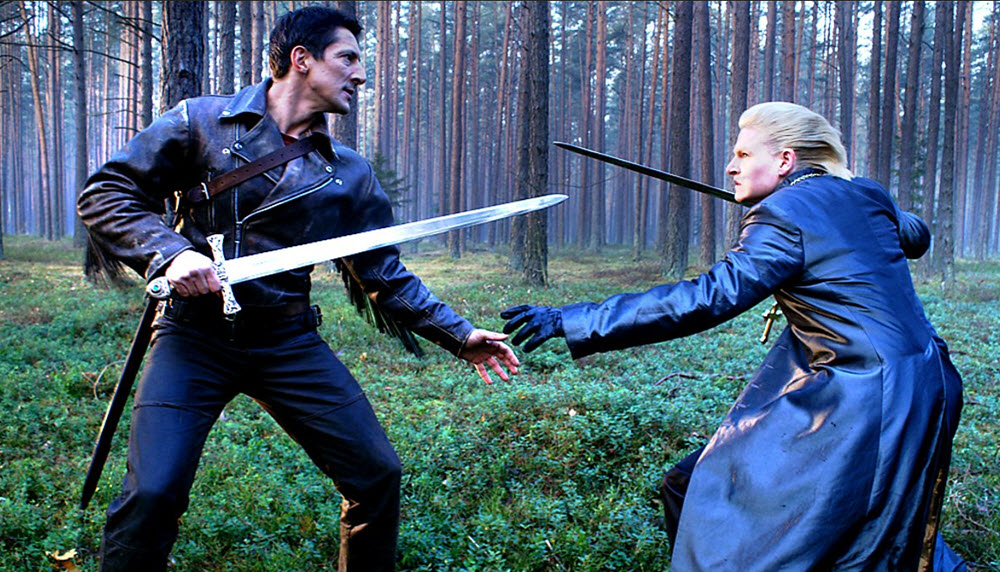
Methos and the others are investigating a very strange phenomenon – the planets are coming out of alignment and approaching Earth. I would have thought that the planet Saturn getting so close to Earth that it could clearly be seen in the night sky was a bad thing, but apparently it is only a sign that a bunch of asshole immortals should seek out the Source. What is the Source? Who knows? It will never get explained to us in this movie. All that’s known is that one of Methos’ little band has been there already (wait, what?!) and has a sample of glowing sand from it. (Well, in the Russian release anyway – the Syfy release cut out this bit, probably for good reason.) In order to join this video conference, this particular immortal for some reason had to break into a skyscraper that has a security guard but no furnishings, who then shoots said immortal as he falls into an elevator. The elevator somehow reads the guy’s mind, because it brings him to the correct floor to access the video conferencing equipment while the guy is still “dead” from the gunshots and unable to press any buttons. But that’s the least of the mind-boggling problems we’ll encounter.
The incoherent nature of the movie hurts it most of all. Highlander has never made a large degree of sense, but when it was good it had a fairly consistent vision. In the opening of this film, we’re given an apocalypse that just sort of happened, and yet whatever technology is needed for the plot to work survived unscathed. The sets where the characters talk, fight, and interact are sparse with very little detail in them, which just makes the whole thing feel sterile. Compare the fight scene in a basically empty lobby with the opening battle in a parking garage of the first film. Both had only a couple of characters in it, but the parking garage battle used its environment well, allowing the immortals to utilize cover, setting off sprinklers, and the like.
This lack of detail or coherency leads Highlander: The Source to feel like an unfinished rough draft…which it probably was. I would be absolutely shocked if the script was finished at the start of filming, and I highly doubt that anyone on the plotting and development side of this movie thought that what they finally had to film represented a final draft.
A Villain We Can’t Unsee
The immortal who broke into the skyscraper is promptly killed off by the villain of this dog and pony show, the Guardian of the Source. He moves in an effect that I have dubbed cheesy speed. It’s supposed to look like super speed, but instead it looks like somebody just sort of added a blur effect around him and then drew in speed lines. Armed with cheesy speed and a large metal collar that protects him from decapitations, the Guardian kills the immortal with the line, “There can be only me!” Then we get a quickening that blows up a skyscraper and catches Duncan’s attention.
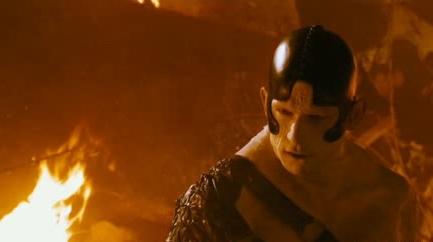
While Duncan runs toward the explosion, we see Joe talking to Methos by cell phone. Not only is it odd that cell phones still work in this setting, but it looks to me like Joe is sitting in his blues bar from the series. So the world has descended into utter chaos, but Joe’s frikkin’ bar managed to survive completely unscathed? Do anarchists and cannibals just appreciate really good blues music or something?
Now, for an oh-so-brief moment, this movie just looks like it will be just cheesy and not awful. The Guardian fights with armor around his neck – clever, especially since immortals don’t have to worry about hiding their presence in the total anarchy around them anymore. The Guardian’s line of, “There can be only me” is kind of a nice twist to the tagline of, “There can be only one.” For a brief moment, the audience is left thinking that maybe we’re going to get something that is Highlander III-style funny-bad rather than painful to look at.
Then the neck armor vanishes, never to be seen again. And then the Guardian has his first interaction with Duncan, which is some bizarre attempt to do late-first-film Kurgan but without any of the introductory menace to pull it off.
That’s a common component that filmmakers have missed when they try to recapture Clancy Brown’s Kurgan: they only remember the third act version of the character who was drunk on power and one kill away from omnipotence. Our first introduction to the Kurgan was when he was dressed in badass armor and nearly killing Connor. Then in the modern day, he remained a largely silent menacing figure until late in the film when he went full-blown psycho in an attempt to get into Connor’s head. Every villain since then has tried to go full-out crazy right from the beginning without building up any of the menace, and the Guardian is probably the worst offender in that regard.
I will give the Guardian one thing, though: his actor is the only one in this movie who seems to be trying. While he’s going way, way over the top, everybody else in this film, even talented actors like Peter Wingfield and Jim Byrnes, are just going through the motions. I don’t blame them, though. I wouldn’t put any effort into this piece of shit either. Adrian Paul probably comes off most bland here, and it seems like in every scene he’s mentally trying to figure out how he got suckered into this garbage in the first place.
Oh, and by the way, hopefully everybody enjoyed that early quickening, because there are no more in this movie. Oh we get some lightning effects here and there later, but this one quickening is the only full one we get. When the Guardian first yelled out, “The quickening!” as it occurred, I thought it might be an attempt to fill new viewers in. But then, what new viewers are seriously going to watch this? The only people left are the most diehard and masochistic Highlander fans, and they know what a quickening is. In actuality, the Guardian is yelling, “The quickening!” because it’s his way of telling you that this pointless mook getting killed is the last quickening that fans will ever see in a live action film. Hope you enjoyed the concept, because it’s gone now!
The Guardian and Duncan fight, with the Guardian dominating the battle because of his cheesy speed. Then Joe shows up. Ah, Jim Byrnes…surely you can save me from this film!
Joe, No!
Joe Dawson has historically been a remedy for the Highlander doldrums. When the show was stuck in a “bad immortal of the week” rut at the start of Season Two, the introduction of his character pulled it in interesting new directions. When The Raven was nothing more than a muddled cop drama, his guest appearance set it in a strong direction that carried through to the conclusion of the show.
Sadly, The Source was too big a mess for even Joe Dawson to save. Rather than being the grounded, knowledgeable, soulful man whose presence lent a mortal perspective to the setting, he became a gun-toting apocalypse rider whose main purpose in his introductory scene is to tell us that the Watchers are no more.
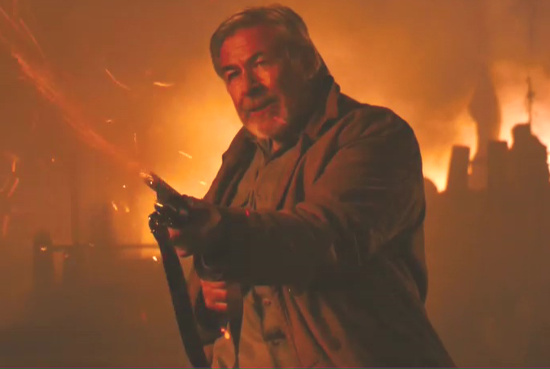
Joe has always been the mortal anchor in the series. And he’s a painful reminder that both Endgame and The Source are no longer trying to tell a story about the mortal world and how much it hurts to be immortal, but are instead obsessed with their own twisted inconsistent mythology.
Endgame only had Joe in a couple of cameos, and every other named character was an immortal. And here we only have two mortals: Joe, who has gone from being a blues bar owner to a one-man arsenal, and Anna, who has no likable qualities and, as we will soon discover, basically has super powers.
With no grounds in the real world, no flashbacks to tie us to history (aside from the flashbacks of Duncan and Anna that occur in an area with an entirely white background), and no characters we can identify with, The Source has broken any possible connection an average viewer might have with the story.
We’re not even very far into this movie and it’s already giving me a stress headache. Let me take a break, beat up on the wall, and cry into my pillow. Then I’ll be ready to continue with the remainder of Highlander: The Source.
 Babbling Brooks