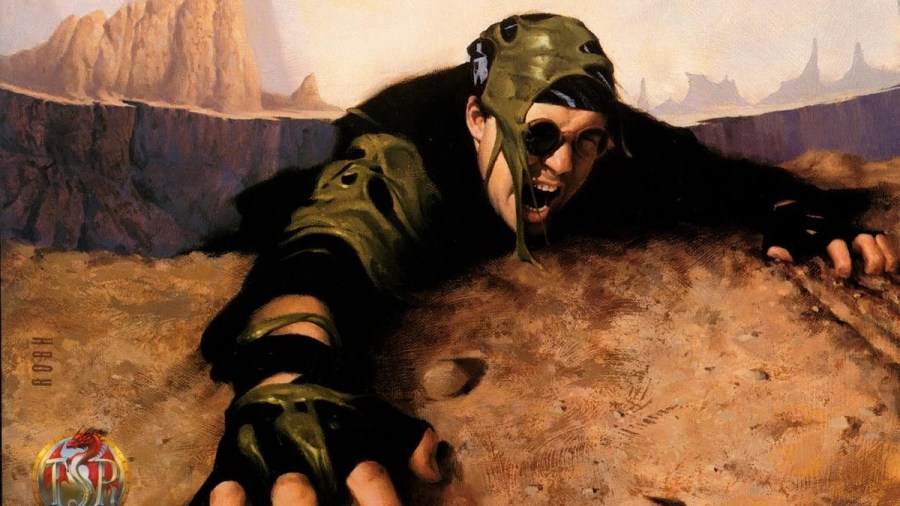
My interest in Dungeons & Dragons history recently led me to the Advanced D&D product Well of Worlds, released in 1994 as part of the Planescape line. That setting was beloved by fans for its weirdness and the way it turned abstract philosophy into adventuring material. Since D&D recently went back to the Planescape well with a boxed set, now seems like a good time to delve into the classic setting as it appeared in the 90s. As I tour the Well of Worlds, here’s my thoughts on what I like, dislike, and have mixed feelings about in this beloved setting.
Good: The Art
Several settings in the 90s hit a home run when it came to their art direction, and Planescape was probably peak in that regard. The cover art for Well of Worlds was done by Brom, and the interiors were done by Tony DiTerlizzi. For Planescape, DiTerlizzi’s work was especially iconic, giving everything that happened in the setting an exaggerated, otherworldly appearance.
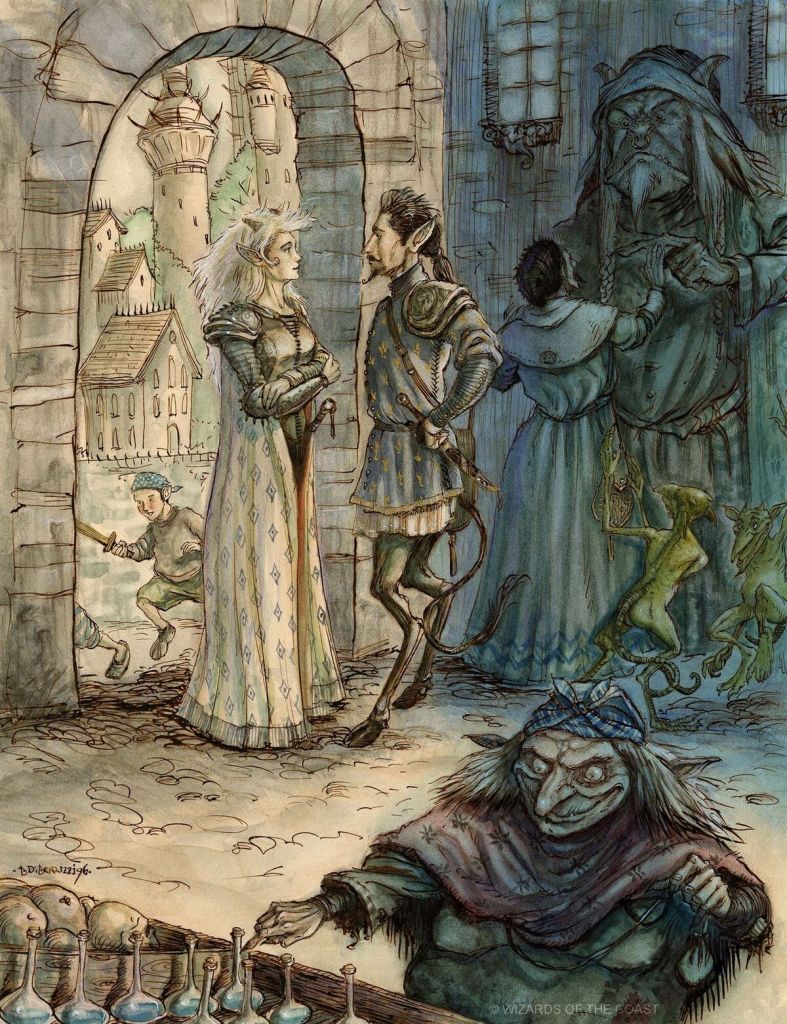
For many years up until Planescape, AD&D had striven for a certain level of realism in its art. DiTerlizzi’s work brought a fairy tale-esque the city of Sigil and its infinite connected planes, giving it a unique and unforgettable style. In a setting where dreams could become real, the dead could walk the streets, and belief was power, DiTerlizzi’s art was a perfect match.
The art from Planescape products in the 90s was so iconic that when Wizards of the Coast brought the setting back in 2023 for 5th edition, they went back to the DiTerlizzi well. You simply can’t do Planescape without his style.
Bad: Casual Contempt
The art helped to establish that Planescape was unlike any other D&D setting folks had seen. The text of the setting’s products continues that theme, but with a casual contempt for the “classic” D&D style that I never really liked.
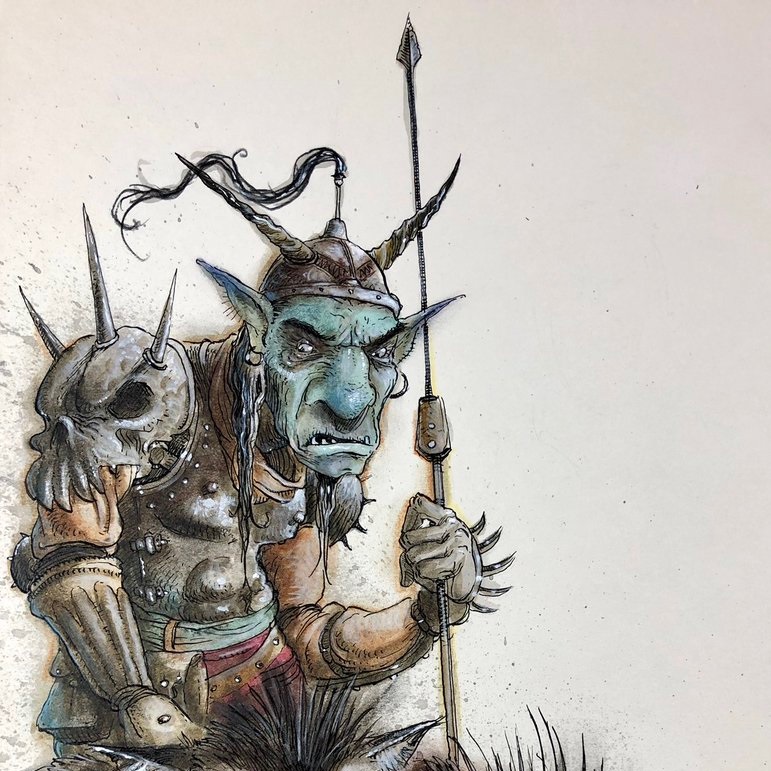
Turning over to another Planescape adventure, The Great Modron March, the introductory text tries to differentiate itself from classic D&D adventures by stating, “Simply put, planar adventuring ain’t about slaughtering monsters or crawling through dungeons. Sure, there’re plenty of opportunities for such things on the planes, but planewalkers have their eyes on more important goals.”
Basically every Planescape adventure hammers on that idea, stating that if you like the “dungeons” part of Dungeons & Dragons, you’re going to be out of your element. This partly reflects an identity crisis that D&D had in the 90s. The RPG hobby had outgrown its wargaming roots, and more games focused on problem-solving and nonviolent solutions over combat. AD&D tried to follow that trend, but its rules were still very much rooted in combat as the primary solution.
In addition to tossing shade at the traditional D&D style of play, Planescape generally dissed characters from other settings–the “clueless,” by Planescape‘s slang.
“Planars view primes as yokels,” states Well of Worlds in its introduction, “closed-minded sods who can’t understand that the planes are far larger than the petty worlds in the Prime Material.”
Overall, Planescape products tended to have a certain tone that belittled not only characters of other settings, but also the style of gaming that a lot of folks playing AD&D still enjoyed. While this tone reflects the setting’s inhabitants well, it’s a certain condescending attitude that I could have happily done without.
Mixed: The Cant
Listen, cutter…you need to make sure to pay the jink to buy that berk some bub and get him to rattle his bone-box, or you’ll end up in the dead-book, got it?
If that sentence made any semblance of sense to you, then you probably played Planescape during the 90s.
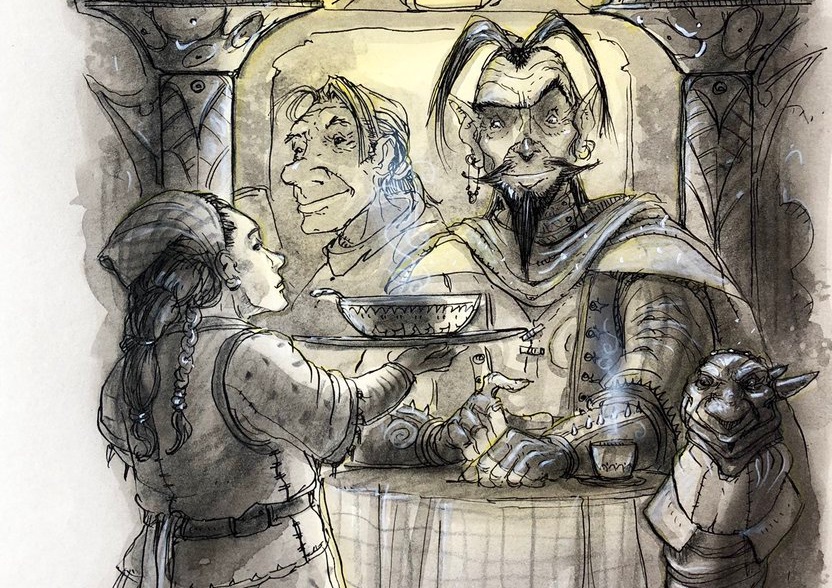
Part of Planescape‘s efforts to distinguish itself from other settings included creating its own unique slang, or cant. The setting books themselves had a nice little glossary for those who wanted to understand the jargon.
When used sparingly, as in the video game Planescape: Torment, the cant added flavor as was intended. When used excessively, as in my example above, it sounded downright silly.
The cant would probably be neither here nor there if it was constrained to flavor text. But Well of Worlds, The Great Modron March, and every other Planescape product with which I’m familiar embraces the cant in everything, including DM notes. The sprinkling of jargon is usually light enough not to be a problem, but combined with the fairly loose formatting of adventures it can often grate a bit.
“The PCs have two options, fight or flight,” states adventure notes near the end of the first adventure in Well of Worlds, “and only one offers a realistic chance of staying out of the dead-book a while longer. Sure, that portal might seem like a long way off, but odds are a berk’d run twice that far on one leg sooner than withstand a horde of abishai.”
That’s a wordy way of saying that the adventure requires a chase scene. Processing all of that isn’t too hard on my brain, but it makes my teeth grind a bit when that entire section spends a lot of time providing the flavor of an exciting chase but provides no information on how the DM is supposed to actually run the scene. If the text had reduced the amount of jargon and instead given some DM advice, I feel like the adventure would run smoother.
Good: See the World Across Infinite Planes…
Whatever tone it might take when discussing other AD&D adventures, Planescape showcases just how grand a fantasy adventure can get. In Well of Worlds, the PCs go from a Prime Material Plane to the wastelands of Avernus to the City of Doors over the course of their first adventure. In later adventures, they travel to the Abyss to deliver a love letter, the Beastlands as potential victims in a wild hunt, Limbo to stop an invasion of the upper planes, and more.
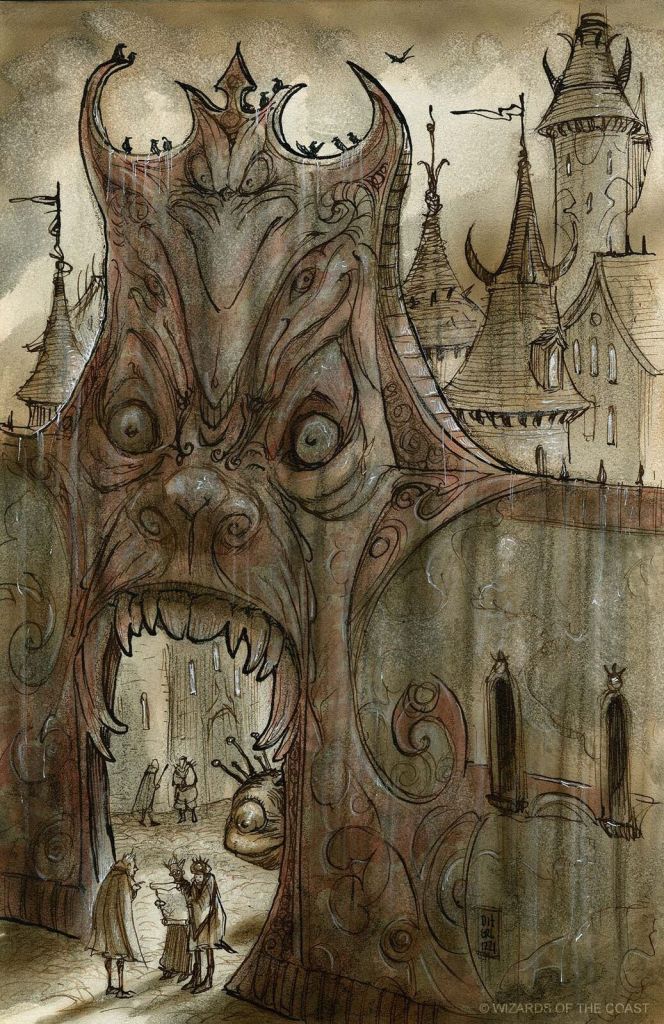
The setting delivers the weird in wonderful ways. This made it perfect for experienced players and GMs who were sick of their 1st-level adventures being some variation of, “Go into these caverns and kill the kobolds and dire rats.” Planescape delivered an entire multiverse from 1st level on up, whereas previous planar adventures had been limited solely to high-level heroes.
Bad: …and do Mostly the Same Stuff
Planescape is visually exciting and unique, but the players don’t always see the visuals. And as exciting as it is when the planes crack wide open for an adventuring party, some of that excitement wears off when you realize that a lot of the setting is the same D&D tropes with a coat of paint slapped on.
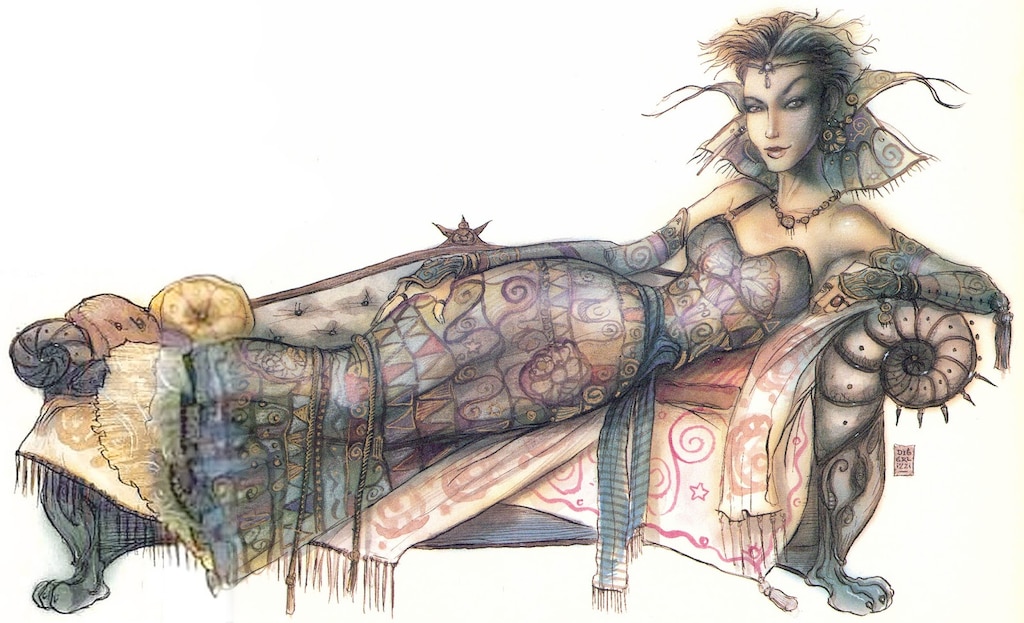
The Outer Planes particularly suffer from some of the D&D-isms, I feel. One of the adventures in Well of Worlds sends characters to Carceri, a plane of nightmares and shadows. But their first destination in the area is a town filled with humanoids who provide them with rumors and a chance to trade. Do the PCs trade in shadows, dreamstuff, or anything similarly esoteric? No…just gold.
For as bonkers as Planescape gets, there are certain gameplay crutches that it relies on where you are reminded of how artificial D&D is. You might go to Mechanus, the plane of eternal law and order, but there’s still a thieves’ guild causing problems. Want to travel through the Pandemonium? There’s a trade caravan that goes through there on its way to the Prime Material Plane. The need to provide coin, trade, and a home base for adventuring PCs tends to tie Planescape down a bit so it never really breaks the old paradigms the way it could.
Mixed: The Cantina Effect
In its own way, Planescape spearheaded one of the developments that I love about modern fantasy RPGs: what I call the Cantina Effect.
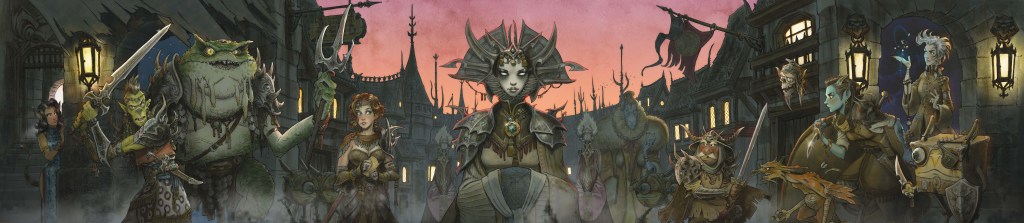
Old D&D was largely human-centric, and things that showed up in the Monster Manual but not the Player’s Handbook were usually regarded as monsters that were attacked on sight. The modern game has taken steps to emphasize that even “monsters” are not inherently evil, and it has also broadened the range of what makes an acceptable player character. As a result, going into a tavern in a 5th edition D&D setting looks a lot more like the Mos Eisley Cantina from Star Wars, with all sorts of weird creatures ponying up to the bar.
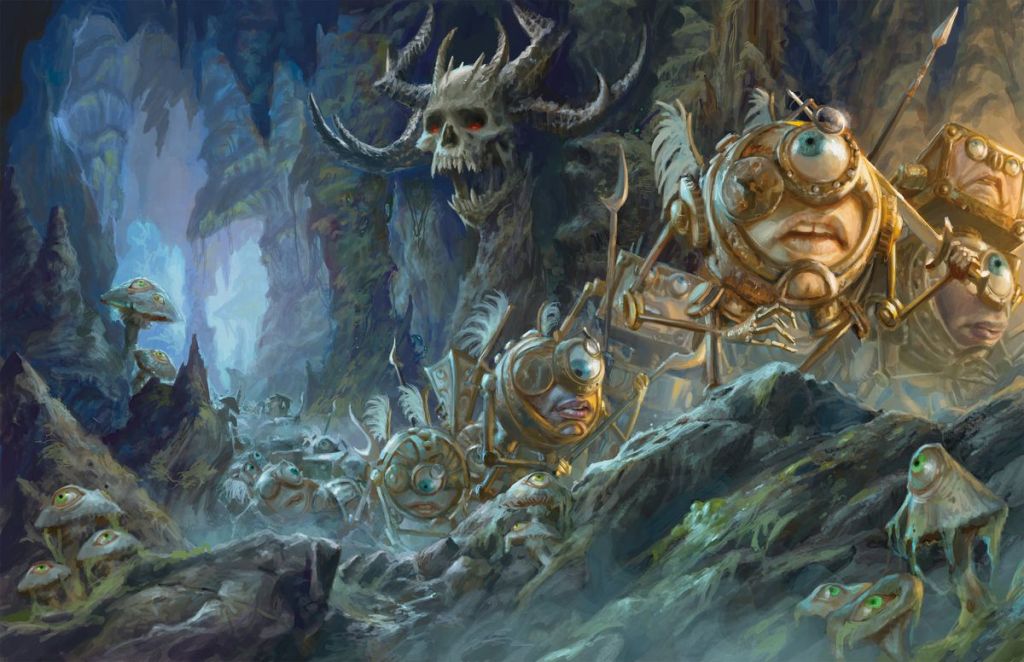
As far as I know, Planescape was the first setting to really embrace that range of weirdness in D&D. When Well of Worlds‘ introductory adventure brings the PCs to Sigil for the first time, it does so with this flavor text:
Mixed in with typical humanoid citizens, fiends walk the streets. Though others give them a wider berth, no one seems to think their presence at all strange.
Sedan chairs carry creatures who can’t (or won’t) walk, and vendors hawk their wares frantically to passersby. The crowd seems a collection of fascinating bodies, once you’ve gotten past the shock of seeing fiends alongside ordinary mortals. In addition to the familiar humans, elves, and dwarves, you spy humanoids you’ve never seen before, and centaurlike beings with the bodies of rams.
Whether this is a good thing depends largely on how you like your fantasy. I’m a big fan of the Cantina Effect, but others prefer a less outlandish setting where almost everyone is human or human-like. Seeing a literal devil, who is the manifestation of tyranny and evil, haggle over prices at a marketplace can be a little too much at times, but it does really help drive home how far beyond the bounds of “normalcy” the planes are to someone from the Prime Material Plane.
Expanding D&D or Limited by It?
Planescape has strong roots in D&D, serving as a new look on material originally presented in the Manual of the Planes. However, at times the setting seems limited by the game that inspired it. A wold where belief is power, where you can literally go the Heaven or Hell, and where the heroes are often merely cosmic flotsam along for the ride has great potential. Sometimes, I am left to wonder if maybe the setting needed a new system that could really embrace that style of play without stopping every now and then to roll for initiative.
The Planescape setting might be limited by the game that inspired it, or it could lie along the outer boundaries of what D&D can allow while still being D&D. Regardless, the setting is evocative, imaginative, and a ton of fun despite (or perhaps because of) all its warts.
 Babbling Brooks